Keeping accurate rental payment records is an important part of managing a home, apartment, room, or other rental property. A rent payment ledger provides a clear record of rent that has been charged, paid, partially paid, or left outstanding. Whether you are a landlord, property manager, or tenant, a well-organized ledger can make financial tracking much easier.
Instead of searching through bank statements, receipts, emails, or text messages, you can use one organized document to see the payment history at a glance. A rent payment ledger can also help identify overdue amounts, confirm payment dates, record payment methods, and maintain useful documentation for your rental records.
What Is a Rent Payment Ledger?
A rent payment ledger is a document used to record rental payments over a specific period. It typically includes information such as the tenant’s name, property address, monthly rent amount, payment date, amount due, amount paid, payment method, and any outstanding balance.
The ledger can be maintained on paper, as a printable PDF, in a spreadsheet, or in another digital format. The best format depends on how frequently you manage rental payments and how detailed your records need to be.
What Information Should a Rent Ledger Include?
A useful rental payment record commonly includes:
- Property address
- Landlord or property owner name
- Tenant name or names
- Lease start and end dates
- Monthly rent amount
- Rent due date
- Payment date
- Rental period covered by the payment
- Amount due
- Amount paid
- Payment method
- Payment or transaction reference number
- Late fees or other applicable charges
- Notes about partial payments, adjustments, or other circumstances
Including these details creates a more complete payment history and makes it easier to review individual transactions later.
Why Use a Rent Payment Ledger?
Rental payments can involve many individual transactions throughout the year. A dedicated ledger keeps those transactions together instead of relying on memory or scattered records.
Keep Payment Records Organized
A ledger provides a consistent place to record every payment. This can be particularly helpful when managing several rental properties or tenants.
Identify Outstanding Balances
Recording the amount due alongside the amount paid makes it easier to identify unpaid or partially paid rent. An outstanding balance can be documented immediately rather than discovered later.
Confirm Payment History
A detailed payment history can help landlords and tenants review when payments were made and how much was paid. Payment references and notes can provide additional context when questions arise.
Simplify Financial Administration
Maintaining records throughout the lease term can make routine bookkeeping easier. Instead of reconstructing a payment history at the end of the year, you can update the ledger whenever a payment is received.
How to Use a Rent Payment Ledger
Using a rent ledger is straightforward when you follow the same process for every payment.
Step 1: Enter the Property and Lease Details
Start by recording the property address, landlord or owner information, tenant name, lease dates, monthly rent, and regular due date. These details establish the context for the payment records.
Step 2: Record Each Payment Promptly
Whenever rent is received, enter the payment date and the rental period it covers. Then record the amount due and the amount actually paid.
Step 3: Document the Payment Method
Record whether the payment was made by bank transfer, check, cash, online payment service, money order, or another method. If appropriate, include a transaction or reference number.
Step 4: Update the Balance
If the payment does not cover the full amount due, record the remaining balance clearly. This prevents partial payments from being mistaken for payments made in full.
Step 5: Add Relevant Notes
Use the notes section for useful information such as an agreed payment arrangement, returned payment, correction, late fee, or other transaction detail. Keep notes factual and concise.
Rent Payment Ledger Example
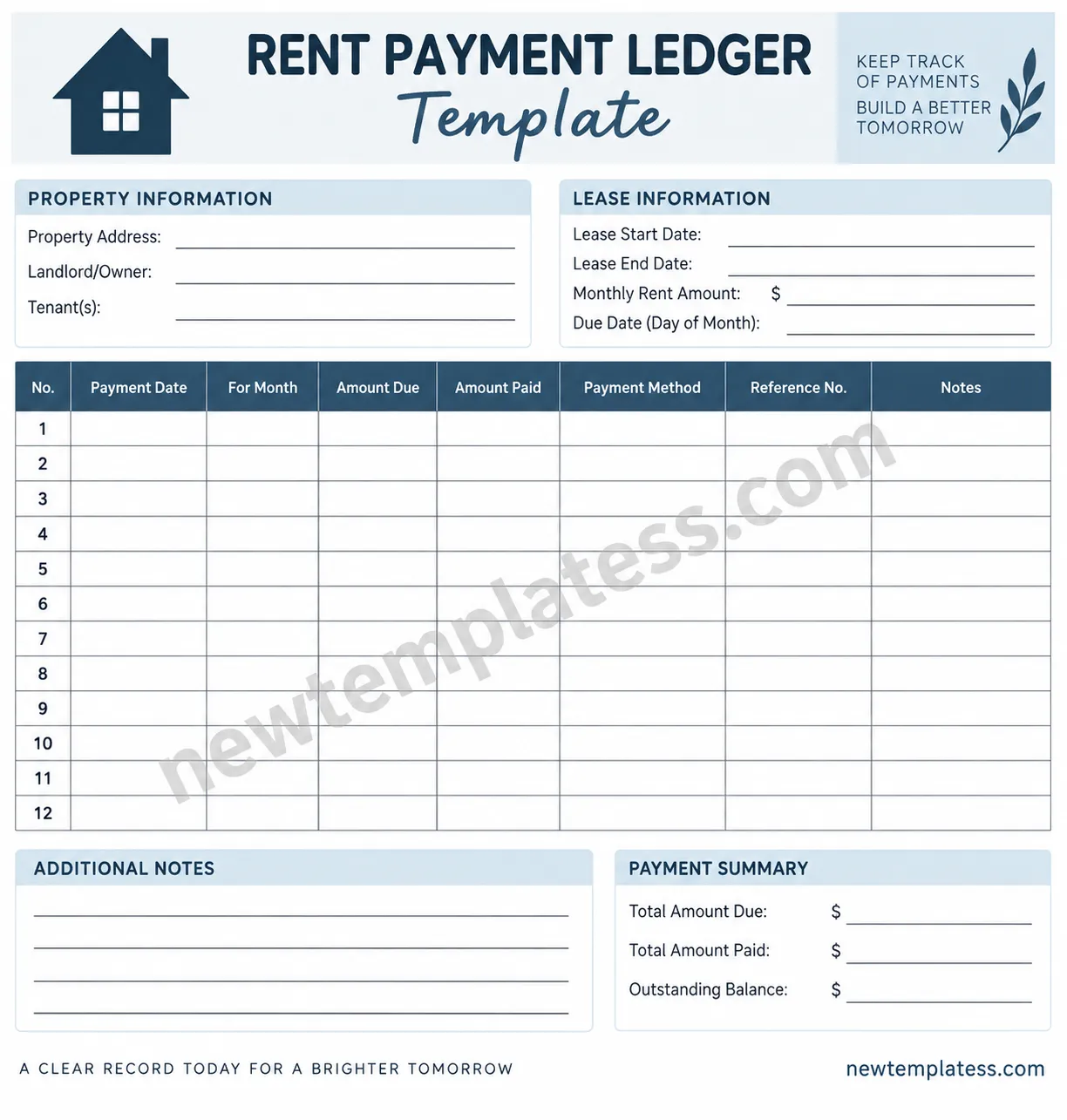
A simple ledger might contain columns for payment date, rental month, amount due, amount paid, payment method, reference number, and notes.
- Payment date: The date the payment was received.
- For month: The rental period covered by the payment.
- Amount due: The scheduled rent or applicable amount owed.
- Amount paid: The amount actually received.
- Payment method: How the tenant made the payment.
- Reference number: A check number or transaction identifier when available.
- Notes: Additional information relevant to the transaction.
This structure is flexible enough for a basic monthly rental record while still providing useful details for future reference.
Printable Rent Payment Ledger vs. Spreadsheet
Both printable and digital rent ledgers can be useful. The right choice depends on your record-keeping preferences and the number of rental transactions you manage.
Printable Ledger
A printable rent payment ledger is convenient for people who prefer handwriting records or keeping physical documents with their lease paperwork. It can be printed for each property or tenant and stored with other rental documents.
Spreadsheet Ledger
A spreadsheet can be more convenient for larger rental portfolios. Digital records can make it easier to sort transactions, calculate totals, search payment history, and maintain multiple properties in one file.
Which Format Should You Use?
For a single rental or a small number of tenants, a printable ledger may be all you need. For a larger portfolio or more complex bookkeeping requirements, a spreadsheet or property-management system may provide additional functionality.
Tips for Maintaining Accurate Rental Payment Records
Good record keeping depends on consistency. The following practices can make a rent payment ledger more useful:
- Update records promptly: Enter transactions soon after payments are received.
- Use consistent dates: Follow the same date format throughout the document.
- Separate amount due from amount paid: This makes partial payments easier to identify.
- Keep supporting documentation: Retain applicable receipts, transaction confirmations, and other records.
- Record corrections clearly: Avoid deleting historical information without documenting the change.
- Review the balance regularly: Periodic checks can help catch missing or incorrect entries.
- Protect sensitive information: Store rental records securely and limit access to authorized people.
Common Mistakes to Avoid
Even a simple ledger can become confusing if entries are incomplete or inconsistent. Avoid recording only the amount paid without noting which rental period the payment covers. Also avoid relying entirely on memory when reconstructing several months of transactions.
Another common issue is failing to distinguish between a payment date and a rent due date. These dates may be different, so recording both when relevant can provide a clearer history.
It is also helpful to avoid vague notes. Instead of writing a general comment such as “adjustment,” describe the adjustment briefly and factually so that the entry can be understood later.
Who Can Benefit From a Rent Payment Ledger?
A rent payment ledger can be useful for several types of rental situations.
- Landlords: Track payments and outstanding balances for individual tenants.
- Property managers: Maintain organized records across multiple rental units.
- Tenants: Keep an independent record of rent payments for personal files.
- Room rental arrangements: Document recurring payments in shared housing situations.
- Small property owners: Maintain straightforward rental bookkeeping without complex software.
How to Make Your Rent Ledger More Useful
The most effective ledger is one that you will actually keep updated. Keep the layout simple enough to complete quickly, but include the information needed to understand each transaction.
For recurring rent payments, consider preparing the ledger at the beginning of the lease term and entering scheduled rental periods in advance. Then update the payment date and amount as each transaction occurs.
If you manage several properties, maintain a separate ledger for each property or tenant when that makes the records easier to understand. Consistent naming and filing conventions can also make older records easier to locate.
Frequently Asked Questions About Rent Payment Ledgers
What is the difference between a rent receipt and a rent ledger?
A rent receipt generally documents an individual payment, while a rent ledger provides a running history of multiple rental transactions. A ledger may contain information from an entire lease period or another defined timeframe.
Can a tenant keep a rent payment ledger?
Yes. Tenants can maintain their own record of rental payments, including payment dates, amounts, methods, and transaction references. Keeping an independent record can make it easier to review personal payment history.
Can I use a rent payment ledger for multiple months?
Yes. A ledger is commonly used to track recurring monthly payments throughout a lease term. For longer periods, additional pages or a digital spreadsheet can be used.
Should I record partial rent payments?
Yes. If a payment is less than the amount due, recording both figures makes the remaining balance clear. Include a concise note when additional context is relevant.
Can a rent ledger replace professional accounting records?
A basic ledger can support everyday payment tracking, but it may not replace accounting records required for tax, legal, business, or regulatory purposes. Requirements vary by location and situation, so consult an appropriate professional when formal compliance records are needed.
Conclusion
A rent payment ledger is a simple but practical tool for maintaining an organized rental payment history. By recording payment dates, rental periods, amounts due, amounts paid, payment methods, and relevant notes, landlords and tenants can create a clear record of rental transactions.
Whether you prefer a printable rent ledger or a digital spreadsheet, consistency is the key. Choose a format that fits your rental situation, update it regularly, and keep supporting documentation with your records. A well-maintained ledger can make everyday rental administration more organized and help you quickly understand the payment history of a property.
