Managing investments for a client requires more than simply selecting assets and watching market prices. A well-organized client portfolio investment strategy helps investors understand where their money is allocated, how individual holdings are performing, and whether the portfolio remains aligned with financial goals. Whether you are a financial advisor, wealth manager, investment professional, or an individual managing a portfolio, having a structured system can make investment tracking much easier.
A clear client portfolio investment framework can bring together client information, investment objectives, asset allocation, holdings, performance, risk considerations, and future investment plans in one place. This makes it easier to review a portfolio regularly and identify areas that may require attention.
What Is Client Portfolio Investment?
Client portfolio investment refers to the process of managing, organizing, monitoring, and reviewing investments held on behalf of a client. A portfolio may contain several asset classes, including stocks, bonds, mutual funds, exchange-traded funds, real estate investments, cash, and other financial assets.
The purpose is not simply to track how much money has been invested. Effective portfolio management considers the client’s financial goals, investment horizon, risk tolerance, liquidity needs, and desired level of diversification.
A well-managed portfolio should make it easy to answer important questions such as:
- What investments does the client currently own?
- How much is allocated to each asset class?
- What is the current portfolio value?
- How much has the portfolio gained or lost?
- Does the current allocation match the target allocation?
- Are the investments still appropriate for the client’s objectives?
- What portfolio changes may need to be considered during the next review?
Why Effective Client Portfolio Management Matters
Investment portfolios can become difficult to manage when information is spread across multiple spreadsheets, statements, applications, and documents. A structured portfolio management process provides a consistent way to organize financial information and review investment performance.
Better Investment Organization
A centralized portfolio overview can show client information, financial goals, asset allocation, investment holdings, and performance data together. This reduces the time required to locate important information during a portfolio review.
Clearer Performance Tracking
Portfolio performance should be reviewed across appropriate periods rather than relying on a single number. Monthly, quarterly, annual, and since-inception measurements can provide different perspectives on investment results.
More Consistent Portfolio Reviews
A repeatable review process helps advisors and investors examine the same core areas each time. This can include portfolio value, asset allocation, individual holdings, investment costs, performance, risk exposure, and progress toward financial objectives.
Key Components of a Client Portfolio Investment Plan
A practical client portfolio investment plan should contain several essential components. These sections create a complete picture of the client’s current investment position and future objectives.
1. Client Information
Start with basic information needed to identify and understand the portfolio. Depending on the intended use, this section can include the client’s name, contact information, advisor, review date, investment horizon, and relevant portfolio notes.
2. Financial Goals
Investment decisions should be connected to measurable financial goals. Common objectives include retirement planning, education funding, purchasing property, generating future income, or preserving capital.
Clearly documenting these goals provides context for evaluating whether the current portfolio remains appropriate for the client’s long-term plans.
3. Asset Allocation
Asset allocation describes how portfolio capital is distributed among different asset classes. For example, a portfolio might contain stocks, bonds, mutual funds, real estate, and cash equivalents.
Tracking both the current and target allocation can help identify differences that may warrant a portfolio review. Allocation percentages should always be considered in relation to the client’s objectives, risk profile, and investment strategy.
4. Investment Holdings
A detailed holdings table can include the investment or fund name, asset class, number of shares or units, current price, market value, gain or loss, and return percentage.
This information makes it easier to see which holdings contribute most significantly to the overall portfolio and which positions may require further analysis.
5. Portfolio Performance
Performance tracking provides a historical view of how the portfolio has changed. Useful measurements may include portfolio value, investment cost, gain or loss, and percentage return over selected periods.
Performance should be interpreted carefully because market conditions, contributions, withdrawals, fees, taxes, and changes in portfolio allocation can all affect reported results.
6. Future Investment Plan
A portfolio review can also document planned actions, target dates, and potential future contributions. This creates a simple roadmap for future portfolio discussions and helps keep investment activities connected to the client’s broader financial objectives.
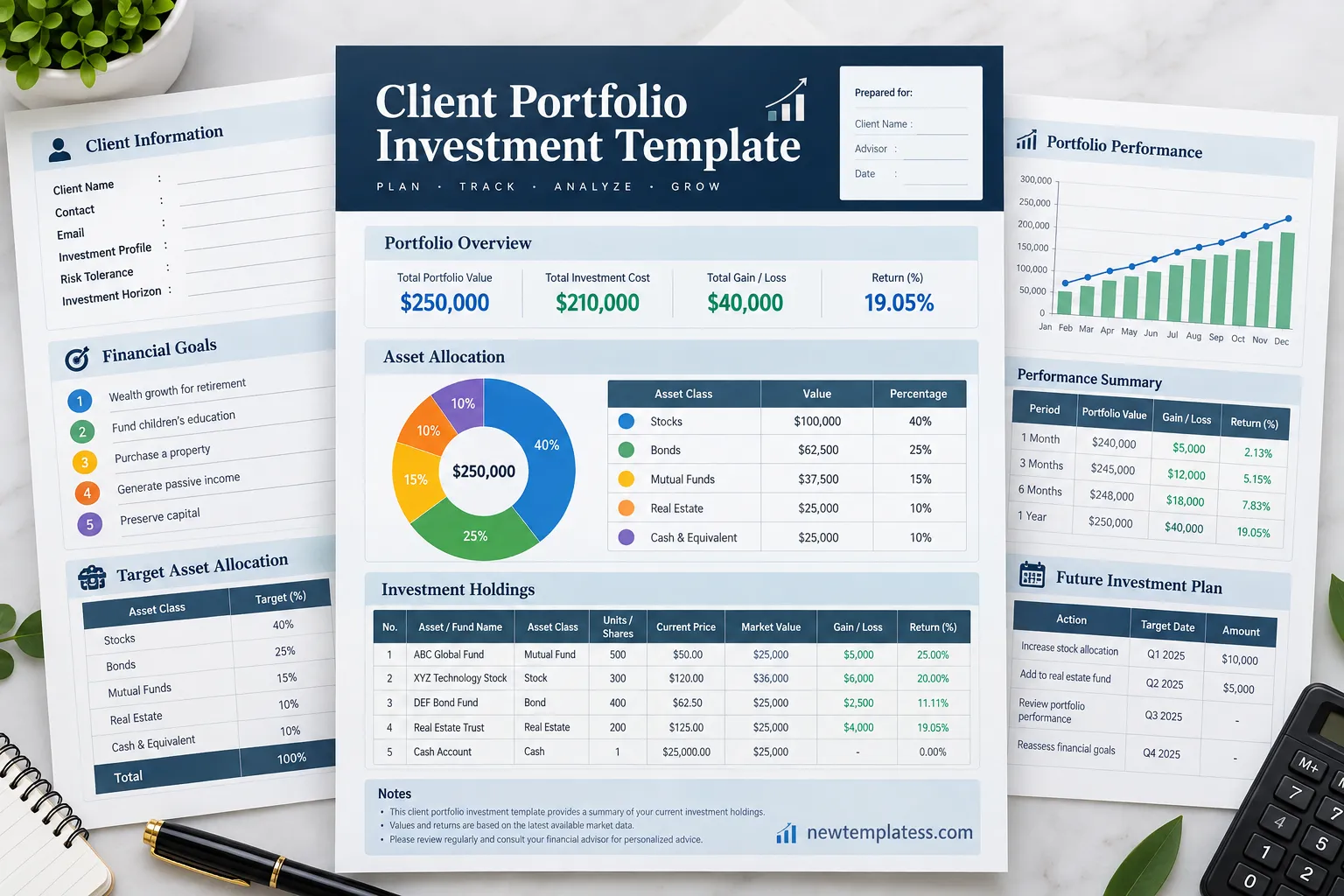
How to Use a Client Portfolio Investment Template
A portfolio template can simplify the process of collecting and presenting investment information. Instead of building a portfolio report from scratch for every review, you can use a consistent structure and update the relevant figures.
Step 1: Enter Client Details
Begin by recording the client information and the date of the portfolio review. Keeping the review date visible is useful when comparing reports over time.
Step 2: Define Investment Goals
Document the primary financial goals associated with the portfolio. Include a target date or time horizon when appropriate. This provides a reference point for future portfolio reviews.
Step 3: Record Current Holdings
Add each investment position to the holdings section. Record the current quantity, price, market value, and relevant performance figures. Update the information using reliable and current account or market data.
Step 4: Review Asset Allocation
Calculate the percentage of the portfolio represented by each major asset class. Compare the current allocation with the intended target allocation and investigate meaningful differences.
Step 5: Evaluate Performance
Review returns across suitable time periods. Avoid judging a long-term investment strategy solely on short-term market movements. Consider the client’s time horizon and investment objectives when interpreting performance.
Step 6: Document Next Actions
Record potential follow-up items, portfolio review dates, planned contributions, research requirements, or other actions that need to be discussed. This turns the portfolio report into a practical working document rather than simply a historical record.
Practical Tips for Managing Client Investment Portfolios
- Keep information current: Update portfolio values and holdings using the latest available account or market information.
- Use consistent categories: Apply the same asset-class definitions across portfolio reviews to make comparisons easier.
- Separate facts from assumptions: Clearly distinguish current portfolio data from projections, targets, and planned actions.
- Review allocation regularly: Changes in market values can alter portfolio weightings over time.
- Connect investments to goals: Portfolio performance has more meaning when considered alongside the client’s financial objectives.
- Keep records organized: Use consistent file names, review dates, and portfolio versions to make historical comparisons easier.
- Protect sensitive information: Investment reports may contain confidential financial information, so use appropriate security and access controls.
Client Portfolio Investment and Risk Management
Risk management is an important part of portfolio review. A portfolio’s risk profile depends on factors such as asset allocation, concentration, investment type, market exposure, liquidity, and the client’s ability and willingness to tolerate fluctuations.
One useful approach is to look beyond individual investments and examine the portfolio as a whole. Several holdings may appear different but still have similar underlying market exposure. Reviewing the portfolio at the total-portfolio level can therefore provide a broader perspective.
Risk considerations should also be reviewed when a client’s financial circumstances or goals change. A portfolio designed for a long-term objective may require a different approach from one intended to meet a near-term financial need.
Common Mistakes in Client Portfolio Management
Focusing Only on Returns
Return is important, but it is only one part of portfolio analysis. Allocation, diversification, risk, liquidity, costs, and progress toward financial goals should also be considered.
Ignoring Portfolio Drift
Asset prices change over time, which can cause actual portfolio percentages to move away from their intended targets. Regularly comparing current and target allocations can help identify portfolio drift.
Using Outdated Information
A portfolio report becomes less useful when its market values, holdings, or client objectives are outdated. Establishing a regular review schedule can help maintain accurate records.
Overcomplicating the Report
A useful client portfolio investment report does not need to contain every possible financial metric. The most effective reports emphasize information that supports understanding, review, and decision-making.
Benefits of a Printable Client Portfolio Investment Template
A printable template can be particularly useful for portfolio review meetings, internal documentation, financial planning discussions, and personal investment records. A clean layout allows important information to be scanned quickly without requiring complicated software.
A well-designed template can combine portfolio summary information with detailed investment holdings, asset allocation, performance measurements, financial goals, and future planning. This creates a practical reference document that can be updated as the portfolio changes.
For advisors and investment professionals, a consistent template can also help create a standardized reporting workflow. For individual investors, it can provide a simple way to understand the overall structure of an investment portfolio.
How Often Should a Client Portfolio Be Reviewed?
The appropriate review frequency depends on the client’s circumstances, investment strategy, portfolio complexity, and applicable professional requirements. Some portfolios may benefit from regular scheduled reviews, while significant changes in financial circumstances may justify an additional review.
Rather than focusing exclusively on a fixed calendar schedule, portfolio reviews should also consider important changes such as a new financial goal, major contribution or withdrawal, change in investment horizon, substantial allocation change, or significant change in the client’s circumstances.
Final Thoughts on Client Portfolio Investment
A structured client portfolio investment process makes it easier to organize holdings, monitor performance, evaluate asset allocation, and connect investment decisions with financial goals. A clear portfolio template can bring these elements together in a format that is easy to review, update, print, and share when appropriate.
The most useful portfolio reports focus on accurate information, clear organization, relevant performance measures, and practical next steps. By maintaining consistent records and reviewing the portfolio in the context of the client’s goals and risk considerations, investors and financial professionals can create a more organized approach to ongoing portfolio management.
Note: A portfolio template is an organizational tool and is not a substitute for personalized financial, investment, tax, or legal advice. Investment decisions should be evaluated based on the individual circumstances of the client and, where appropriate, with a qualified professional.
