A strong training consulting proposal Template is more than a document that describes a course. It is a structured business case that connects a client’s current challenge with a specific training solution, measurable outcomes, delivery method, schedule, investment, and next step. When a client is comparing several consultants, clarity often matters as much as presentation. The proposal should make it easy to understand what will happen, why the approach fits the organization, what will be delivered, how progress will be evaluated, and what the engagement will cost.
Current consulting proposal guidance consistently emphasizes a client-centered structure built around the problem, proposed approach, scope, deliverables, timeline, pricing, assumptions, and acceptance process. Training proposals add another layer: learning objectives, audience definition, curriculum, delivery methodology, learning evaluation, and reinforcement. Combining these elements produces a document that is persuasive without becoming vague or overly promotional.
The most useful template is therefore not the longest one. It is a reusable framework that can be adapted to leadership development, technical training, onboarding, compliance education, customer service, communication, sales enablement, management development, or other professional learning engagements. The examples and visual references below show how the structure can be translated into a polished document while keeping the substance focused on the client’s needs.

What a training consulting proposal should accomplish
A training consulting proposal should answer the client’s most important decision questions in a logical sequence. First, it should demonstrate that the consultant understands the business situation. Second, it should explain what the proposed engagement will accomplish. Third, it should make the scope concrete enough that both parties can recognize what is included and what is outside the engagement. Finally, it should connect the investment to the work and outcomes rather than presenting a fee without context.
This distinction is important because a training consultant is usually selling expertise, design capability, facilitation, and a path toward improved performance rather than simply selling hours in a classroom. A proposal that only lists topics such as communication, leadership, or project management does not explain why those subjects matter to the client. A stronger document connects each topic to a stated business or workforce need and identifies the evidence that will show whether the intervention is working.
The document also creates an early alignment mechanism. If the client believes the engagement includes curriculum design, live delivery, participant materials, manager coaching, and post-training evaluation, those expectations should be visible before approval. Likewise, if the consultant assumes that the client will provide participant lists, internal data, subject-matter experts, facilities, or timely review, those dependencies should be stated clearly. Good proposal structure reduces ambiguity before ambiguity becomes a scope dispute.

Start with the client’s situation and desired outcome
The opening section should focus on the client rather than beginning with a long biography of the consultant. A concise situation statement can describe the organizational context, the performance challenge, the affected audience, and the reason the training is being considered now. This makes the proposal feel specific rather than recycled. If the engagement follows a discovery meeting, the wording should reflect what the client actually described during that conversation.
The next step is to define the desired outcome. Training objectives should describe what participants are expected to know, do, demonstrate, or apply after the engagement. Organizational outcomes can sit above those learning objectives. For example, a leadership program might aim to strengthen manager capability, while the learning objectives could focus on coaching conversations, delegation, feedback, and decision-making. Separating these levels prevents the proposal from confusing course content with business results.
A useful executive summary can then connect the situation, outcome, proposed solution, duration, and investment in a few focused paragraphs. It should be possible for a decision-maker to understand the essence of the engagement without reading every page. Detailed methodology belongs later in the document. The summary should create enough confidence to continue reading while remaining factual and specific.

Define the training need before presenting the solution
A training proposal becomes stronger when it explains how the need was identified. Depending on the engagement, a consultant may use stakeholder interviews, questionnaires, existing performance information, job-role analysis, observation, document review, or a workshop with managers. The proposal does not need to reproduce the entire diagnostic process, but it should summarize the relevant findings and show how those findings shaped the proposed intervention.
Needs analysis is especially important when the client’s stated request is broad. A request for “leadership training,” for example, can represent very different problems: newly promoted supervisors may need foundational management skills, experienced managers may need coaching capability, or senior leaders may need a common operating model. The proposal should identify the specific capability gap rather than assuming that a generic course will solve every problem associated with the label.
The needs section can also distinguish training needs from issues that training alone cannot solve. If performance is affected by unclear processes, missing tools, conflicting incentives, insufficient staffing, or poor systems, those factors should be acknowledged. A credible consultant does not promise that training will fix a problem that actually requires organizational or operational change. Instead, the proposal can explain which factors the training engagement will address and which conditions remain client responsibilities.

Build measurable training objectives
Objectives give the proposal a practical backbone. Strong objectives use observable language and describe the capability participants should demonstrate. Instead of saying that participants will “understand leadership,” a stronger objective might state that participants will conduct structured coaching conversations, establish performance expectations, or use a defined feedback framework. The exact wording should reflect the engagement and the audience rather than follow a generic formula.
Objectives should also connect to the client’s priorities. If the business problem involves inconsistent customer interactions, the objectives might focus on communication standards, service recovery, questioning techniques, and escalation handling. If the challenge involves new managers, the objectives might focus on delegation, feedback, prioritization, and team development. This alignment makes the proposal easier for an executive or procurement reviewer to evaluate.
When possible, separate learning measures from business measures. A participant assessment may show whether knowledge or skill improved, while a later operational measure may indicate whether the capability is being used. The proposal should avoid promising a business result that depends on many factors outside the consultant’s control. Instead, it should describe what the consultant will measure and what evidence the client will provide for broader performance evaluation.


Design the curriculum and delivery methodology
The curriculum section should show how the proposed training will move participants from the current state toward the desired capability. A simple module sequence can include topic names, learning objectives, estimated duration, learning activities, and expected outputs. The level of detail should match the buying decision. A small workshop may need only a concise agenda, while a multi-phase organizational development engagement may require a more detailed curriculum map.
Delivery methodology should explain how learning will occur. Depending on the situation, this might involve instructor-led sessions, facilitated workshops, coaching, simulations, case studies, peer practice, guided exercises, asynchronous learning materials, manager reinforcement, or blended delivery. The proposal should explain why the selected method fits the audience and objectives instead of presenting a list of fashionable training techniques without rationale.
A well-designed curriculum also considers transfer to the workplace. Participants may understand a concept during a session but fail to use it later if the environment does not reinforce the behavior. The proposal can therefore include job aids, practice assignments, manager discussion guides, follow-up coaching, refresher sessions, or post-session reflection. These elements should be clearly priced or identified as included deliverables so expectations remain transparent.


Turn scope into specific deliverables
Scope and deliverables should be closely related but not treated as identical. Scope describes the work the consultant will perform, while deliverables describe the tangible outputs the client will receive. For a training consulting engagement, scope could include needs assessment, curriculum design, facilitator preparation, session delivery, evaluation, and reinforcement. Deliverables could include a needs assessment summary, curriculum outline, facilitator guide, participant workbook, presentation materials, evaluation report, and recommendations.
Specific deliverables make a proposal easier to approve because the client can visualize what is being purchased. Each deliverable should have an identifiable format or acceptance point when appropriate. For example, “training materials” is vague, while “participant workbook covering six modules and accompanying practice exercises” is much clearer. The same principle applies to consulting reports, assessments, coaching sessions, and post-training recommendations.
Out-of-scope items deserve equal attention. A proposal can state that travel, venue costs, translation, additional revisions, extra participant cohorts, custom technology development, or ongoing support are excluded when those items are not part of the quoted engagement. Specific exclusions are more useful than a generic statement that “additional work may incur charges.” They help both sides understand where the boundary sits.

Make the timeline realistic
A training proposal timeline should show more than the dates of live sessions. It should account for discovery, needs assessment, curriculum design, client review, revisions, preparation, delivery, evaluation, and follow-up when those activities are part of the engagement. A phased timeline helps the client see the sequence and understand which decisions or approvals are required before the next stage begins.
Milestones are particularly useful for larger consulting engagements. A milestone might mark completion of the needs assessment, approval of the curriculum, launch of a pilot cohort, completion of the main delivery phase, or presentation of the evaluation report. The proposal should avoid artificial precision when the schedule depends on client decisions. Instead, identify dependencies such as review turnaround, participant availability, data access, or stakeholder interviews.
The timeline can be presented as a simple sequence, a calendar-style schedule, or a milestone graphic. The format matters less than readability. A decision-maker should be able to identify the engagement duration, major phases, key outputs, and major client commitments at a glance. If the proposal is also used internally during delivery, the timeline can become a practical reference for project management.

Explain evaluation and success measurement
Evaluation should be designed around the decisions the client needs to make. A proposal may include participant reaction feedback, knowledge checks, skills demonstrations, observation, manager feedback, follow-up questionnaires, or operational measures. The right combination depends on the objectives. There is little value in collecting extensive data that will never be reviewed or connected to a decision.
A useful evaluation section specifies what will be measured, when it will be measured, who will provide the information, and what the consultant will deliver afterward. For example, a consultant might conduct a baseline assessment before training, a knowledge or skills check immediately afterward, and a follow-up review several weeks later. If the client wants business performance measures, the proposal should identify which existing metrics will be considered and who owns those data.
Evaluation also creates a stronger business case for future training. A client can use the evidence to decide whether to repeat the program, expand it, revise the curriculum, or introduce additional reinforcement. The consultant should avoid claiming guaranteed improvement. Instead, the proposal should define a credible measurement process and explain how the findings will inform recommendations.

Present consultant qualifications without overwhelming the client
Credentials matter, but they should support the proposed solution rather than dominate the proposal. Include qualifications that are directly relevant to the client’s problem: subject expertise, facilitation experience, instructional design capability, industry experience, certifications when relevant, and examples of comparable engagements. A short profile is usually more useful than a long career history.
Case studies can strengthen credibility when they are specific and verifiable. Explain the type of client, the challenge addressed, the work performed, and the resulting deliverables or documented outcomes. Do not disclose confidential client information simply to make a case study sound impressive. If numerical results are presented, they should come from records that the consultant can substantiate.
For a multi-consultant engagement, define roles clearly. The proposal can identify who leads discovery, who designs the curriculum, who facilitates sessions, who handles evaluation, and who serves as the primary client contact. Clear responsibility reduces confusion and reassures the buyer that the proposed team has been assembled for the specific engagement rather than copied from a generic proposal.


Structure pricing around scope and value
Pricing is easier to evaluate when it follows a clearly defined scope. A consultant may price a project as a fixed fee, daily or hourly engagement, phased project, retainer, or another commercially appropriate structure. The proposal should state what the price covers and how payment is scheduled. If expenses are treated separately, that should be clear before approval.
A fixed project fee can work well when the scope and deliverables are stable. Time-based pricing can be more appropriate when discovery is uncertain or the client needs flexible advisory support. A phased structure can be useful when the client wants to authorize discovery first and decide later whether to proceed with implementation. The proposal should explain the logic behind the selected structure without turning the pricing section into a lengthy sales argument.
When the engagement contains optional components, identify them clearly. For example, the core package might include needs assessment, curriculum design, and two delivery days, while an optional reinforcement package could include coaching and a later evaluation. This approach gives the client control while keeping the main proposal easy to understand.


Choose the right document format
Different clients prefer different document formats, but the content should remain consistent. A consultant researching a training consulting proposal template word format may want an editable working document for internal revisions. Someone searching for a training consulting proposal template pdf may prefer a fixed presentation format for review and approval. The important principle is to keep the final version stable once it has been approved.
A training proposal template word document is useful when the consultant expects substantial text editing, collaboration, or repeated adaptation. A training proposal template ppt format can work when the proposal will be presented live and the buyer expects a visual narrative. A print proposal template for consulting is useful when the proposal will be reviewed as a physical document, provided that typography, margins, page breaks, and charts remain legible on paper.
An online proposal template for training can be useful for teams that need collaborative review, while an online proposal template for consulting can support a more interactive presentation of scope, milestones, and commercial terms. Format should serve the decision process rather than dictate it. A polished design cannot compensate for unclear scope or unsupported claims.


Adapt the template to the type of consulting engagement
A proposal template for consulting services should be adapted according to the nature of the engagement. Training strategy consulting may emphasize assessment, curriculum architecture, capability frameworks, and implementation planning. A facilitation engagement may focus more heavily on session design, participant materials, delivery logistics, and evaluation. A leadership development engagement may include coaching, manager practice, and reinforcement after formal training.
The same principle applies to the training plan proposal template. A plan should identify the target population, learning goals, modules, delivery schedule, resources, responsibilities, and evaluation approach. It can sit inside the larger consulting proposal or become a separate implementation document after approval. Keeping the commercial proposal and operational plan conceptually distinct can make both documents easier to maintain.
Consultants who want a reusable consulting proposal writing template should build modular sections rather than one enormous document. A core framework can contain the executive summary, client situation, objectives, methodology, scope, deliverables, timeline, pricing, assumptions, credentials, and acceptance. Modules for different training specialties can then be inserted only when relevant. This keeps proposals focused and prevents unnecessary pages.


Use visual structure to make the proposal easier to scan
Visual design should clarify information rather than compete with it. A proposal can use consistent headings, short sections, restrained color, milestone graphics, process diagrams, and carefully formatted financial information. Visual hierarchy is particularly useful for executives who may scan the document before deciding whether to read it in detail.
Charts and diagrams should only be used when they communicate something more clearly than prose. A timeline graphic can make dependencies obvious. A process diagram can show the relationship between assessment, design, delivery, and evaluation. A scope graphic can distinguish included work from optional work. These visuals should use labels that remain understandable without a verbal explanation from the consultant.
Document design should also support accessibility and practical review. Use readable typography, sufficient contrast, logical page order, consistent terminology, and meaningful headings. Avoid filling pages with decorative elements that push important information into small text. A professional proposal is ultimately judged by how easily the reader can understand and act on it.



Common mistakes that weaken training consulting proposals
One of the most common problems is writing a proposal that could have been sent to any organization. Generic language may save drafting time, but it also signals that the consultant has not connected the solution to the client’s specific situation. Personalization does not mean rewriting every sentence. It means reflecting the client’s problem, audience, objectives, constraints, and decision criteria throughout the document.
Another problem is describing activities without defining outputs. “Conduct training” is an activity; it does not tell the client what preparation, materials, sessions, assessments, or follow-up are included. Similarly, “provide consulting support” is too broad unless the proposal explains the workstreams and expected deliverables. Specificity protects both the client and the consultant.
A third mistake is presenting price before establishing context. A fee becomes difficult to evaluate when the reader has not yet seen the scope, deliverables, schedule, and value logic. Pricing should follow enough information for the buyer to understand what the investment covers. At the same time, the consultant should avoid excessive justification that makes the price appear uncertain or negotiable by default.
Another weakness is promising outcomes that cannot reasonably be controlled. Training can support capability development, but organizational performance also depends on leadership behavior, processes, technology, incentives, workload, and other conditions. A proposal is more credible when it identifies those dependencies instead of promising guaranteed business results.

Practical Solution
Start by creating one master training consulting proposal Template with clearly labeled placeholders for the client name, problem statement, objectives, audience, methodology, scope, deliverables, timeline, investment, assumptions, team, evaluation, and acceptance. Keep the master structure stable, but customize the wording and modules for every engagement. This approach provides consistency without allowing the proposal to become generic.
Next, conduct a short discovery process before finalizing the proposal. Capture the client’s current situation, desired outcomes, audience, decision-maker, timeline, budget considerations, constraints, existing materials, and measures of success. Then map each discovery finding to a proposal section. If a requirement cannot be connected to a deliverable, timeline, assumption, or evaluation measure, revisit the scope before sending the document.
Then build the proposal in this sequence: client situation, desired outcomes, proposed approach, curriculum, scope, deliverables, timeline, evaluation, team qualifications, investment, assumptions, and next steps. This order allows the buyer to understand value before reviewing commercial details. It also gives the consultant a logical framework for defending the proposed fee because the investment follows clearly defined work.
Finally, create versions suited to the client’s review method. A consultant may search for a training consulting proposal template free or a training consulting proposal template free download when looking for a starting structure, but the real value comes from adapting the framework to the engagement. If a client specifically needs a training consulting proposal template pdf, prepare a stable final version after internal editing. If the working process requires an editable file, retain the source version separately.
The phrase training consulting proposal template free download may describe a searcher’s preferred resource format, but consultants should evaluate any template by structure rather than by appearance alone. Likewise, training consulting proposal template free can be a useful starting point for exploring layouts, while the finished proposal should contain original, client-specific information. The goal is not to send a generic document; the goal is to create a clear record of the proposed engagement.
Before sending, perform a final quality review. Confirm that the client name is correct, objectives match the stated problem, every deliverable is understandable, exclusions are explicit, dates are realistic, pricing is internally consistent, and the acceptance step is clear. Check that the document works equally well on screen and in print when relevant. This final review often catches small inconsistencies that can undermine confidence in an otherwise strong consulting offer.

Reference Examples
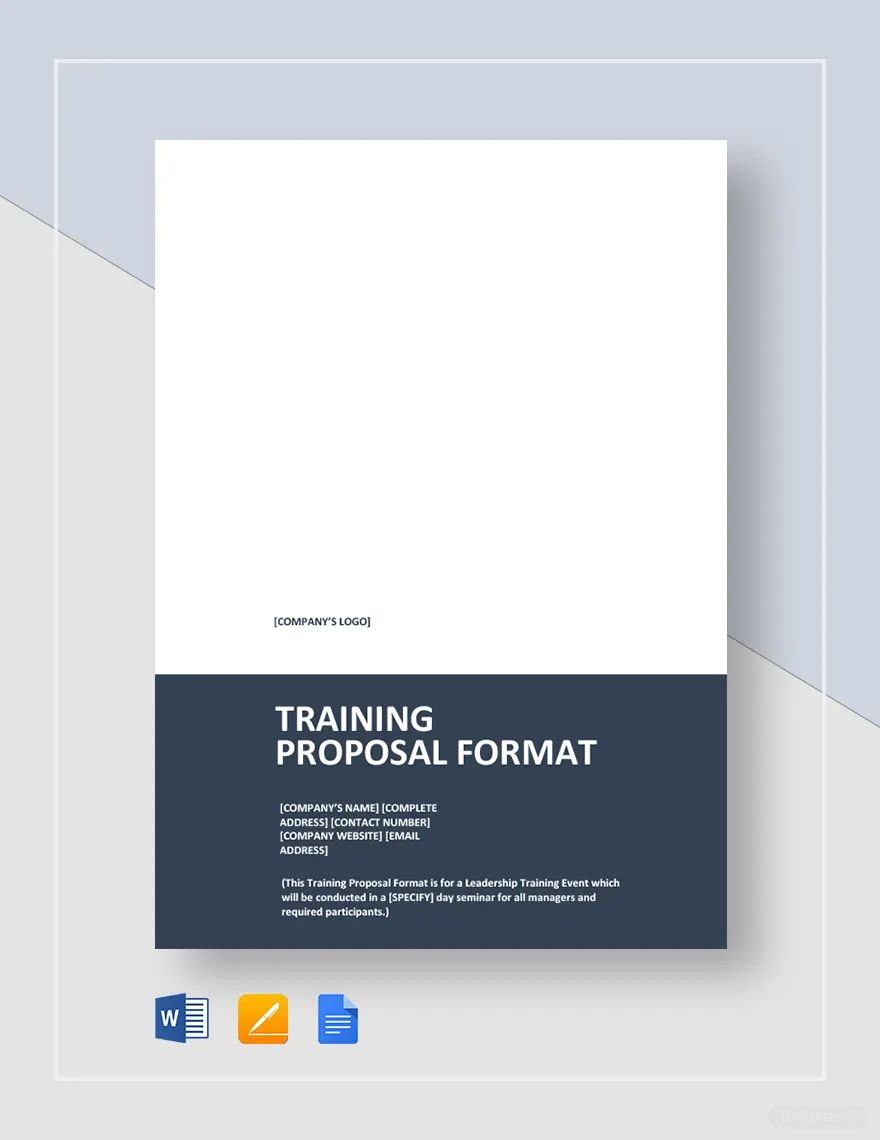
A useful training consulting proposal Template should make the relationship between client need, training solution, deliverables, schedule, and investment immediately understandable. The visual references in this section illustrate different ways to organize that information, from a formal proposal cover and workshop structure to business training layouts, budget pages, and consulting-oriented documents. They are examples of visual organization rather than universal formats. A consultant should adapt the hierarchy, terminology, scope, and commercial details to the actual engagement and the expectations of the intended decision-maker.
These references are especially useful when evaluating how much information belongs on each page and which elements deserve visual emphasis. A strong proposal can use a simple cover, a concise executive summary, a clear needs assessment, defined objectives, a curriculum or methodology section, a timeline, an investment section, and an acceptance path. Comparing different layouts can help consultants recognize which structures make complex training engagements easier to scan while keeping the central subject—the proposed training and consulting solution—clear from beginning to end.

Training Seminar Proposal Template
Source: Template.net
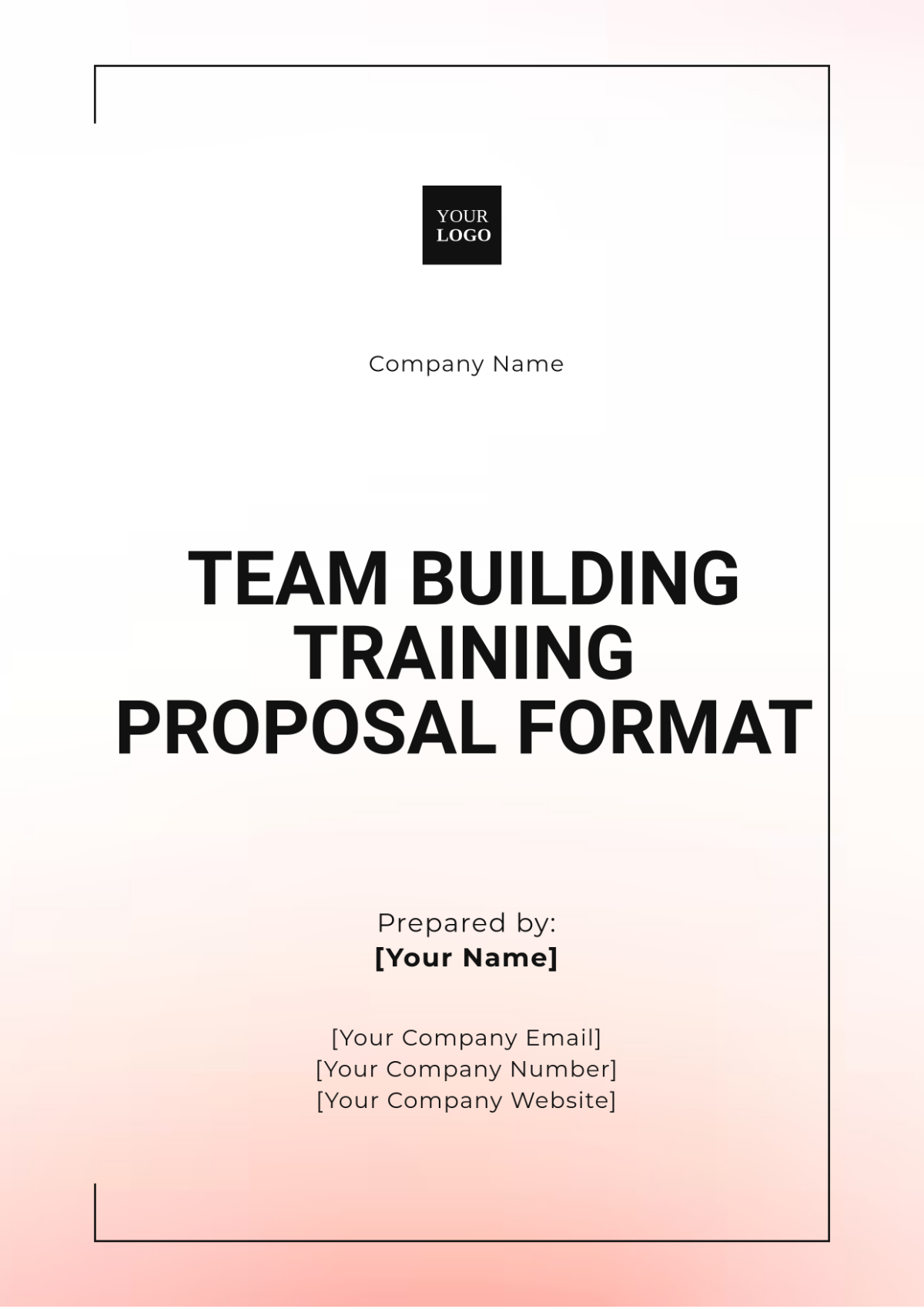
Team Building Training Proposal Format Template
Source: Template.net
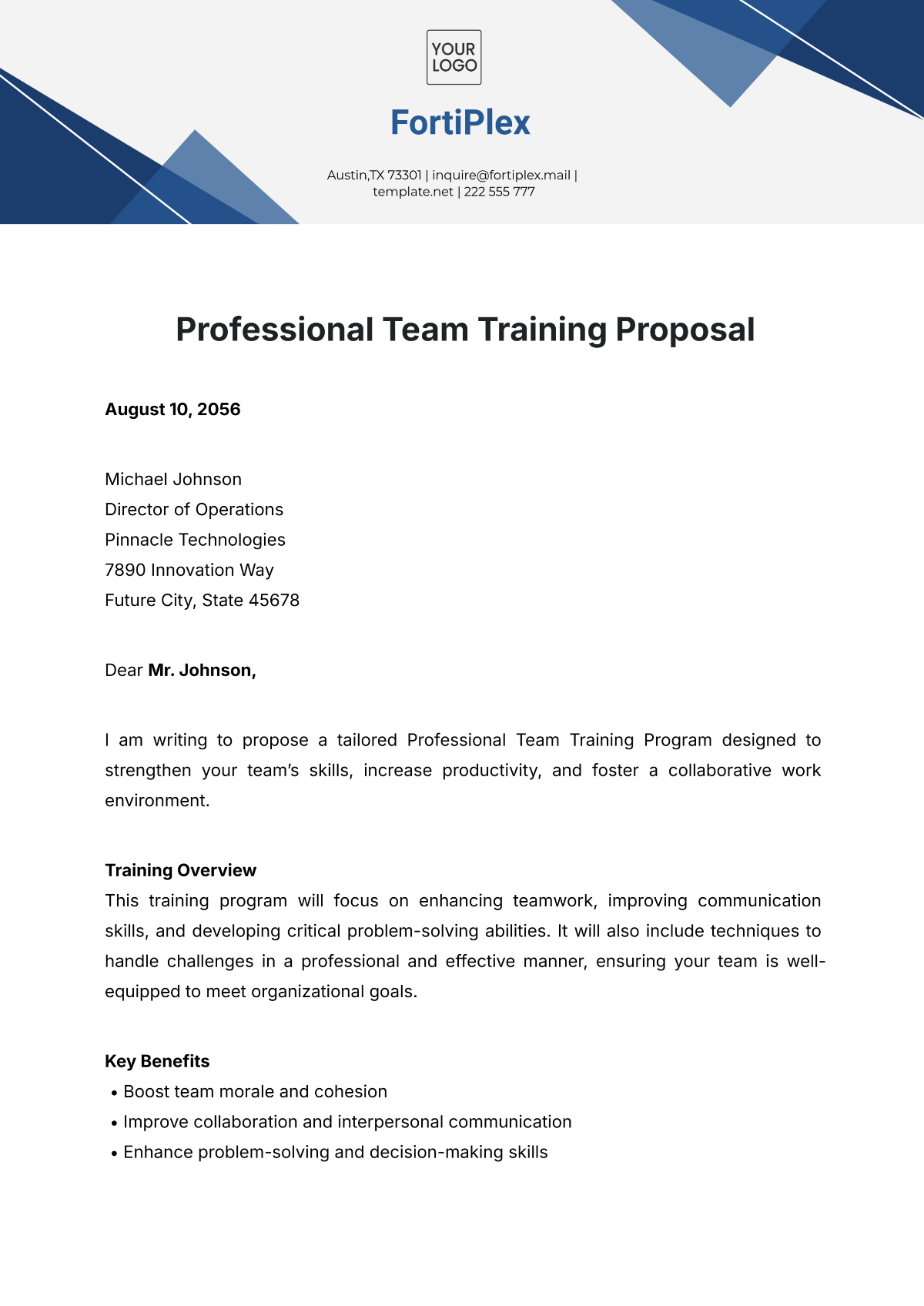
Professional Team Training Proposal
Source: Template.net
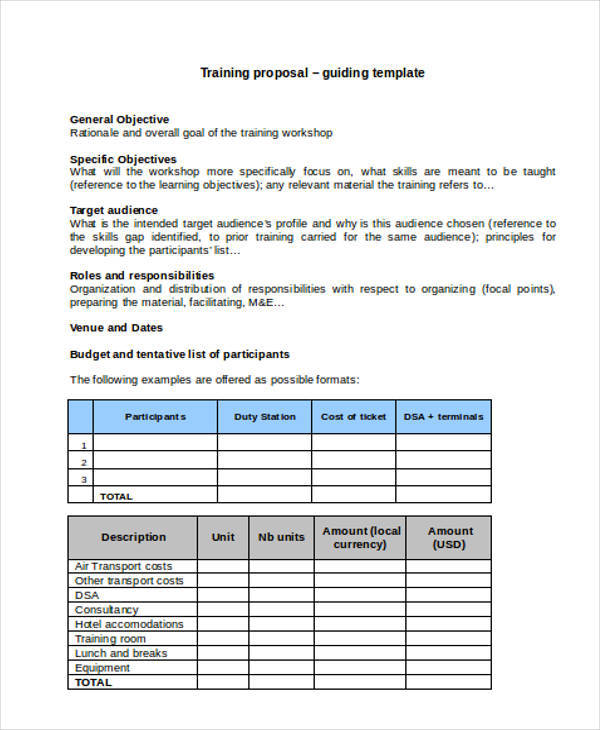
Training proposal – guiding template
Source: SampleTemplates
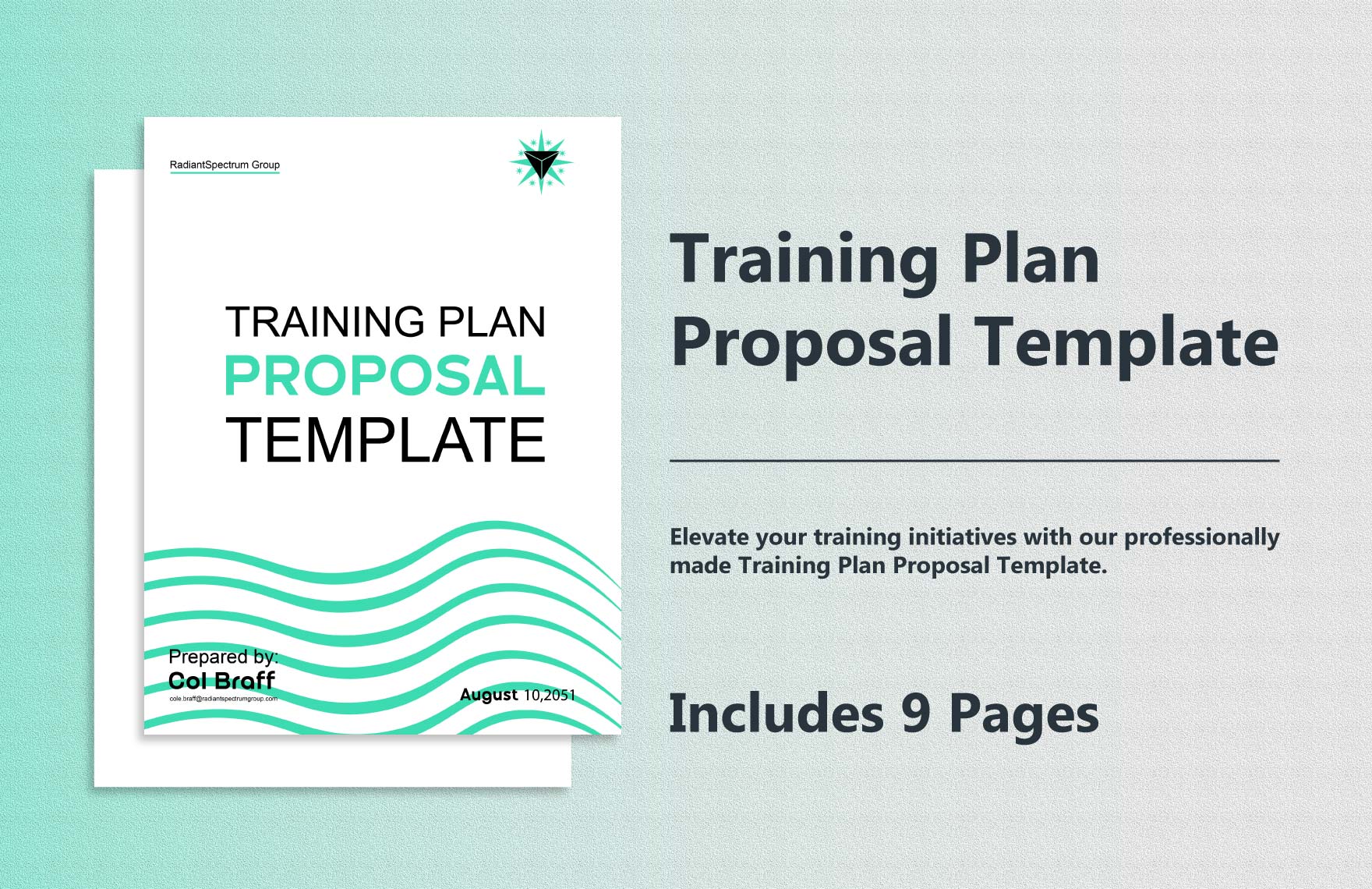
Training Plan Proposal Template
Source: Template.net
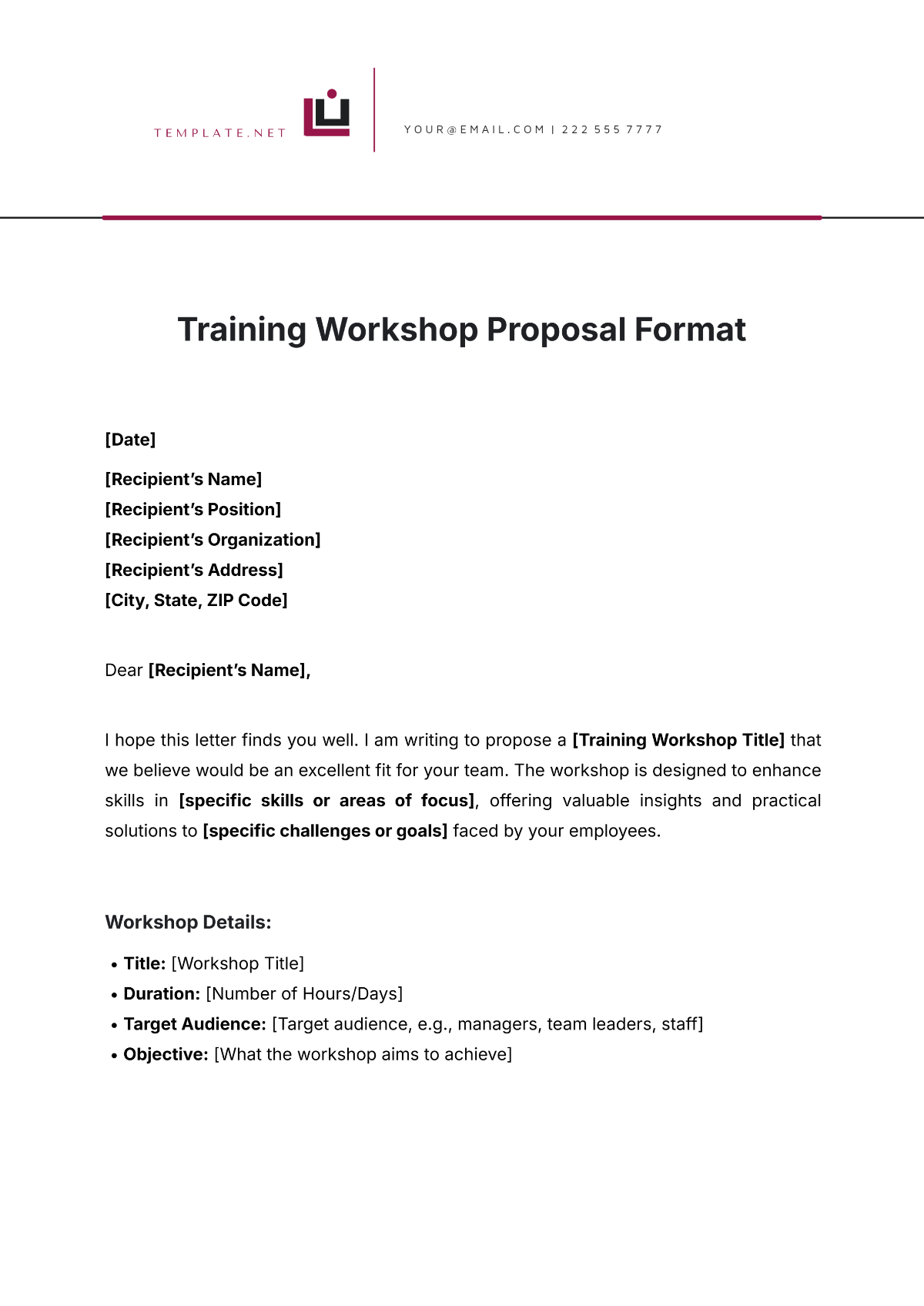
Training Workshop Proposal Format
Source: Template.net
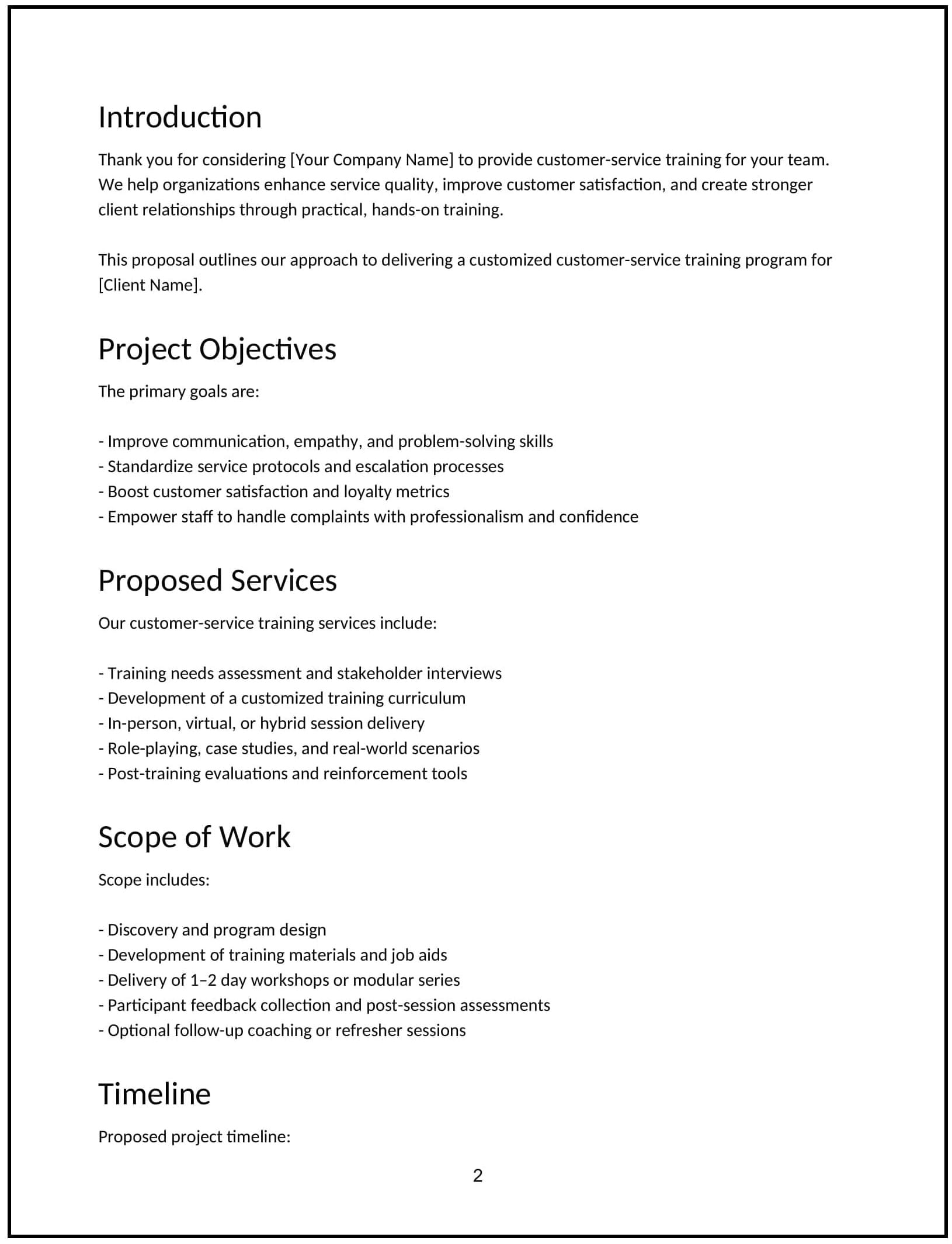
Customer-Service Training Proposal
Source: Cobrief

Training Proposal Templates Visual Reference
Source: Visme

Consultant’s Technical and Financial Proposal
Source: SlideShare
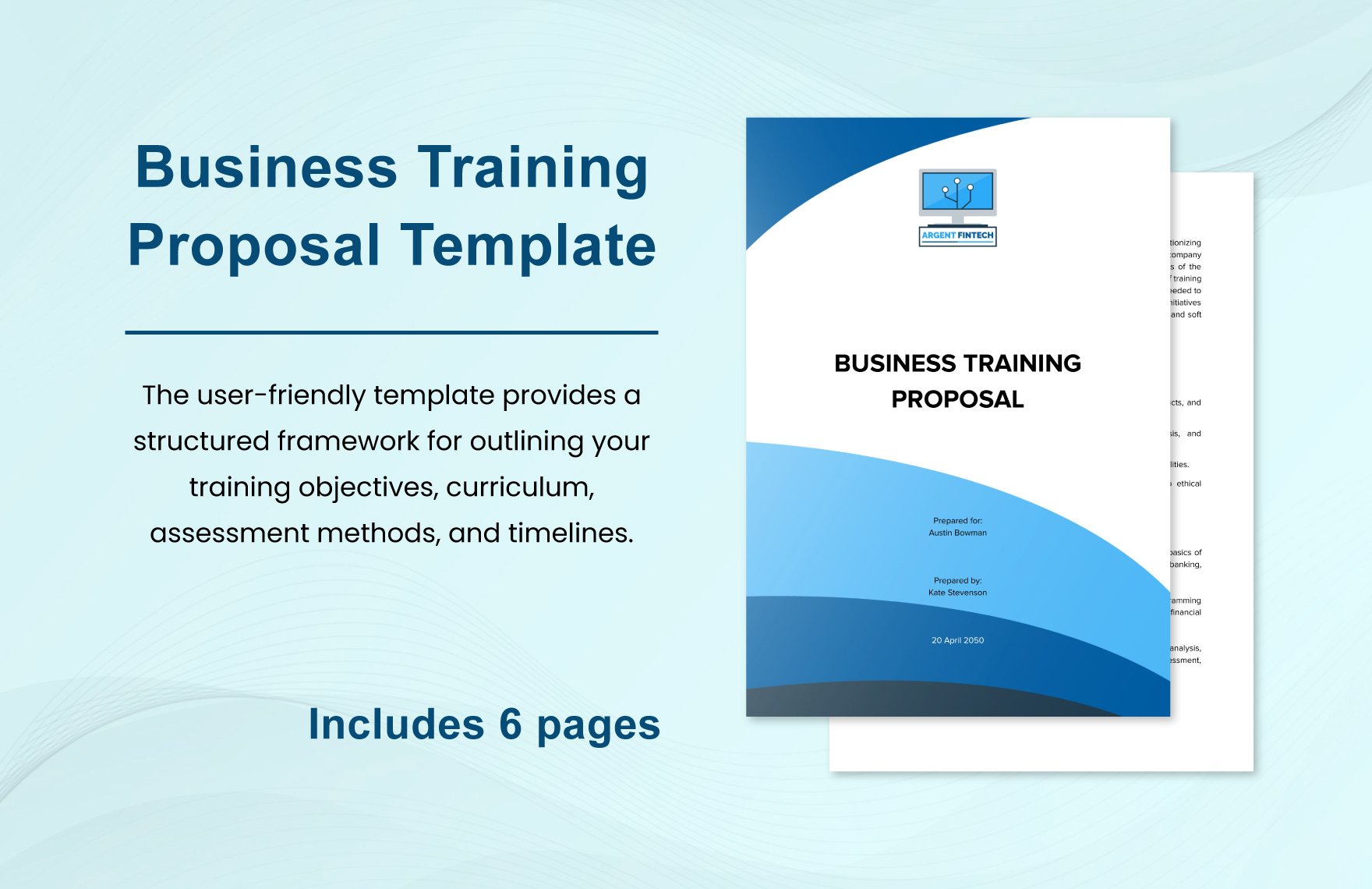
Business Training Proposal Template
Source: Template.net
