Planning an exterior home renovation can be exciting, but without a clear budget, costs can quickly get out of control. A well-organized exterior home renovation budget helps homeowners understand what they can afford, prioritize important improvements, compare contractor estimates, and prepare for unexpected expenses.
Whether you are updating your siding, replacing an old roof, installing new windows, improving landscaping, or creating a more attractive outdoor living area, careful financial planning can make the renovation much easier to manage. The goal is not simply to spend less. It is to make informed choices so that every dollar contributes to a safer, more functional, and more attractive home exterior.
What Is an Exterior Home Renovation Budget?
An exterior home renovation budget is a financial plan that estimates how much you expect to spend on improvements outside your home. It can include materials, labor, permits, professional services, equipment rentals, landscaping, disposal fees, and unexpected costs.
A useful budget should go beyond one total number. Breaking expenses into individual categories makes it easier to identify expensive areas and adjust the project before construction begins.
Common exterior renovation categories include:
- Roofing repairs or replacement
- Siding installation or repair
- Exterior painting
- Windows and exterior doors
- Driveways, walkways, and patios
- Landscaping and drainage improvements
- Decks, porches, and outdoor living spaces
- Exterior lighting
- Gutters and downspouts
- Fencing and gates
- Permits and professional services
- Cleanup and waste disposal
Organizing your renovation costs this way gives you a clearer picture of where your money is going and which improvements can be postponed if necessary.
How to Start an Exterior Home Renovation Budget
1. Define Your Renovation Goals
Before collecting prices, decide what you want the renovation to accomplish. Your goals might include improving curb appeal, fixing structural problems, increasing energy efficiency, preparing the property for sale, or creating a more comfortable outdoor space.
Start by walking around the property and making a list of everything that needs attention. Separate urgent repairs from cosmetic improvements. A damaged roof or poor drainage should generally be considered before decorative landscaping or aesthetic upgrades.
2. Set a Realistic Spending Limit
Determine how much you are comfortable spending before selecting materials or signing contracts. Your maximum budget should reflect your available savings, financing plans, and other household financial priorities.
It is also wise to avoid using every dollar of your available budget on planned work. Exterior renovations can reveal hidden problems once walls, roofing, siding, or landscaping are removed.
3. Divide the Budget Into Categories
Create separate spending allowances for each major part of the project. This makes it easier to compare estimates and identify areas where you may be overspending.
For example, a simple budget structure could include roofing, siding, windows and doors, painting, landscaping, outdoor living, lighting, permits, and miscellaneous expenses.
A printable exterior home renovation budget template can make this process much easier because you can record estimated costs, actual expenses, differences, and notes in one place.
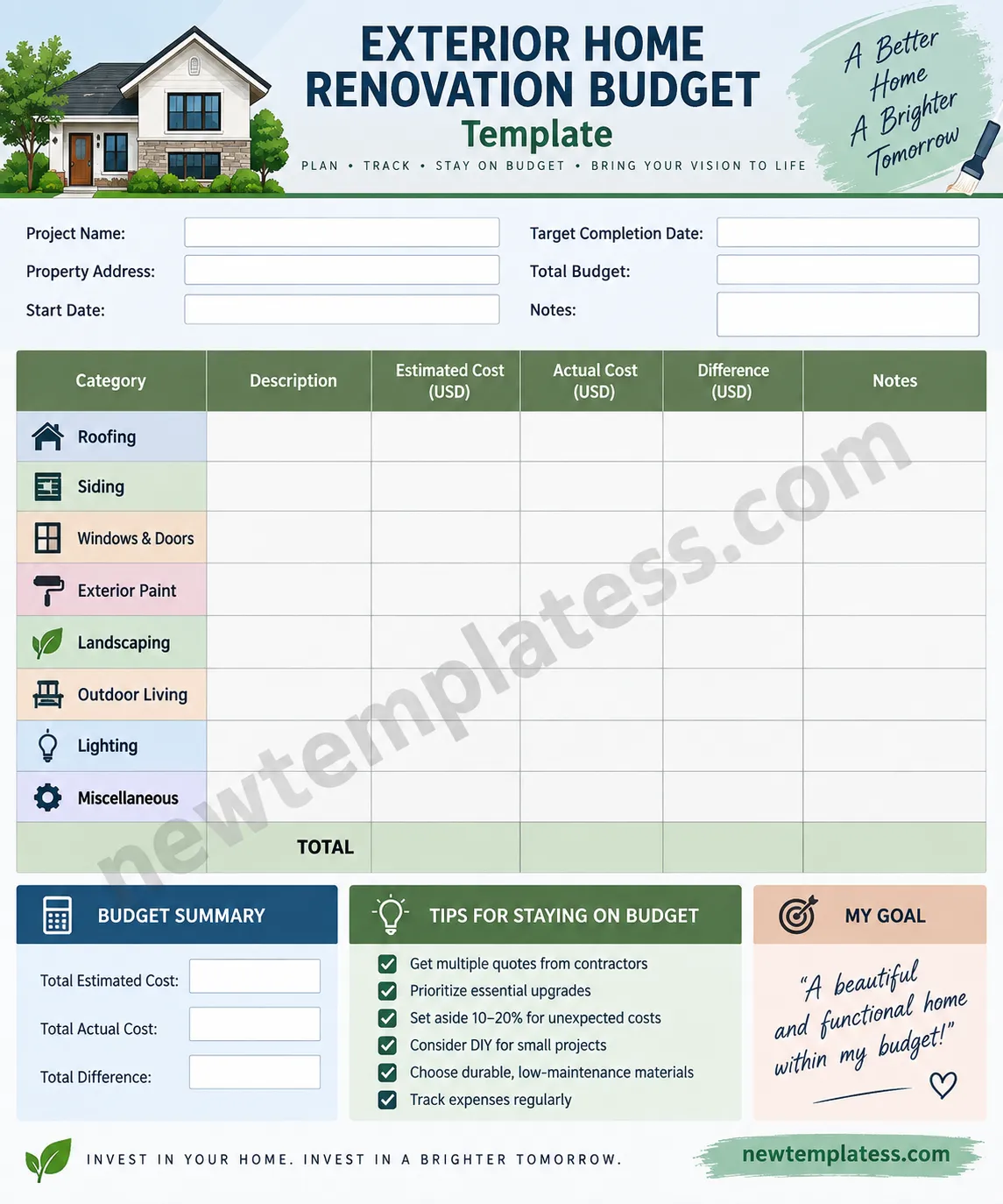
Major Exterior Renovation Costs to Include
Roofing
Roofing can be one of the most significant exterior renovation expenses. Your budget may need to account for materials, labor, underlayment, flashing, ventilation improvements, old roofing removal, and disposal.
If the roof is nearing the end of its useful life, obtain professional estimates early. A roofing problem can also lead to water damage that increases the overall renovation cost.
Siding
Siding affects both the appearance and weather protection of your home. When estimating siding costs, consider the material, square footage, removal of existing siding, insulation requirements, trim, installation, and waste.
Compare several material options rather than choosing based only on the initial purchase price. Durability, maintenance requirements, and expected lifespan can significantly affect long-term value.
Windows and Exterior Doors
Replacing windows and doors can improve appearance, security, insulation, and energy efficiency. Your budget should include the products themselves as well as installation, trim, flashing, disposal, and possible structural modifications.
Measure carefully and obtain professional recommendations before purchasing. An inexpensive product can become costly if installation requires unexpected changes to the opening.
Exterior Painting
Exterior painting costs depend on the size and condition of the house, surface preparation, paint quality, number of coats, and labor. Peeling paint, damaged wood, mildew, and cracks may need to be addressed before painting begins.
Do not budget only for paint. Proper preparation often has a major effect on the durability and final appearance of the project.
Landscaping and Drainage
Landscaping can range from simple planting improvements to complete redesigns involving trees, retaining walls, irrigation, lighting, pathways, and drainage systems.
When planning your exterior renovation budget, prioritize drainage and water management if your property has standing water, erosion, or runoff problems. Decorative landscaping should not hide an underlying drainage issue.
Build an Emergency Fund Into Your Renovation Budget
One of the most important exterior renovation budgeting tips is to reserve money for unexpected costs. Older homes can contain problems that are impossible to identify until renovation work begins.
Depending on the age and condition of the property, homeowners may choose to reserve approximately 10% to 20% of the planned project budget as a contingency. The appropriate amount depends on the project’s complexity and the condition of the existing structure.
Potential surprises can include:
- Hidden water damage
- Rotten wood beneath siding or trim
- Damaged roof decking
- Drainage problems
- Outdated electrical components
- Structural repairs
- Unexpected permit requirements
- Material price changes
- Additional demolition or disposal costs
Keeping a contingency fund does not mean you should spend it. Ideally, it remains untouched unless a genuine unexpected expense occurs.
How to Save Money on an Exterior Home Renovation
Get Multiple Contractor Estimates
Request estimates from several qualified contractors for major projects. Ask each contractor to explain what is included, which materials are specified, how long the work should take, and whether permits or cleanup are included.
Do not compare estimates based only on the final price. A lower quote may exclude important services or use different materials. Comparing the details of each proposal provides a more meaningful picture of the actual cost.
Prioritize Repairs Over Cosmetic Upgrades
If your budget is limited, address problems that affect safety, weather protection, or structural integrity first. Cosmetic improvements can often be completed later.
For example, fixing a leaking roof is generally more urgent than installing decorative exterior lighting. Once essential repairs are complete, you can use the remaining budget for appearance and lifestyle improvements.
Choose Durable, Low-Maintenance Materials
The cheapest material is not always the least expensive option over time. Consider how often a product needs painting, sealing, cleaning, repairing, or replacing.
A material with a higher initial cost may reduce future maintenance expenses. Evaluate both the purchase price and the expected maintenance requirements when making your decision.
Consider DIY for Small Projects
Homeowners with the appropriate skills may be able to handle smaller tasks such as planting, basic cleanup, painting certain areas, or installing simple decorative features.
However, avoid DIY work that involves structural systems, roofing, electrical connections, or other tasks requiring specialized knowledge or permits unless you are properly qualified to perform them.
How to Track Actual Renovation Expenses
Creating a budget is only the first step. You should also track actual spending throughout the project.
Record every significant expense, including deposits, materials, contractor payments, permit fees, equipment rentals, delivery charges, and disposal costs. Compare actual expenses with your original estimates regularly.
A simple tracking system can include:
- Estimated cost: What you originally expected to spend.
- Actual cost: What you ultimately paid.
- Difference: The amount over or under the original estimate.
- Notes: Information about changes, upgrades, discounts, or unexpected expenses.
Reviewing these numbers every week can help you identify budget problems before they become difficult to correct.
Ways to Prevent Exterior Renovation Budget Overruns
Budget overruns often happen when homeowners make frequent changes after work has started. Establishing a clear scope of work before construction begins can reduce this risk.
Before approving the project, confirm the materials, finishes, dimensions, colors, fixtures, and major design decisions. If you decide to make a change later, ask for the additional cost in writing before authorizing the work.
Other useful strategies include:
- Set priorities before requesting contractor estimates.
- Confirm whether taxes and delivery charges are included.
- Ask about permit and inspection costs.
- Keep written records of approved changes.
- Avoid unnecessary upgrades during construction.
- Review invoices before making payments.
- Maintain a separate contingency reserve.
When to Update Your Exterior Renovation Budget
Your budget should be treated as a working document rather than a one-time calculation. Update it whenever you receive a new contractor quote, select a different material, approve a change order, or discover an unexpected repair.
At the end of each project phase, compare your remaining budget with the work that still needs to be completed. If one category is significantly over budget, consider whether another nonessential category can be reduced or postponed.
Frequently Asked Questions About Exterior Home Renovation Budgets
How much should I budget for an exterior home renovation?
There is no single amount that applies to every property. The total depends on the home’s size, location, materials, labor rates, project scope, and condition. Create a detailed list of planned improvements and obtain current local estimates before establishing a final budget.
What should an exterior renovation budget include?
A comprehensive budget can include materials, labor, permits, professional services, demolition, disposal, equipment, delivery, landscaping, and contingency funds. Including these costs early can reduce unpleasant surprises later.
How much should I keep aside for unexpected expenses?
A contingency of approximately 10% to 20% is commonly used for renovation planning, although the appropriate amount depends on the project’s risk and the property’s condition. Older or more complex homes may require a larger reserve.
Should I renovate the entire exterior at once?
Not necessarily. Completing the work in phases can make a large renovation easier to finance and manage. Prioritize urgent repairs first, followed by improvements that provide the greatest functional or aesthetic benefit.
Conclusion
A carefully planned exterior home renovation budget gives homeowners greater control over costs and helps turn renovation ideas into a manageable project. Start by defining your goals, inspecting the property, prioritizing essential repairs, and dividing the expected expenses into clear categories.
Get multiple estimates, compare the details rather than just the prices, choose materials based on long-term value, and maintain a contingency reserve for unexpected problems. Most importantly, track actual spending throughout the renovation and update your budget whenever the project changes.
With a practical budget and consistent expense tracking, you can improve your home’s exterior while making informed decisions about where your money goes. A printable budget template can make the process even easier by keeping estimates, actual expenses, and project notes organized in one convenient place.
