A well-structured car lease and service purchase Template can bring several related parts of a vehicle transaction into one organized record: the identity of the parties, vehicle details, lease terms, payment obligations, purchase options, insurance responsibilities, maintenance arrangements, and signatures. The phrase is broad enough to cover several document formats, so the most useful approach is to understand what each section is supposed to accomplish before choosing a layout.
A vehicle lease is different from a purchase. A lease generally gives the customer the right to use a vehicle for an agreed period and mileage allowance, while ownership normally remains with the lessor unless a purchase option is exercised. The Consumer Financial Protection Bureau explains that lease payments generally reflect depreciation and rental charges, and that an end-of-term purchase option may allow the lessee to acquire the vehicle.
For that reason, a useful template should not simply copy a generic rental form. It should clearly distinguish the right to use the vehicle from the right or obligation to purchase it, while separately describing maintenance and service responsibilities. Federal consumer-leasing rules also focus on disclosures such as the amount due at signing, scheduled payments, security deposits, and possible end-of-term charges.

What a car lease and service purchase Template is designed to organize
The central purpose of a vehicle agreement template is consistency. Instead of leaving important terms scattered across emails, invoices, handwritten notes, and separate records, the document creates a single place where the transaction can be described. This is particularly important when leasing and purchasing are connected because the financial relationship can continue for years and may involve several different events before ownership changes.
A strong structure normally begins by identifying the lessor and lessee, followed by the vehicle’s year, make, model, VIN, license information, mileage, and condition. The document then establishes the lease term, payment schedule, permitted use, mileage limitations, insurance requirements, maintenance responsibilities, and procedures for early termination or default. If there is a purchase option, that option should be stated separately instead of being implied.
The service component deserves its own treatment. A maintenance arrangement may cover routine servicing, while a separate service contract may address specified repairs or mechanical failures. Those concepts should not be blended casually. A manufacturer warranty, prepaid maintenance plan, extended service agreement, and negotiated repair arrangement can have different coverage, exclusions, authorization procedures, and payment responsibilities.
- Parties: legal names, addresses, and contact information.
- Vehicle identification: VIN, year, make, model, mileage, color, and relevant equipment.
- Lease terms: start date, end date, payment schedule, mileage allowance, and permitted use.
- Financial terms: agreed vehicle value, deposits, fees, taxes, credits, and other charges.
- Purchase option: purchase price or calculation method, exercise deadline, and ownership-transfer procedure.
- Service terms: covered maintenance, repairs, exclusions, authorization, and payment responsibility.
- Insurance: required coverage and evidence of insurance.
- Condition records: existing damage, mileage, inspection results, and delivery condition.
- Signatures: signatures and dates for all parties whose obligations are established.

Why vehicle identification details matter
The VIN is one of the most important fields in a vehicle agreement because it identifies the specific vehicle rather than merely describing a general model. A template should provide enough space for the complete VIN and should encourage the parties to compare the number against the physical vehicle, title, registration record, and other transaction documents before signing.
Other identifying details should also be recorded. The year, make, model, body style, color, mileage, and license information can help distinguish the vehicle from another vehicle with a similar description. Accessories or equipment that materially affect the transaction can also be listed, particularly when the agreed value or service responsibilities depend on those items.
Mileage deserves particular attention in a lease because the agreed mileage allowance can affect end-of-term charges. The CFPB notes that many consumer leases impose mileage limits and may charge for excess mileage or excessive wear and tear. :contentReference[oaicite:2]{index=2} A well-designed document should therefore record the mileage at delivery and explain how future mileage is measured.

Lease terms that should be explicit
The lease term should state the precise beginning and ending dates rather than relying on a general statement such as “three years.” The payment schedule should identify the amount, due dates or periods, and any amounts required at signing. If taxes, registration charges, acquisition charges, documentation charges, or other amounts are separate from the recurring payment, they should be identified rather than buried inside a single unexplained total.
The document should also distinguish between the negotiated vehicle value and the amounts used to calculate the lease payment. A lease worksheet can help organize capitalized cost, capitalized-cost reductions, residual value, mileage allowance, acquisition charges, and initial amounts due. Chrysler Capital’s published lease worksheet, for example, includes fields for agreed vehicle value, title and registration fees, acquisition fees, service contracts, maintenance contracts, and initial charges.
Readers should be careful when interpreting a low monthly payment. A lower recurring payment does not by itself describe the total economic cost of a lease. Upfront payments, taxes, fees, mileage charges, disposition charges, purchase-option amounts, and potential early-termination costs can all matter. A useful template should therefore make the underlying figures visible enough that the parties can understand what the monthly number represents.

Purchase options and lease-to-purchase arrangements
A lease with a purchase option needs especially careful wording because the end of the lease can produce a different legal and financial event. The agreement should state whether the lessee has an option to purchase, whether the option is mandatory or discretionary, how the purchase price is determined, when the option must be exercised, and which fees or taxes apply when ownership changes.
A useful lease to purchase car agreement template should avoid vague language such as “the customer may buy the car later.” Instead, it should identify the event that activates the purchase process. Depending on the transaction, the purchase price may be stated directly or determined using a residual value, an agreed formula, or another contractual method. The document should also state whether the lease payments themselves reduce the purchase price; this should never be assumed without checking the actual contract.
The distinction between a lease and a purchase agreement is important. A vehicle purchase agreement generally records a transfer of ownership in exchange for an agreed price, while a lease agreement primarily records the right to possess and use the vehicle for a defined period. A vehicle lease purchase agreement template combines concepts from both arrangements, so the ownership-transfer provisions should be especially clear.

Service and maintenance provisions
The service portion of a vehicle agreement should answer a basic question: who is responsible for what maintenance or repair, under which conditions, and who pays? Routine maintenance can include items such as oil and filter changes, tire rotations, inspections, fluid service, and scheduled manufacturer maintenance. Repair coverage is different because it may depend on a mechanical failure, an approved repair procedure, a deductible, or a stated coverage limit.
A service section should identify the covered services rather than using a broad phrase such as “all maintenance.” It can list scheduled services, covered components, labor rules, parts requirements, service intervals, authorization procedures, and exclusions. If the customer must obtain prior approval before a covered repair, that requirement should be stated clearly so that a later disagreement does not arise over whether the work was authorized.
The financial portion should explain whether service costs are included in the lease payment, charged separately, paid at the time of service, or handled through a separate service contract. A published vehicle service agreement example describes provisions for covered maintenance and repair services, exclusions, cost limits, deductibles, claims, cancellation, and governing law. These categories are useful when designing a practical document, even though the exact wording should be adapted to the transaction and jurisdiction.

Insurance, damage, and vehicle condition
Insurance provisions should identify the required coverage and explain which party is responsible for maintaining it. The agreement can specify that proof of insurance must be provided before delivery, during the lease, or after a change in policy. It should also address what happens after an accident, including notification obligations and the relationship between insurance payments and repair responsibilities.
The initial condition of the vehicle should be recorded before possession changes hands. A condition report can list scratches, dents, glass damage, wheel damage, interior condition, warning lights, existing mechanical problems, and accessories. Photographs can be attached or referenced as supporting evidence. This is particularly useful when the agreement contains wear-and-tear obligations at the end of the lease.
California provides a useful example of why jurisdiction matters. California DMV guidance states that leased-vehicle registration records identify both lessor and lessee, with the lessor remaining the registered owner under the described registration procedure. California DMV also states that a certificate of title identifies the legal owner and contains vehicle identification information. A template should therefore never assume that title and registration treatment is identical in every state.

State-specific considerations: California, Florida, and Virginia
Searches involving a car lease and service purchase template california, Florida, or Virginia should be treated as jurisdiction-specific research rather than simply a formatting question. A document can have the same general structure in several states while the applicable registration, tax, consumer-protection, title, disclosure, or execution rules differ. The safest approach is to identify the governing state first and then verify current requirements with the relevant state agency and, when appropriate, legal counsel.
Virginia DMV specifically notes that additional information is required to title and register a vehicle when the vehicle is leased. Its vehicle-registration guidance also explains that leased vehicles are treated differently in DMV records from vehicles purchased through a dealer. Virginia’s leased-vehicle title guidance identifies information collected from the lessee, including the lessee’s name, residence address, and locality where the vehicle will principally be garaged or parked.
Florida should likewise be handled using current Florida-specific rules rather than copying provisions from another state. The same principle applies to California and Virginia. A state name in a template does not make a document legally compliant by itself; the substantive terms, disclosures, signatures, title procedures, taxes, insurance provisions, and consumer protections should be checked against the current rules applicable to the actual transaction.

Choosing between PDF, Word, and spreadsheet formats
A car lease and service purchase template pdf is useful when the priority is preserving a stable page layout for review and signing. PDF formatting is particularly convenient when the final document needs to be printed or archived without changing the appearance of fields. The drawback is that a PDF is not always the easiest format for developing complex calculations or repeatedly editing transaction data.
A car lease and service purchase template word format is more suitable when the document will be customized repeatedly. Word-style documents are convenient for editing clauses, adding state-specific provisions, changing headings, and incorporating attachments. However, repeated manual editing can introduce inconsistencies, so a controlled master version should be maintained rather than creating every agreement from an old copy.
A spreadsheet format is most useful for calculations and structured data. A car lease and service purchase template excel can organize payment schedules, mileage calculations, fee categories, service costs, residual values, and scenario comparisons. It should not automatically be treated as the legal agreement itself. A spreadsheet can support the financial analysis while the signed contract establishes the actual rights and obligations.

How to structure the financial section
The financial section should be designed so that someone who did not negotiate the transaction can still understand the numbers. Begin with the agreed vehicle value and then identify reductions, trade credits, rebates, deposits, taxes, acquisition charges, registration amounts, service charges, and other applicable items. The recurring payment should be presented separately from one-time amounts.
Residual value is another important concept. In a standard lease, the residual value represents the estimated value of the vehicle at the end of the lease and can affect the payment calculation and purchase option. The CFPB explains that consumers may negotiate elements such as vehicle cost, residual value, down payment, trade-in value, rental charge or money factor, mileage limit, and purchase option.
A practical worksheet can also include a total-cost view. For example, a hypothetical 36-month transaction could list the monthly payment, initial amount due, insurance costs, expected service costs, and potential end-of-term purchase amount separately. Those figures should be labeled as an example rather than presented as a typical market result. The objective is to make the structure transparent, not to predict what any particular customer will pay.

Lease application and approval information
A car lease application template serves a different purpose from the final lease contract. It may collect applicant identity, contact information, employment or business details, requested vehicle information, proposed lease term, and other information needed for an approval process. It should not be treated as proof that a lease has been approved or as a substitute for the executed agreement.
Application information should also be separated from contractual terms wherever possible. An applicant may request a certain vehicle or payment structure that later changes during underwriting or negotiation. The final agreement should reflect the terms actually accepted by the parties rather than simply reproducing information from an earlier request form.
Privacy should also be considered when designing an intake document. Collect only information that is genuinely needed for the transaction and protect sensitive identity or financial information. If the document will be shared with a dealership, lender, leasing company, service provider, or third party, the parties should understand who will receive the information and why.

What a lease contract should say about early termination
Early termination deserves a prominent section because ending a lease early is not necessarily equivalent to returning a vehicle and stopping payments. The CFPB warns that early termination charges can be substantial and that a consumer generally cannot simply return the vehicle and stop making payments.
The template should therefore state how an early termination amount is determined, whether notice is required, how outstanding payments are handled, and how the vehicle must be returned. If the lessor has separate procedures for voluntary termination, repossession, insurance loss, or total loss, those procedures should not be conflated.
The same care should be applied to default provisions. The agreement can identify missed-payment consequences, notice procedures, rights relating to possession, and responsibility for collection or recovery costs where legally permitted. Because these provisions can be jurisdiction-sensitive, the template should be reviewed for the state governing the transaction before it is executed.

End-of-lease purchase and ownership transfer
If the lessee intends to purchase the vehicle at the end of the lease, the document should provide a clear path from lease possession to ownership. It should identify the purchase amount, the deadline for exercising the option, the documents needed for transfer, and the treatment of taxes, title, registration, liens, and other transaction costs.
California DMV guidance illustrates why the accounting and title provisions deserve attention. California states that when a lessee buys the vehicle from the lessor at the end of a lease, use-tax treatment applies to the balance owed under the applicable circumstances. California DMV also explains that title is the official document identifying the legal owner and containing vehicle information.
Virginia similarly has specific procedures for leased vehicles. The Virginia DMV’s published leased-vehicle title guidance shows that information about the lessee and the vehicle’s principal location is part of the titling process. These examples demonstrate why a national template should leave room for state-specific instructions rather than assuming one universal ownership-transfer process.
Common mistakes when preparing the document
One common mistake is combining the lease price, service cost, and eventual purchase amount into a single figure. Doing so can make it difficult to understand what each payment represents. Separate schedules for lease charges, service charges, and purchase-option amounts create a clearer record and make later reconciliation easier.
Another mistake is leaving vehicle condition and mileage undocumented. If a lease contains wear-and-tear obligations, a vague condition statement can create disagreement when the vehicle is returned. A dated inspection record with mileage and photographs provides a much more useful baseline.
A third mistake is copying a generic template without checking the governing jurisdiction. A document can look professional while still omitting a disclosure or procedure that matters in the relevant state. California and Virginia DMV materials demonstrate that leased vehicles can receive specific treatment in registration and title procedures.

Practical Solution
The most practical way to build a car lease and service purchase Template is to separate the document into modular sections rather than trying to place every provision into one dense paragraph. Start with party identification and vehicle identification, then add lease economics, usage rules, insurance, maintenance, purchase-option provisions, default and termination rules, and signature blocks. Each section should answer one group of questions without relying on information hidden elsewhere in the document.
Next, create a separate financial worksheet that mirrors the important numbers in the agreement. Record the negotiated vehicle value, upfront amounts, recurring payments, mileage allowance, residual value, service charges, taxes, and purchase-option amount. Reconcile the worksheet against the contract before signing. If the transaction changes during negotiation, update both records rather than changing only one of them.
Finally, create a signing and recordkeeping workflow. Confirm the VIN and mileage against the physical vehicle, review the condition report, verify insurance requirements, confirm the state-specific title and registration procedure, and make sure every required party signs the final version. Keep the executed agreement together with the condition report, payment schedule, service records, and ownership-transfer documents. This workflow reduces ambiguity without assuming that a generic template is automatically legally sufficient.
For businesses, an additional control is useful: maintain a master template and a transaction-specific version. The master should contain approved clauses, while the transaction copy contains the actual vehicle and customer information. Changes to the master should be reviewed before being introduced into future agreements. This approach is particularly useful for fleets, dealerships, service providers, and businesses handling multiple lease-to-purchase transactions.

Example workflow for a hypothetical transaction
Consider a hypothetical transaction involving a vehicle leased for a defined term with a purchase option. The first stage would record the parties, vehicle identity, starting mileage, condition, agreed vehicle value, lease duration, annual mileage allowance, recurring payment, initial amounts due, insurance obligations, and maintenance responsibilities. These details establish the basic relationship without assuming that the customer has agreed to purchase the vehicle.
During the lease, service records would be maintained separately but referenced by the agreement. If routine maintenance is included, the service schedule can specify the required intervals and covered items. If a major repair occurs, the service provision can identify the authorization process, covered components, deductible, and responsibility for excluded work.
Near the end of the lease, the parties would review the vehicle condition and mileage, calculate any applicable end-of-term amounts, and confirm whether the lessee intends to return the vehicle or exercise the purchase option. If the purchase option is exercised, the ownership-transfer process should then be completed according to the applicable state requirements.

When a separate service agreement makes more sense
Not every transaction needs one document containing every obligation. If the lease and service relationship involve different companies, a separate service agreement can be easier to administer. For example, a leasing company may own the vehicle while an independent maintenance provider performs scheduled service. In that situation, forcing all service details into the lease can make amendments and claims harder to manage.
A separate service agreement can identify the service provider, covered vehicle, service intervals, covered work, excluded work, parts standards, labor charges, authorization requirements, payment terms, claim procedures, and termination provisions. The lease can then state which party is responsible for maintaining the separate service arrangement.
The two documents should still be consistent. The VIN, vehicle identity, mileage basis, term dates, and responsible parties should match. If one agreement says maintenance is included for 36 months while another says 24 months, the inconsistency can create an avoidable dispute.

How to review a completed template before signing
A final review should begin with the vehicle itself. Compare the VIN on the agreement with the VIN displayed on the vehicle and the corresponding ownership or registration records. Check the mileage, year, make, model, and equipment. Any mismatch should be corrected before signatures are applied.
Next, review the money. Confirm the negotiated vehicle value, upfront amount, recurring payment, fees, taxes, service charges, mileage allowance, residual value, and purchase option. Ask whether every amount is a one-time charge, recurring charge, conditional charge, or end-of-term amount. This makes the financial structure much easier to understand.
Finally, review obligations rather than just prices. Identify who maintains insurance, who pays for routine maintenance, who authorizes repairs, who pays for excluded repairs, what happens after an accident, how excess mileage is handled, what constitutes excessive wear, how early termination works, and how ownership is transferred if the purchase option is exercised. A contract is useful only when these responsibilities are clear.
Reference Examples
The following visual references show several document structures that can help explain the purpose of a car lease and service purchase Template. Some examples focus on vehicle purchase records, while others illustrate service coverage or lease documentation. They should be treated as visual references rather than universal legal forms because the correct wording, disclosures, tax treatment, title procedures, and consumer protections depend on the transaction and jurisdiction. The most useful feature to study is the way each document separates vehicle identity, financial terms, responsibilities, and signatures.
When comparing these references, pay particular attention to how information is grouped. A practical car lease and service purchase Template should make it easy to locate the parties, vehicle identification, payment structure, service responsibilities, purchase option, and execution details. The examples below can help readers recognize different layouts and decide which structural elements are worth incorporating into a professionally reviewed document for their particular transaction.
Vehicle Bill of Sale Form
Source: Xantrelivo

Premier Vehicle Service Contract Form
Source: TypeCalendar

Jeep Wrangler 4xe Lease Agreement
Source: Leasehackr Forum
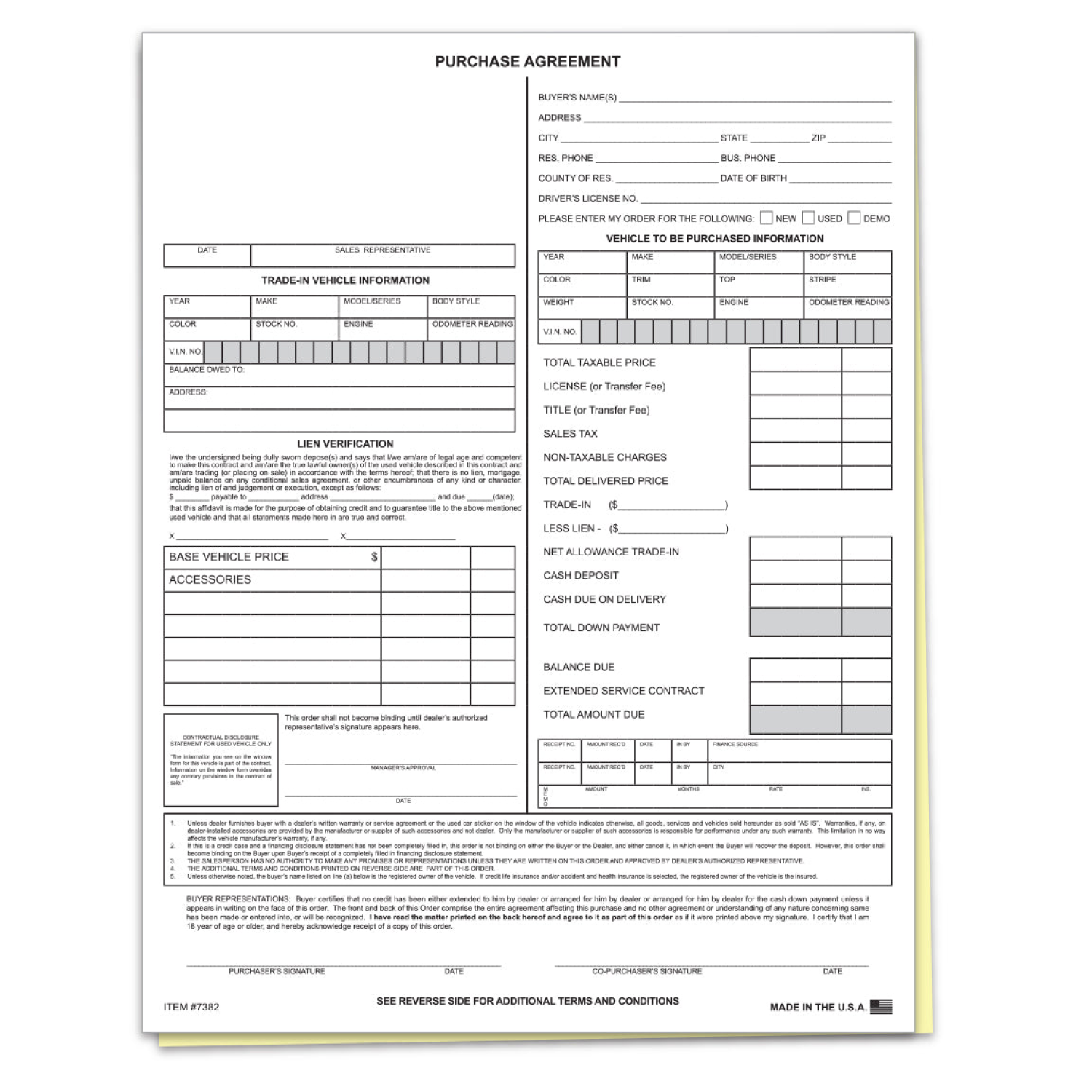
Vehicle Purchase Agreement Form
Source: Dealer Depot USA

Lease Worksheet Breakdown
Source: Leasehackr Forum
