A health insurance premium reminder Template is a structured document used to communicate an upcoming, current, or overdue insurance premium payment. A useful reminder does more than state that money is owed. It identifies the policy, shows the amount due, gives the relevant deadline, explains how payment can be made, and provides a reliable contact point for questions. When these details are presented in a consistent format, policyholders can understand what action is required without searching through multiple documents or messages.
The strongest reminder format is simple, specific, and easy to review. The recipient should be able to find the policy number, premium amount, payment period, due date, and instructions within seconds. A reminder may be used by an insurer, broker, benefits administrator, employer, school, or an individual maintaining a personal payment record. The wording should remain professional while making the requested action unmistakably clear.
Searches for a health insurance premium reminder template free often reflect a desire for a practical starting point rather than a complicated billing system. The same applies to searches for a health insurance premium reminder template free download or a health insurance premium reminder template pdf. In each case, the important issue is not merely the document format but whether the reminder contains accurate policy and payment information.
What a Health Insurance Premium Reminder Should Communicate
A premium reminder is fundamentally a payment communication. Its purpose is to connect a specific insurance obligation with a specific action and deadline. The document should therefore avoid vague statements such as “your payment is coming due.” Instead, it should identify the policyholder, policy reference, premium amount, payment period, and due date. If the reminder concerns an overdue balance, it should distinguish the original due date from any revised date or requested payment date.
The reminder should also make the recipient confident that the notice relates to the correct policy. A policy number or other account reference is particularly useful when a household has several insurance policies or when an employer manages coverage for multiple employees. The communication should not expose unnecessary personal or medical information. A payment reminder normally needs financial and policy details, not diagnoses, treatment history, or detailed clinical information.
Payment instructions are another essential component. Depending on the insurer and plan, the recipient may be directed to a designated payment portal, telephone payment service, bank arrangement, mailing address, or another approved method. The reminder should not invent payment channels. Instead, it should reproduce the payment information supplied by the responsible insurer or administrator and encourage the recipient to verify the instructions on the official bill or account record when appropriate.
Essential Fields to Include in the Template
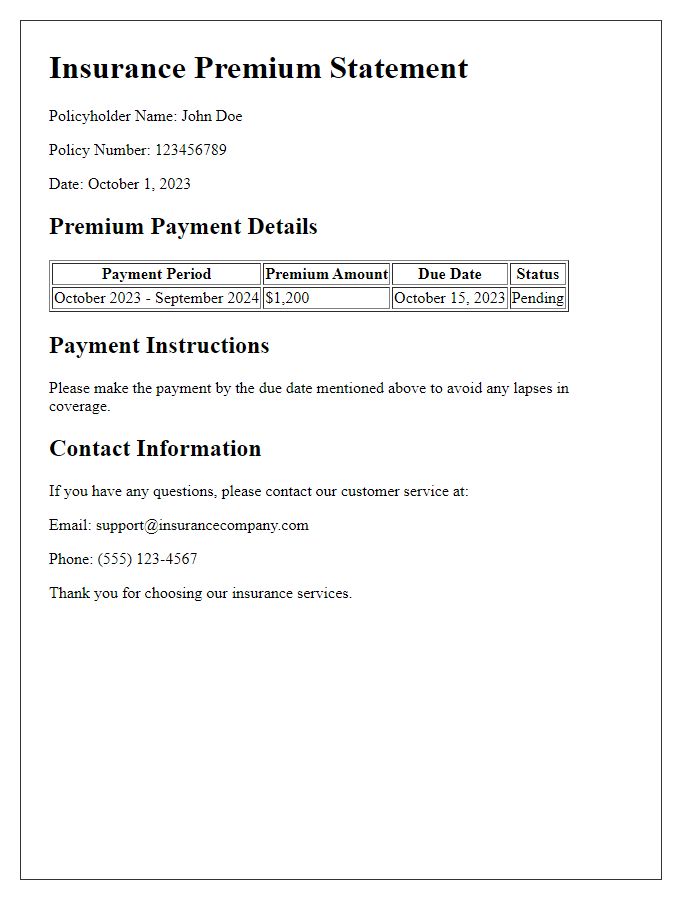
A dependable reminder can be built around a small number of fields. Start with the sender’s organization or responsible administrator, followed by the date of the notice. Then identify the recipient and policy reference. The central payment section should show the premium amount, the coverage or billing period, the original due date, and the current status. If the amount includes an adjustment, credit, or outstanding balance, explain that distinction rather than presenting one unexplained figure.
- Notice date: The date the reminder was prepared or issued.
- Recipient: The policyholder, employee, subscriber, or authorized account holder.
- Policy number: The reference needed to locate the correct insurance record.
- Coverage period: The month, quarter, or other period associated with the premium.
- Premium amount: The amount currently required under the applicable billing record.
- Due date: The deadline shown by the insurer or plan administrator.
- Payment instructions: The approved way to submit the payment.
- Customer service details: A verified phone number, email address, or other contact channel.
- Status: Upcoming, due, overdue, or awaiting payment confirmation.
The visual hierarchy matters as much as the wording. A recipient should not have to read every sentence to find the amount and deadline. Place the due date and amount in prominent positions, while keeping supporting explanations below them. If the document is intended for repeated monthly use, maintaining the same layout helps recipients recognize important information quickly.
For organizations, consistency also makes internal review easier. A benefits coordinator can compare notices more efficiently when every document follows the same structure. A small business may maintain one master format and change only the recipient, policy reference, amount, period, and deadline. The document should still be reviewed before sending because a reusable layout does not guarantee that each populated field is correct.
Choosing the Right Reminder Type
Not every payment situation needs the same tone. An upcoming reminder can be courteous and preventive, while an overdue notice should be more direct because the payment deadline has already passed. A renewal notice serves another purpose: it alerts the recipient that the current coverage term is approaching its end and that a new premium or renewal decision may be required. Treating all three communications as identical can create confusion.
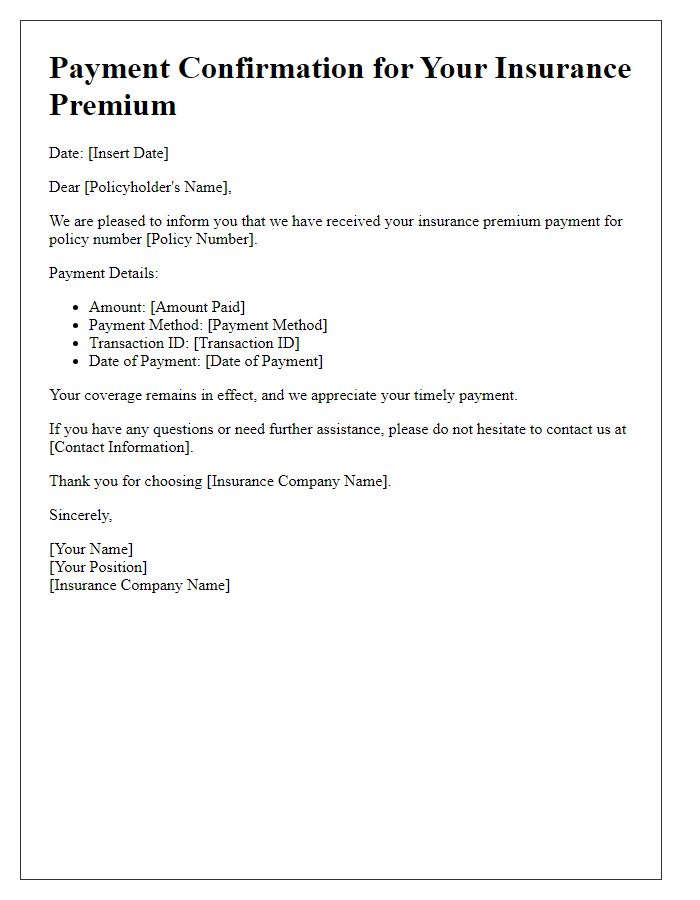
An ordinary monthly reminder works well when the payment is approaching and the account is otherwise current. A past-due reminder should identify the unpaid amount and explain what the recipient needs to do next. A payment confirmation serves the opposite function: it documents that the insurer or administrator has received the payment. Keeping these document types distinct reduces unnecessary back-and-forth communication.
A useful health insurance premium reminder template pdf can therefore be designed as a fixed notice format, while an editable document can serve as the working master. Organizations may also maintain a spreadsheet for payment tracking and use the reminder letter as the communication layer. The format should follow the workflow rather than dictate it.
How to Write the Opening of the Reminder
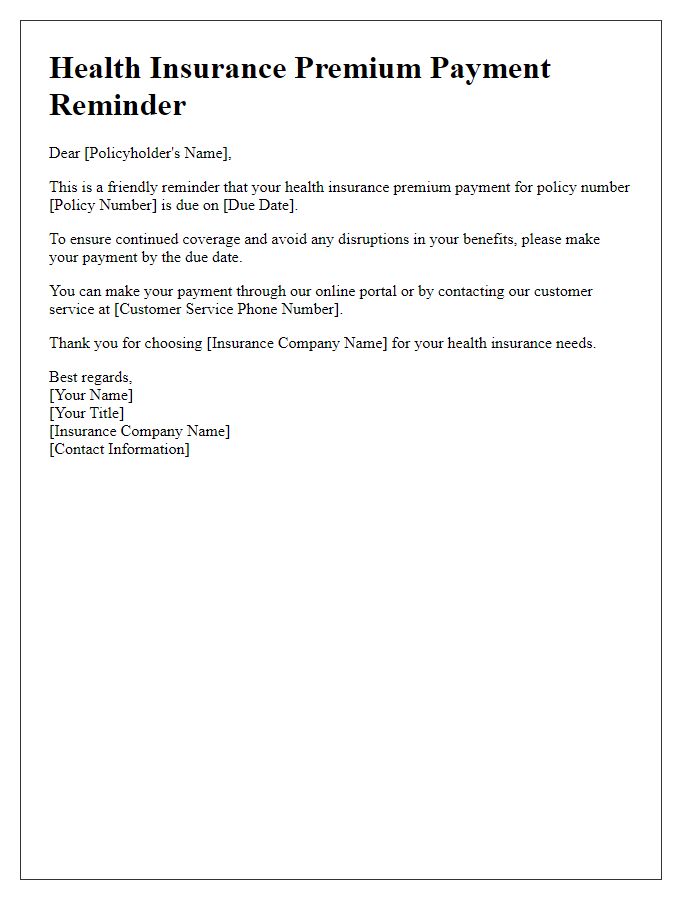
The opening should identify the reason for the communication immediately. A straightforward sentence such as “This is a reminder that the premium for policy [number] is due on [date]” establishes context without unnecessary background. If the communication concerns an overdue payment, say so clearly. Avoid language that could make an unpaid balance sound like a routine upcoming payment.
The greeting should match the relationship with the recipient. An insurer communicating with an individual policyholder may use the person’s name. An employer benefits team may address an employee by name while referring to the applicable health plan. A general household reminder may use the policyholder name shown in the account. Whatever approach is selected, the information should match the organization’s records.
The opening should not contain assumptions about why a payment has not been made. A reminder is not the right place to accuse a recipient of negligence or financial difficulty. A neutral statement of the account status is more useful. If the recipient believes the notice is incorrect, the document should provide a clear route for asking questions or correcting the record.
How to Present the Amount and Due Date
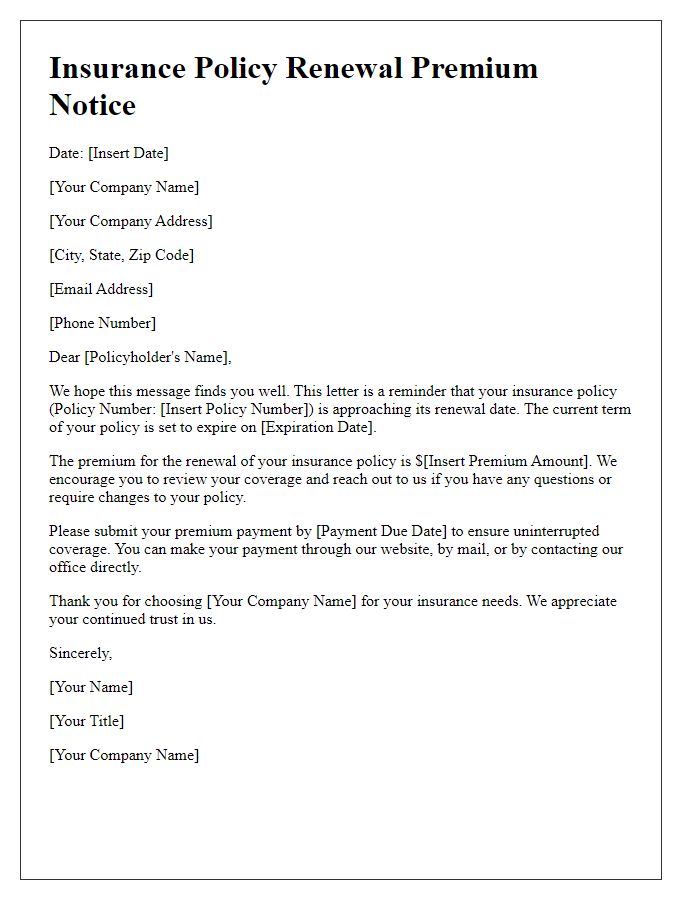
The amount and due date are the operational center of a reminder. They should be visually easy to locate and should correspond with the current billing record. If there is a prior balance, separate it from the current premium instead of combining several amounts into one unexplained total. When credits or adjustments are involved, the notice should identify them clearly enough that the recipient can reconcile the amount with the underlying bill.
The due date should be copied accurately from the applicable billing record. Do not assume that every insurance plan uses the same calendar date. Payment schedules can vary by plan, insurer, billing arrangement, and coverage type. The safest template is one that leaves the deadline as a field populated from the current account record rather than hard-coding a universal date.
For organizations maintaining recurring reminders, the billing period is equally important. A notice that says only “premium due” may be ambiguous when multiple months are outstanding. A clearer format identifies something such as “Premium for October 2026” or “Coverage period: October 1–31, 2026,” provided those dates match the actual plan record.
Upcoming, Overdue, and Follow-Up Reminders
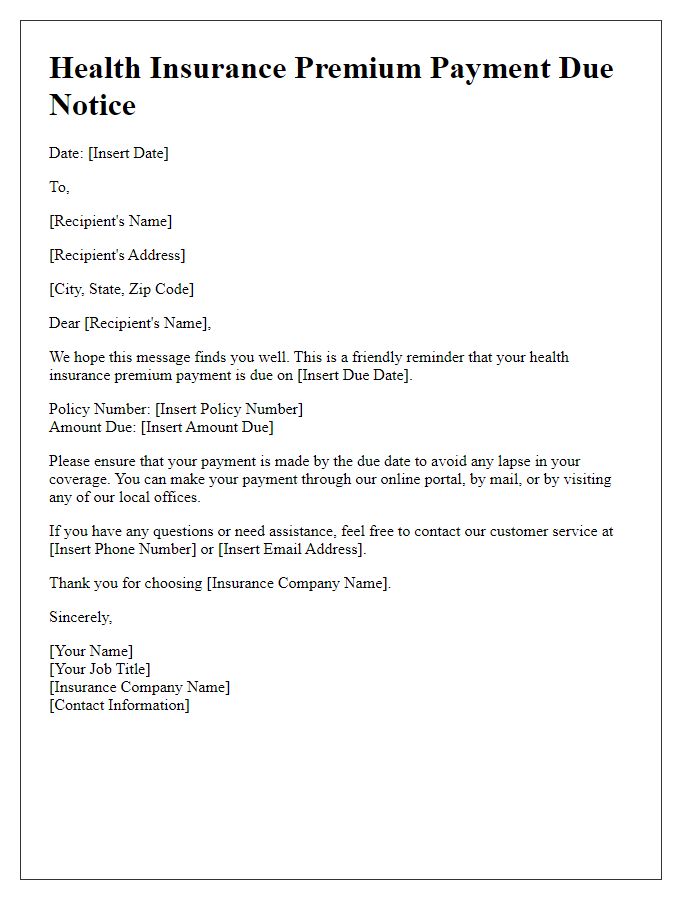
An upcoming reminder should focus on prevention. Its purpose is to give the recipient enough information to complete the payment before the deadline. The language can be courteous and concise, with the amount, due date, and payment route presented prominently. There is usually no reason to use threatening language when the account is not yet overdue.
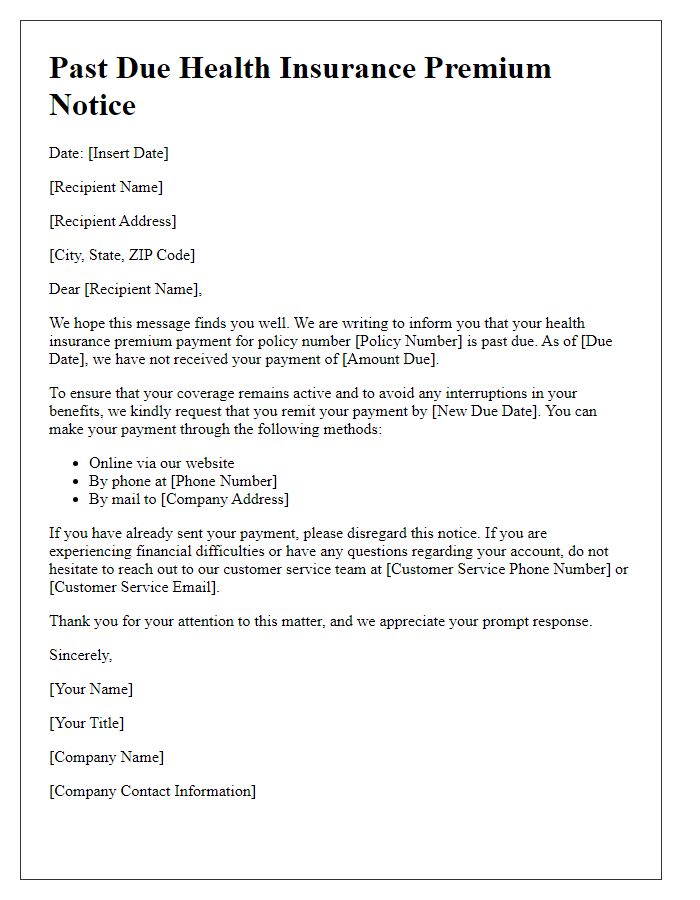
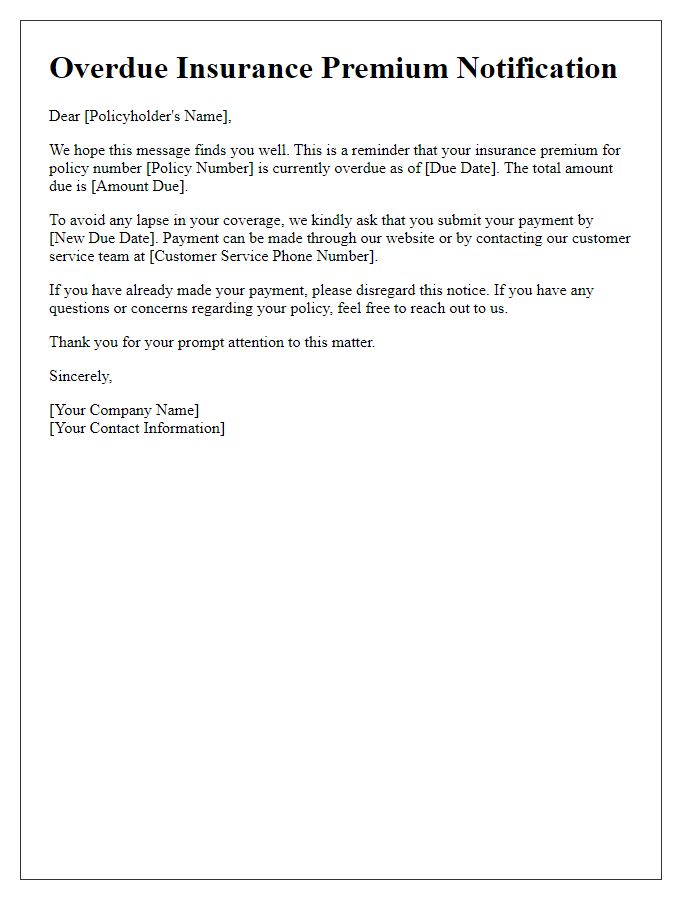
An overdue notice requires more precision. It should identify the original due date and the outstanding amount, then state what action is currently requested. The notice should avoid claiming that coverage has already ended unless that status has been confirmed. Insurance coverage rules differ, and the consequences of non-payment depend on the plan and applicable requirements.
A follow-up reminder can be used when the organization has reason to believe payment remains outstanding. It should not automatically assume that the recipient ignored the earlier notice. Postal delays, processing delays, payment posting errors, and account changes can all create apparent discrepancies. A professional follow-up gives the recipient a way to verify the account rather than simply repeating the same demand.
Grace Periods and Coverage Risk
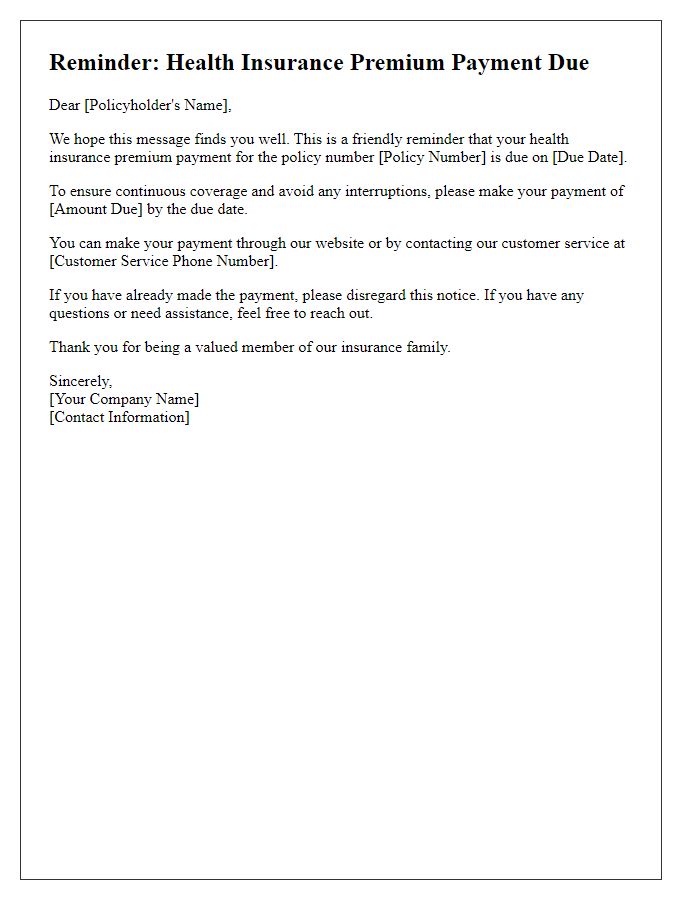
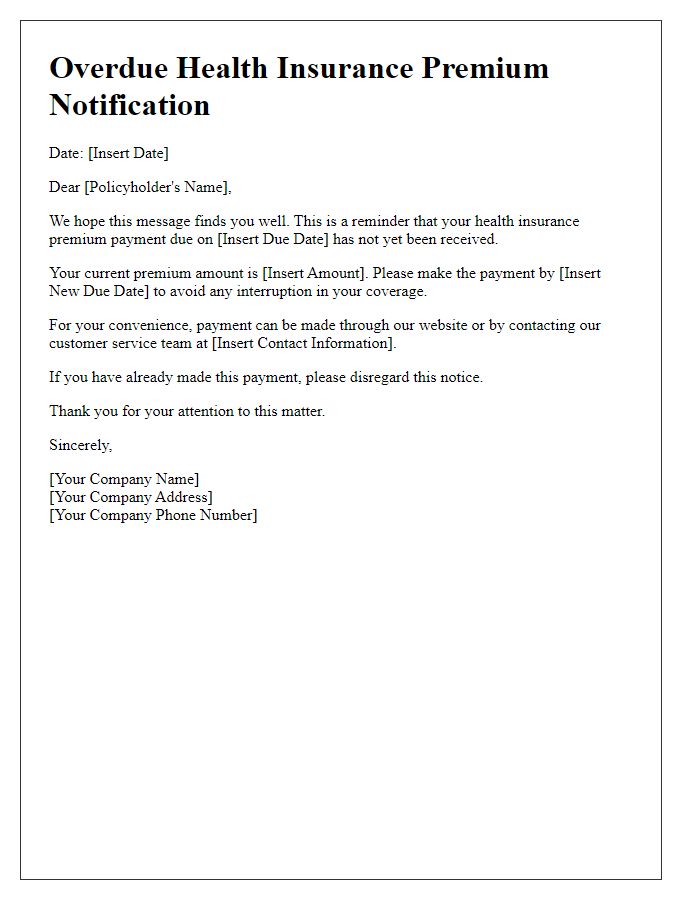
One of the most important reasons for a carefully written reminder is that missed premium payments can affect coverage. The exact consequences depend on the plan and applicable rules, so a generic template should not promise a particular grace period or claim that coverage will terminate on a specific date unless that information has been verified for the relevant policy.
For Marketplace coverage, HealthCare.gov explains that a grace period can apply when certain conditions are met, and that the length may differ depending on whether premium tax credits are being used. The federal guidance also warns that unpaid premiums can ultimately result in loss of coverage. This is why a reminder should direct the recipient to the insurer or plan administrator for plan-specific payment and coverage questions.
California provides another useful example of why the template should be tied to the actual billing arrangement. Covered California states that payment deadlines are printed on the bill and that ongoing health plan payments are made directly to the selected insurance company. A health insurance premium reminder template california should therefore avoid inventing a universal California deadline and instead use the date and instructions appearing on the applicable plan bill.
Using Templates for Employees and Benefits Administration
Employers have a slightly different communication challenge because health insurance premiums may be handled through payroll deductions, employer contributions, employee contributions, or a combination of arrangements. CMS describes health plan premium payment transactions as including information about individuals for whom premiums are being paid and payment processing information such as payroll deductions. A reminder used internally should therefore make clear whether the employee must personally submit a payment or whether the notice is informational.
A health insurance premium reminder template for employees can include the employee’s name, plan name, coverage period, employee contribution, employer contribution when relevant, and the action required. If payroll deductions are already scheduled, the reminder should not imply that the employee needs to make a second payment. Instead, it can explain that the amount is scheduled to be reflected through payroll.
Employee communications should also separate confidential health information from routine benefits administration. The reminder should contain only the information necessary to explain the premium obligation. Sensitive medical details do not belong in a routine premium notice. This makes the document more appropriate for email, printed correspondence, or internal records.
Formats: Word, Excel, PDF, and Printable Records
Different formats serve different purposes. A health insurance premium reminder template word format is useful when staff need to customize the wording, recipient details, or branding. A document format is especially practical for creating a standard master notice that can be reviewed before each use.
A health insurance premium reminder template excel approach is more useful for tracking than for writing a polished letter. A spreadsheet can contain policy numbers, billing periods, amounts, due dates, status fields, and follow-up dates. It can then serve as the internal register from which individual reminders are prepared. The tracking sheet should be protected appropriately because insurance records can contain personal information.
A health insurance premium reminder template free printable search usually reflects the need for a straightforward paper notice. For printing, use a readable font, sufficient white space, a clear subject line, and a prominent payment summary. The document should remain understandable when printed in ordinary letter-size format and should not rely on color alone to communicate urgency or status.
Connecting a Reminder With a Payment Tracking System
A reminder is more reliable when it is connected to a simple tracking process. The tracking record should show when the notice was prepared, when it was sent, what billing period it covered, and whether payment was later confirmed. This prevents staff from repeatedly contacting someone whose payment has already been received but has not yet been reconciled in the reminder workflow.
A useful internal register can contain one row per policy and billing period. The columns might include policy reference, recipient, billing month, amount due, due date, reminder date, status, payment date, and confirmation reference. This is where a monthly bill reminder template can complement the insurance notice without replacing the insurer’s official billing record.
The tracking process should also include a review step for returned mail, incorrect contact information, changed policies, and canceled coverage. If a policy has changed, simply reusing last month’s reminder can create an inaccurate notice. Templates reduce repetitive writing, but they do not remove the need for account verification.
Understanding Payment Reminder Language
The phrase payment reminder meaning and templates generally refers to the purpose and structure of a communication asking someone to complete an expected payment. In health insurance, that meaning is particularly important because the payment can be connected to continuing coverage. A well-designed reminder therefore identifies the obligation without overstating consequences that have not been confirmed.
Good wording is factual rather than intimidating. “Our records indicate that the premium remains outstanding” is more appropriate than making assumptions about the recipient’s intentions. If the payment has already been submitted, the notice should explain how the recipient can contact the responsible organization to reconcile the account.
The same principle applies when writing a reminder for personal use. A search phrase such as free personal medical reminder can refer to many kinds of health-related reminders, but a premium reminder should remain focused on insurance payments. It should not be confused with a medical treatment schedule, appointment record, or prescription tracking document.
Keeping Premium Reminders Separate From Medication Tracking
Health-related record keeping can involve several unrelated types of reminders. A premium notice concerns an insurance financial obligation, while a medication record concerns the timing and administration of medicines. Combining the two can create unnecessary privacy risks and make both documents harder to understand.
For example, a medication reminder chart template might contain medicine names, doses, times, and instructions. None of those fields normally belongs in a health insurance premium notice. The insurance reminder should instead concentrate on policy identification, billing period, premium amount, due date, payment instructions, and customer service information.
This distinction is especially useful for families and caregivers who manage several types of health records. Keeping financial reminders, insurance documents, medical schedules, and appointment records separate creates clearer records and reduces the chance of sending unnecessary personal health information with a financial communication.
Common Mistakes to Avoid
The first common mistake is using a generic amount or date without checking the current billing record. A reminder may look professional while still being incorrect. Another mistake is failing to distinguish a current premium from a previous balance. If the recipient cannot tell exactly what amount is being requested, the reminder may create more questions instead of resolving them.
Another problem is making unsupported claims about cancellation, penalties, or grace periods. These terms can depend on the plan, insurer, state, and circumstances. A template should use verified policy language where required and otherwise direct recipients to their insurer or plan administrator for specific consequences.
- Do not assume every plan has the same grace period.
- Do not promise that coverage remains active without confirming the applicable rules.
- Do not invent payment addresses, telephone numbers, or payment portals.
- Do not include unnecessary medical information.
- Do not combine several billing periods without showing the individual amounts clearly.
- Do not reuse an old reminder without checking the policy and recipient details.
- Do not treat a reminder as a substitute for the insurer’s official billing record.
A further mistake is making the notice unnecessarily long. A premium reminder is not a policy booklet. The recipient usually needs a small set of actionable facts. Supporting explanations can be included when they clarify an unusual balance, renewal, or payment status, but the main action should remain easy to identify.
How to Improve Clarity and Professionalism
Start by creating one master structure with consistent headings and field labels. Use plain language for the action requested and avoid unnecessary industry jargon. The subject should tell the recipient whether the notice is an upcoming reminder, payment due notice, overdue notice, renewal communication, or payment confirmation.
Next, create a visual hierarchy. Put the policy reference, premium amount, and due date near the beginning. Put payment instructions and customer service information immediately after the payment summary. Keep legal or plan-specific language separate from the basic payment instructions so that important facts are not buried in a dense paragraph.
Finally, establish a quality check before a reminder is issued. Confirm the recipient, policy number, billing period, amount, due date, payment method, and contact details. For organizational use, a second-person review can be valuable when the notice concerns a large balance, a renewal, or a possible coverage termination.
Practical Solution
The most practical approach is to maintain three connected pieces: a master reminder document, a payment tracking record, and a verification checklist. The master document contains the standard wording and fields. The tracking record identifies which policy and billing period require attention. The checklist confirms that every outgoing reminder matches the current account information.
Begin each billing cycle by reviewing the current premium records. Identify upcoming due dates and separate them from overdue balances. Populate the reminder with the exact recipient information, policy reference, billing period, amount, and deadline. Then verify the payment instructions against the insurer’s current billing information. Do not rely solely on an old notice when payment details may have changed.
Before sending the notice, perform a final review. Confirm that the amount is correct, the date is correct, the policy reference belongs to the recipient, and the message accurately describes the payment status. After sending, record the communication date. When payment is received, update the tracking record and retain the confirmation according to the organization’s recordkeeping practices.
For recurring employee or household use, a spreadsheet can track due dates while the reminder document provides the communication. For individual policyholders, a simple calendar or recurring financial reminder can support the same workflow. The key is to keep the reminder tied to the actual insurance billing record rather than relying on a generic date or assumption.
Sample Structure for a Clear Reminder
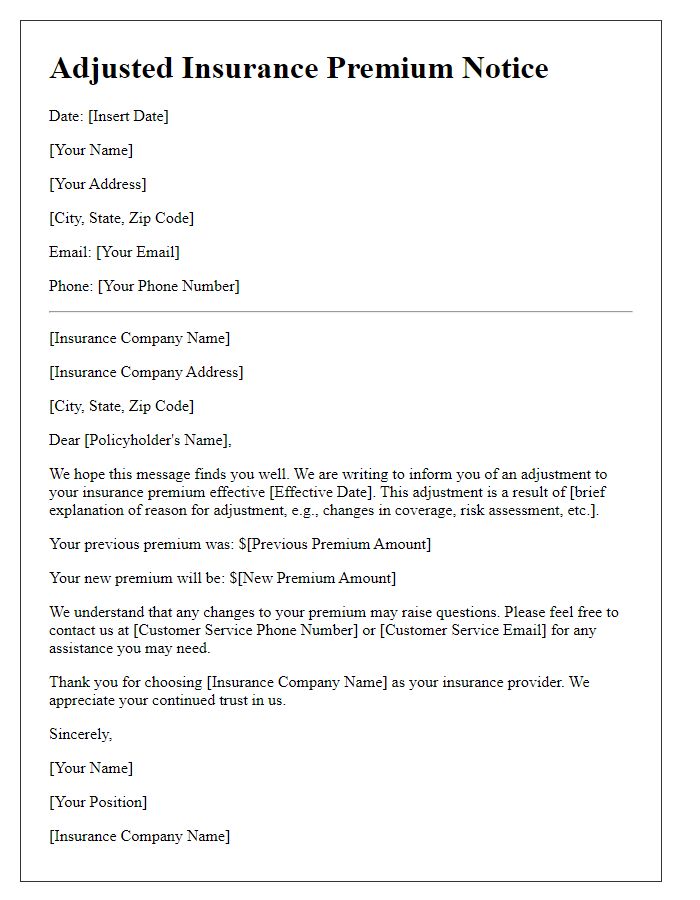
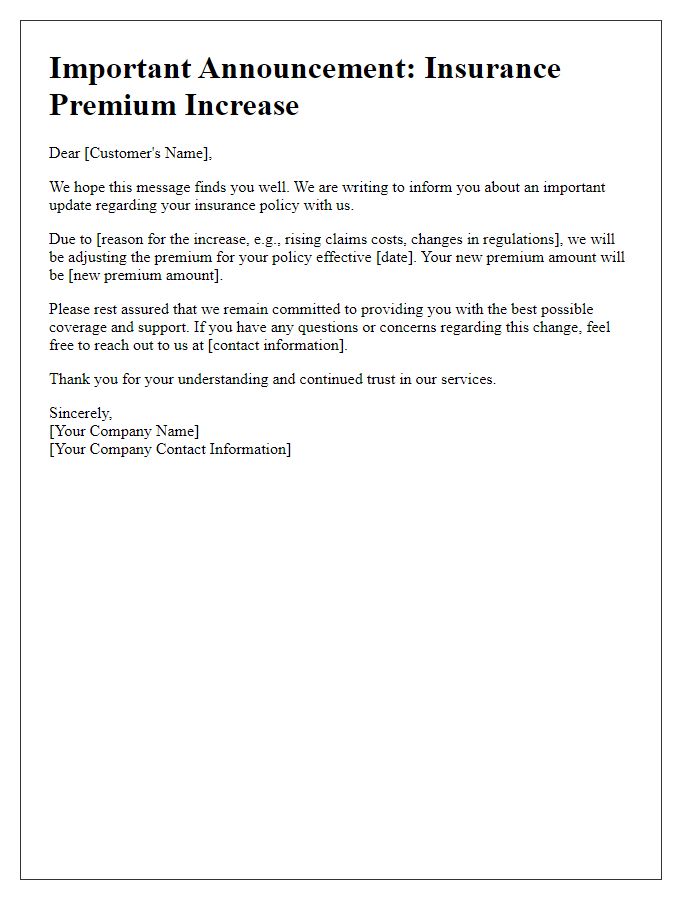
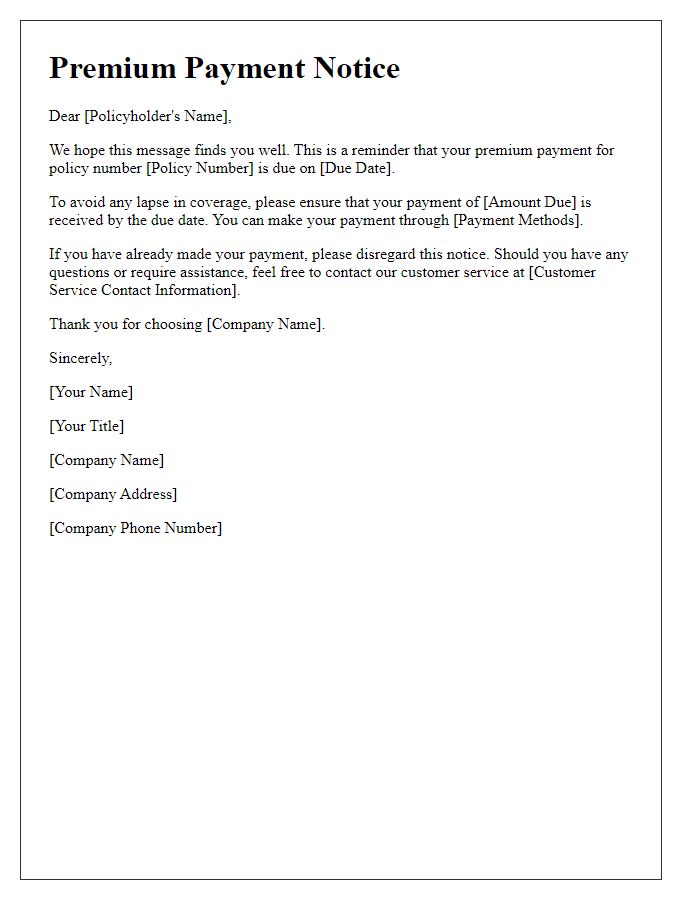
A practical notice can begin with the organization name and notice date, followed by the recipient’s name and policy number. The next paragraph can state that the premium is due and identify the applicable billing period. A short payment summary can then show the amount due and deadline. This structure lets the recipient understand the purpose of the communication without reading a long explanation.
The next section can provide payment instructions exactly as supplied by the insurer. If there are several approved payment methods, list them in a short set of bullets. If only one method is available, describe that method precisely. The contact section should provide a verified route for questions, especially when the recipient may dispute the amount or report a payment that has already been submitted.
The closing should remain professional and neutral. It can invite the recipient to disregard the notice if payment has already been received, but only when that wording is appropriate for the communication workflow. For overdue notices, the closing can also encourage prompt contact if the recipient believes the account information is incorrect.
When a Reminder Should Be Revised
A template should be revised whenever the underlying process changes. This can include a new payment channel, a new billing address, a revised customer service contact, a changed plan structure, or a new internal approval process. Even when the visual design remains suitable, outdated instructions can make the notice misleading.
It is also useful to review templates periodically for unnecessary information. Remove fields that are no longer used and retain only the information needed to identify the obligation and help the recipient act. A lean template is easier to maintain and reduces the possibility of conflicting information appearing in different sections.
When a plan has special payment rules, the reminder should be adapted to that plan rather than forcing the plan into a generic format. The goal of a template is consistency, not uniformity at the expense of accuracy.
Payment Verification and Recordkeeping
A payment reminder process should not end when the notice is sent. If the organization receives payment confirmations, those confirmations should be reconciled with the correct policy and billing period. This is particularly important where several family members or employees have similar names or where multiple plans are administered together.
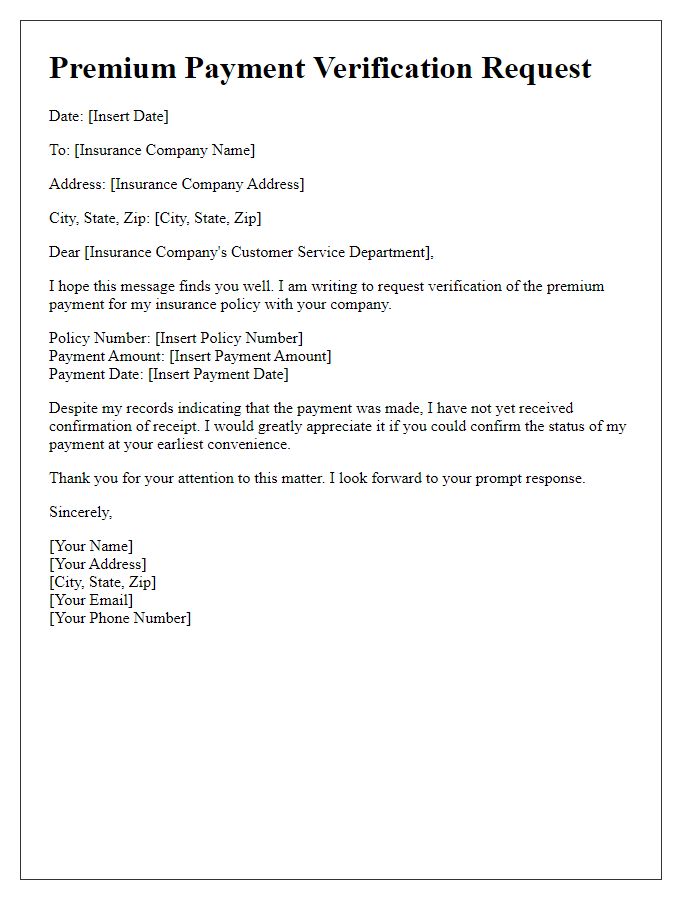
A verification notice can contain the policy number, payment amount, payment date, and transaction reference when appropriate. The purpose is to establish a clear connection between the payment and the account. If the payment cannot be matched, the recipient should be given a reliable contact route rather than being told that the payment definitely failed.
Good recordkeeping also makes future reminders more accurate. When the latest payment date and outstanding balance are recorded, the next reminder can be based on current information instead of assumptions. The process becomes easier to audit and less likely to produce duplicate or contradictory notices.
Renewal and Recurring Premium Communications
Recurring premiums require a slightly different workflow from one-time payment notices. A monthly reminder can use a stable layout while updating the billing period, amount, and due date. A renewal reminder should additionally identify the end of the current coverage term and explain whether the recipient needs to take a specific renewal action.
A recurring reminder should not automatically assume that the premium remains unchanged. Premium amounts can change for reasons specific to the plan or coverage arrangement. If the amount has changed, the notice should clearly identify the current amount and, where appropriate, explain that the recipient should review the insurer’s accompanying notice for additional details.
For recurring communications, consistency is especially valuable. Recipients learn where to find the amount and due date, while administrators can review notices more quickly. The template should therefore remain visually stable even when the account information changes from one billing period to another.
Final Checks Before Sending a Premium Reminder
Before a reminder is issued, compare every variable field against the current insurance record. The recipient name, policy number, premium amount, coverage period, due date, and account status should all agree. If the communication references a previous notice, make sure the referenced date and amount are also accurate.
Next, verify the payment instructions and customer service information. This step is easy to overlook when a template has been reused for months. Payment channels, addresses, and contact procedures can change, so the current official billing record should take precedence over an old template.
Finally, review the tone and privacy of the document. The notice should contain enough information to identify the payment obligation without revealing unnecessary health information. It should be firm when action is required, but it should not make unsupported statements about cancellation, penalties, or coverage. A carefully reviewed reminder is more useful to both the recipient and the organization responsible for the account.
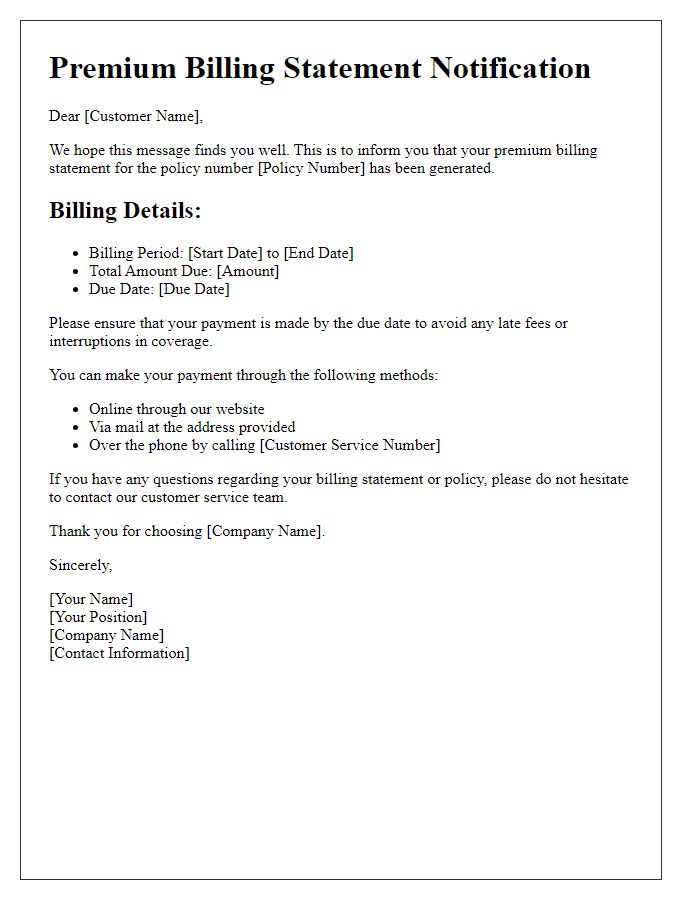
Reference Examples
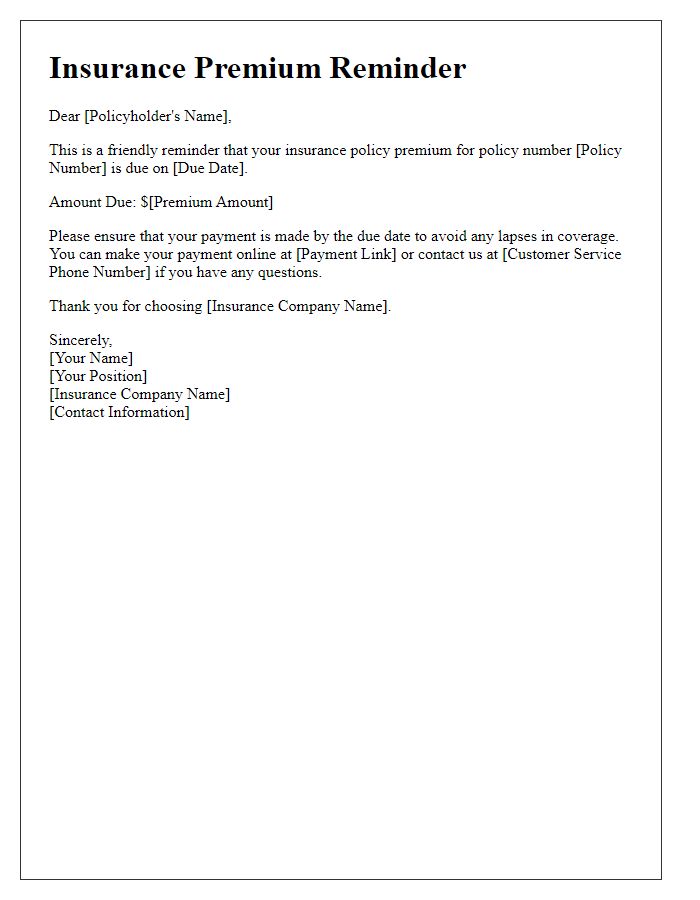
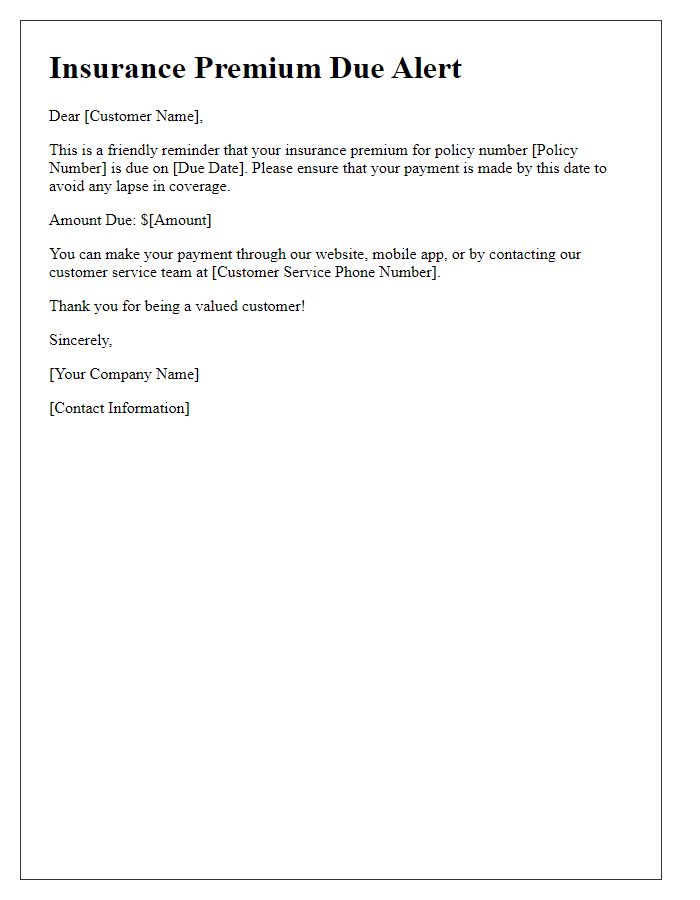
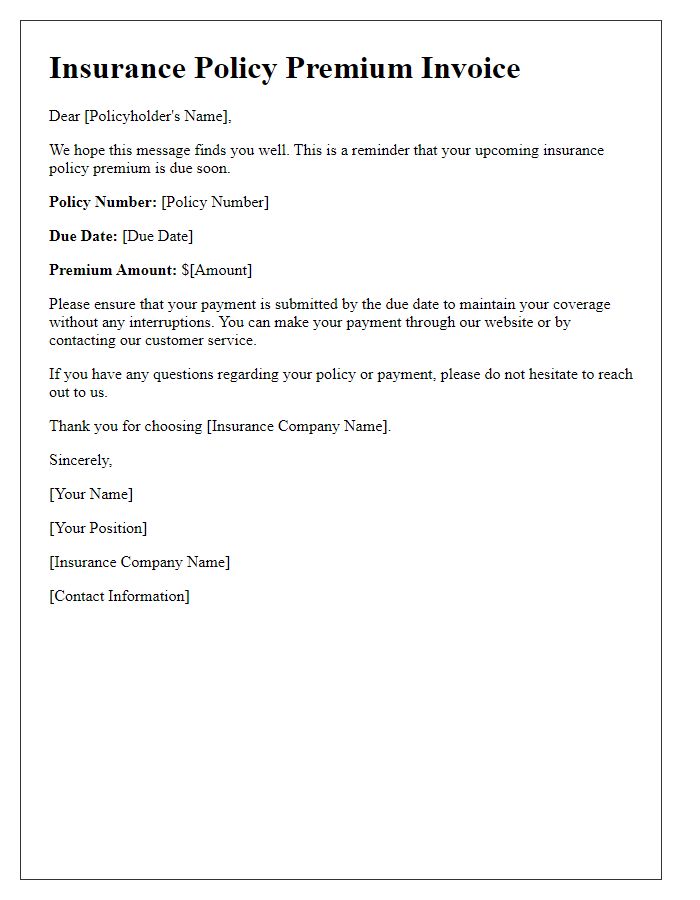
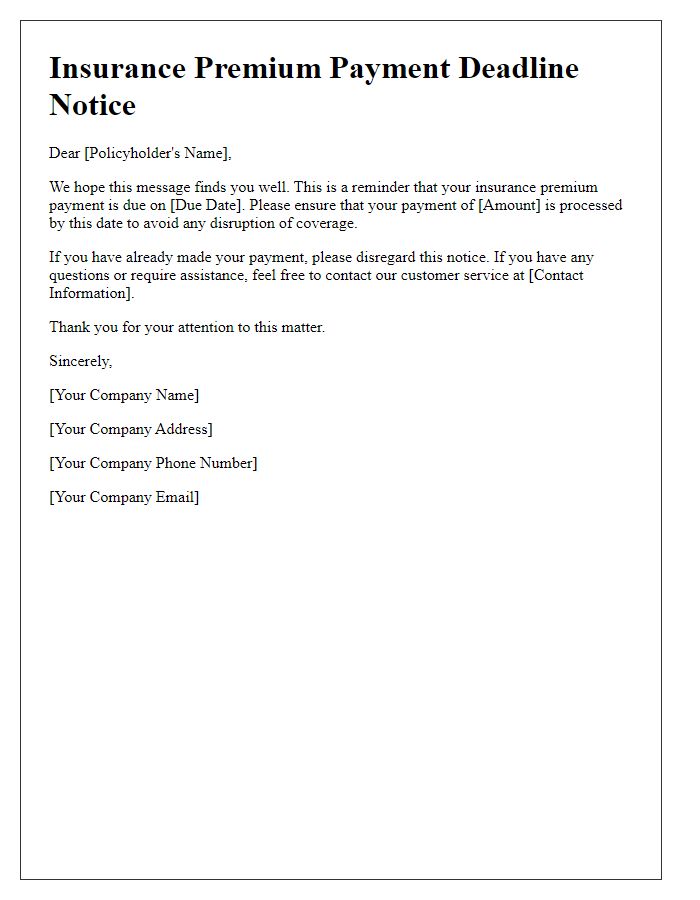
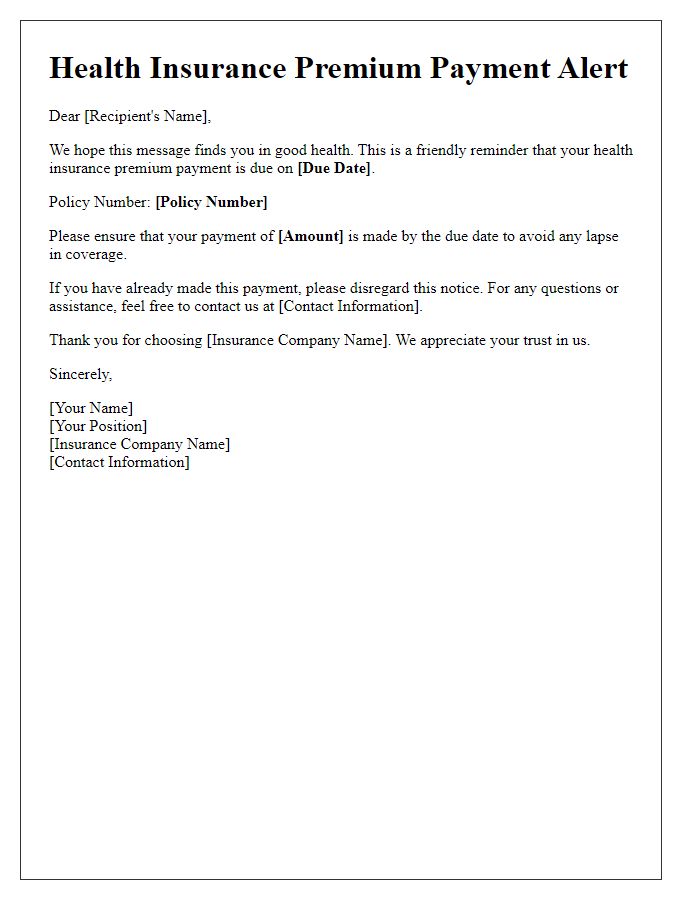
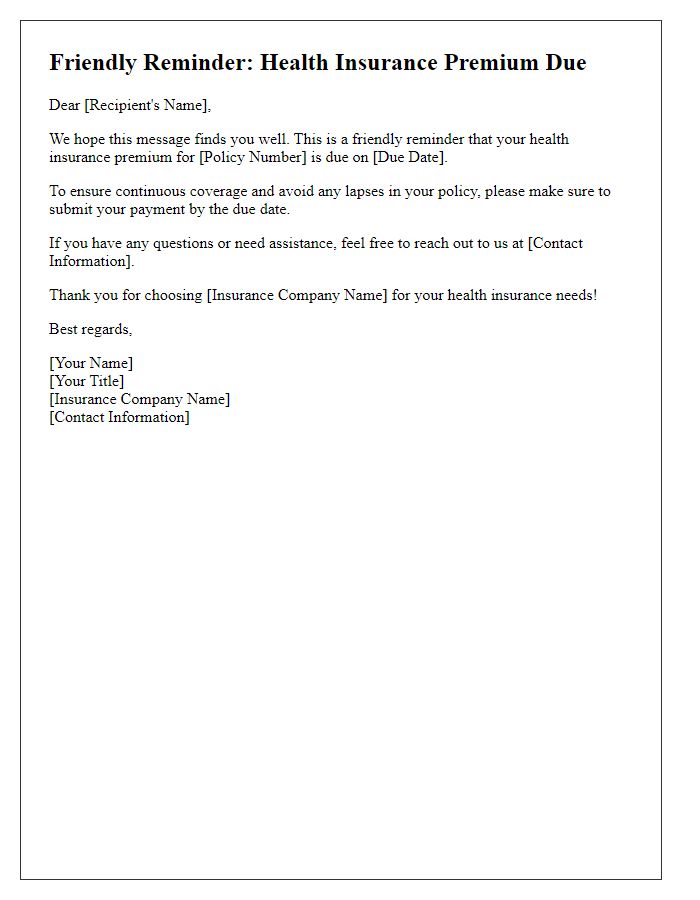
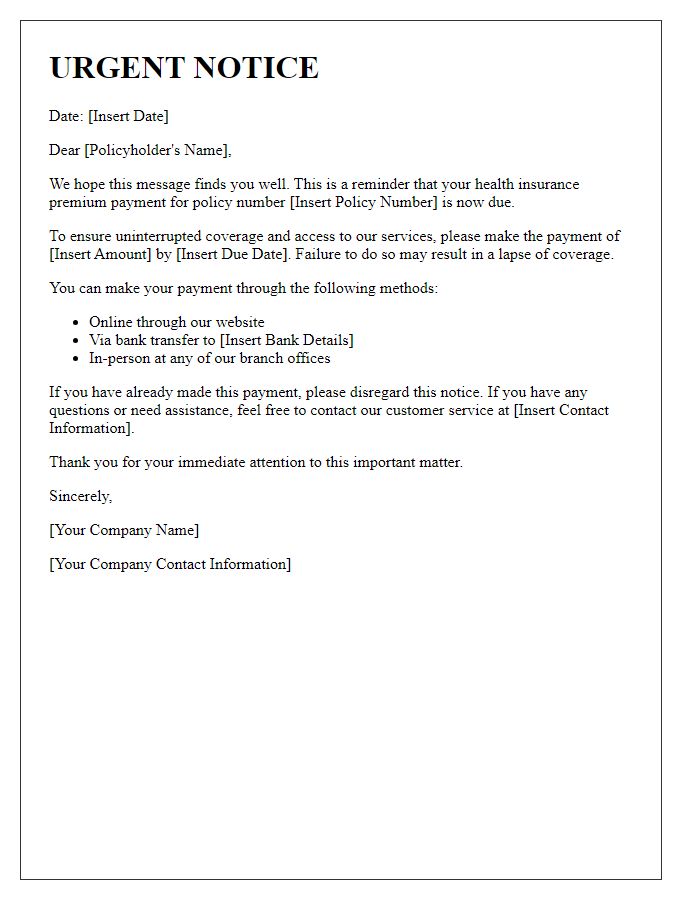
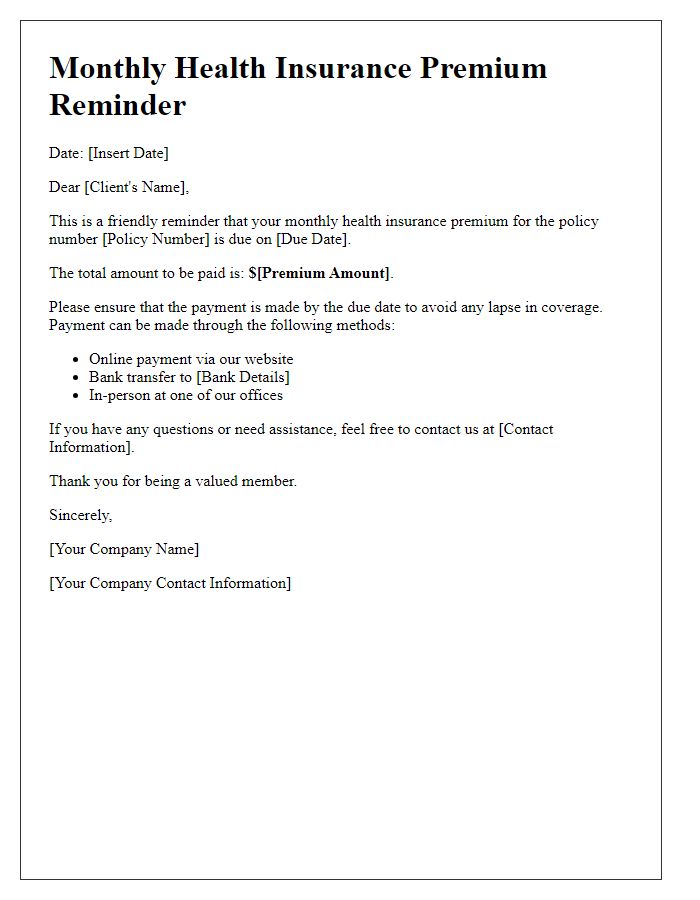
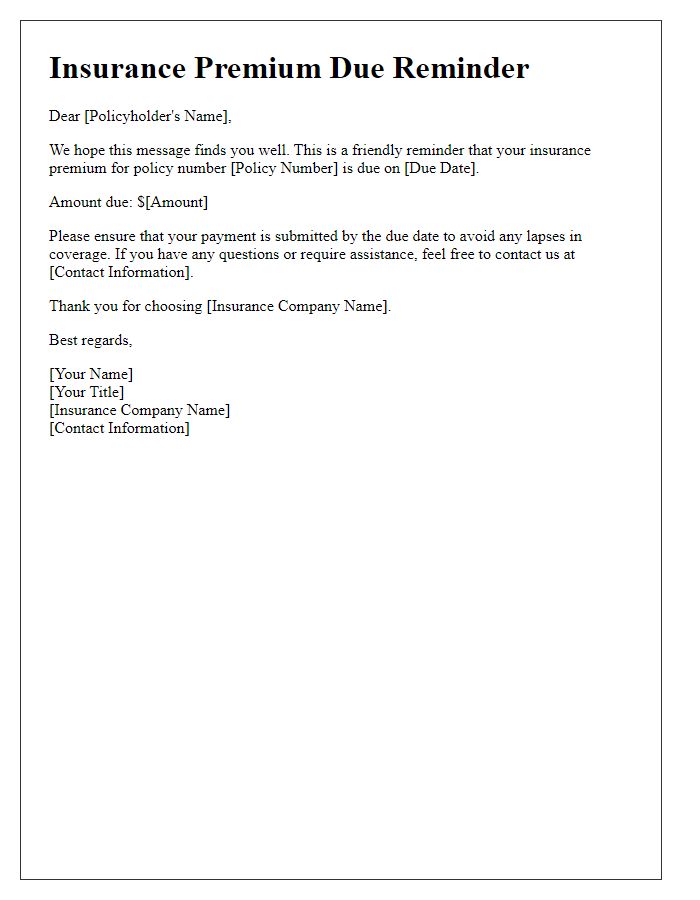
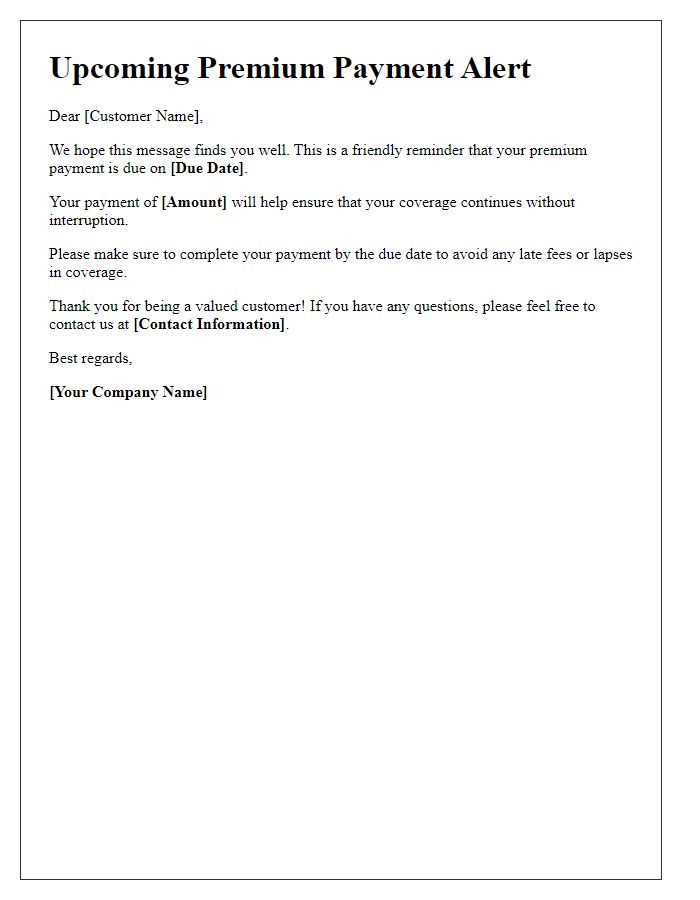
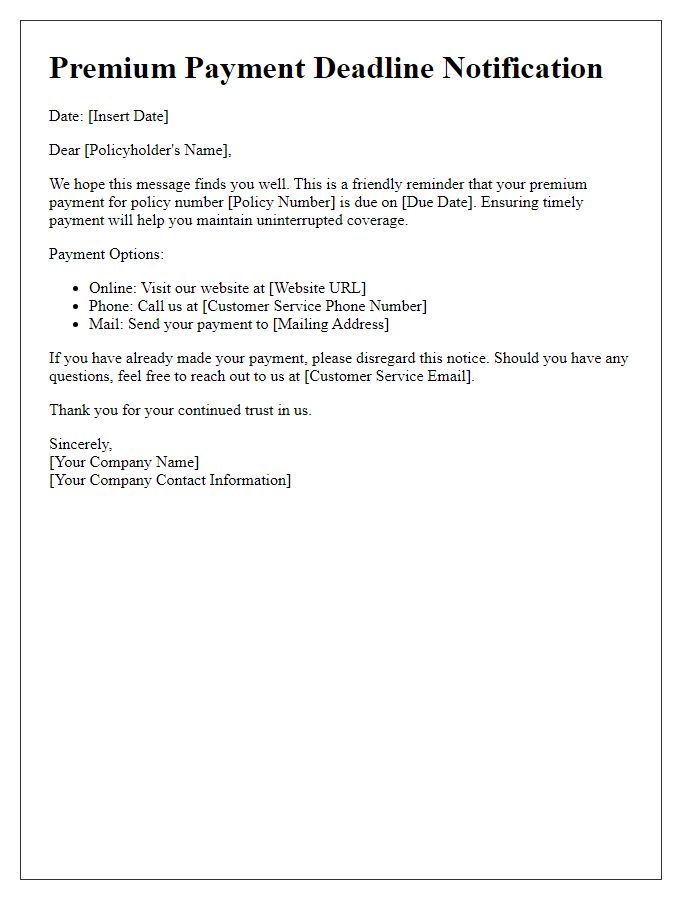
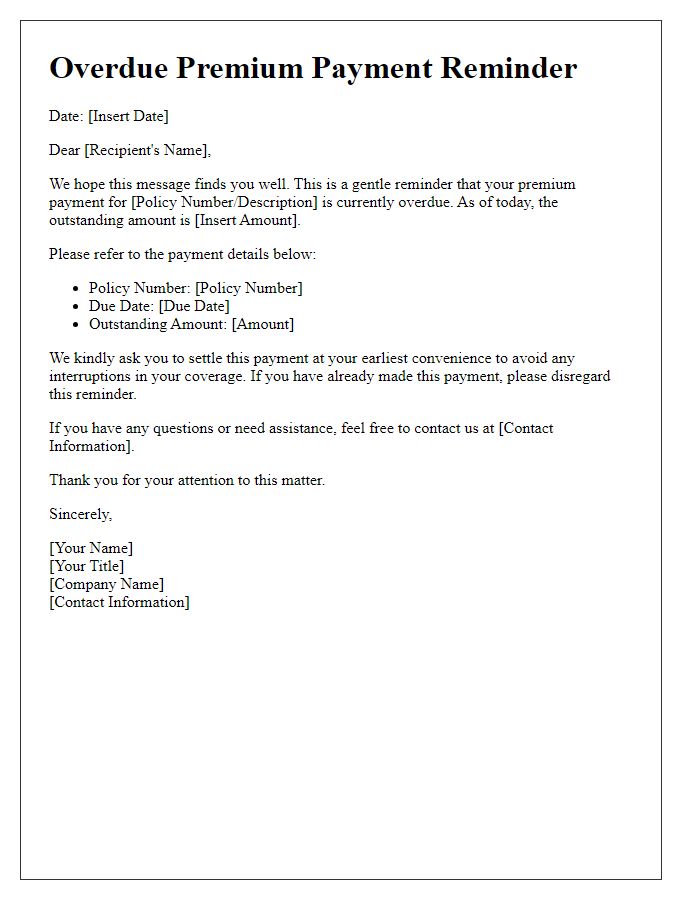
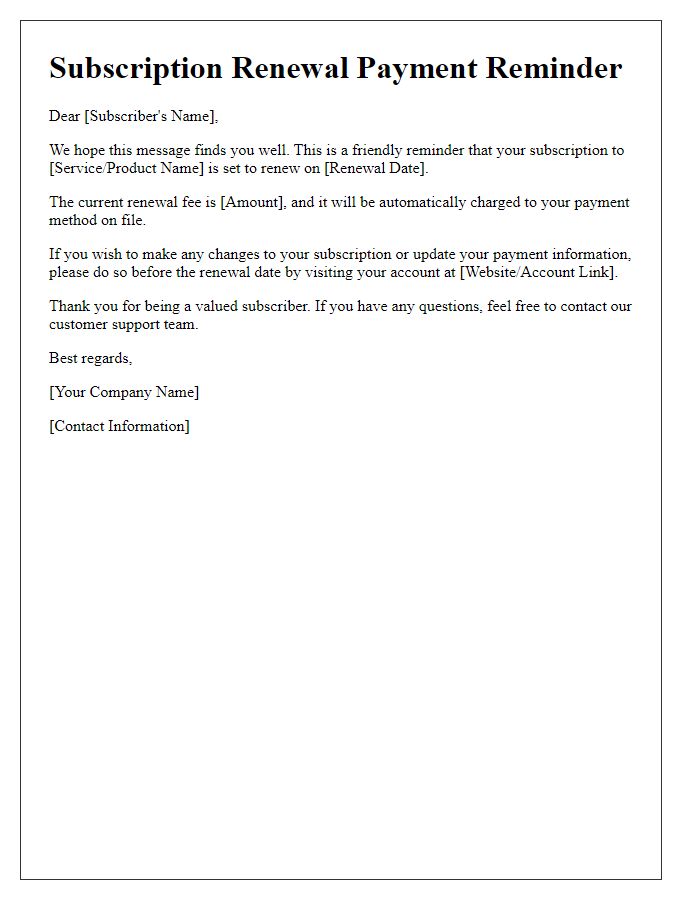
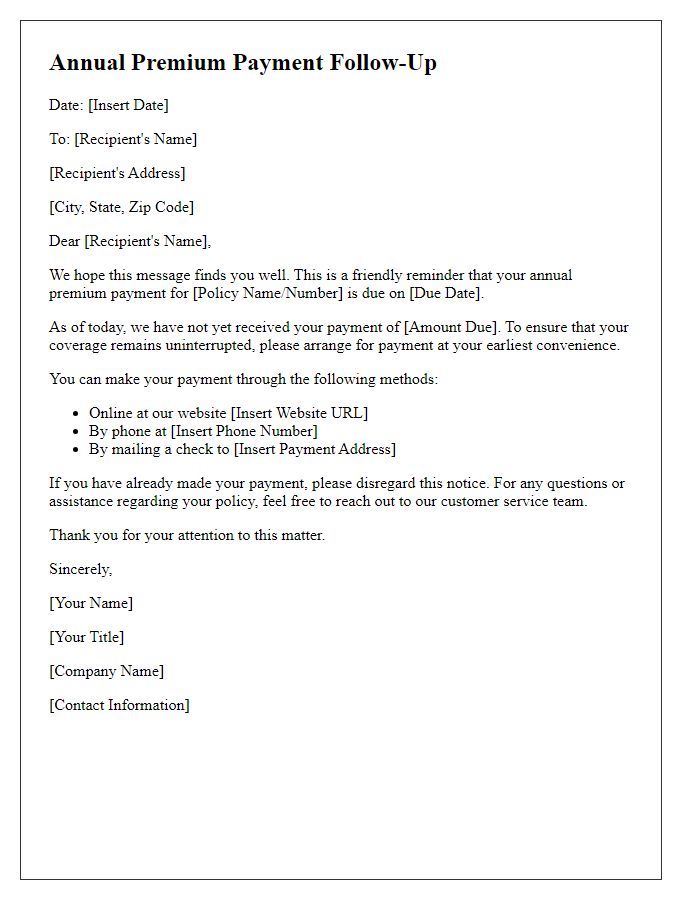
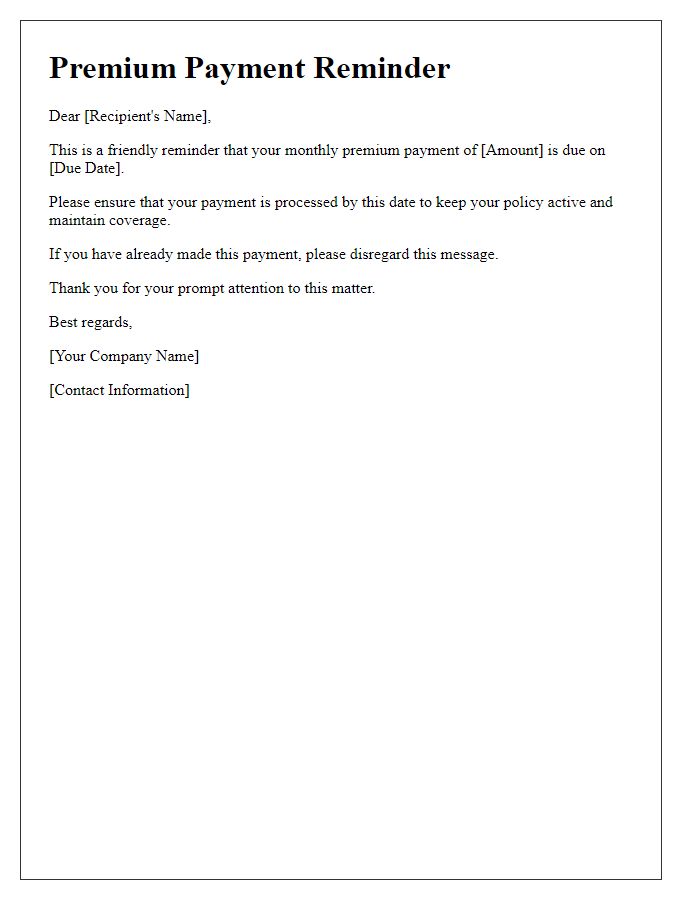
A health insurance premium reminder Template is easiest to evaluate when readers can see how different notices organize the same essential information. Useful examples typically place the policy reference, premium amount, due date, payment instructions, and contact information in predictable positions. Some examples emphasize an upcoming payment, while others address an overdue balance, renewal, adjustment, or billing update. Comparing these layouts helps readers recognize which elements are essential and which are optional. It also shows why a good reminder should be designed around the actual payment workflow rather than around decorative formatting.
The following visual references illustrate several practical ways to structure a health insurance premium reminder Template. They can help readers compare wording, hierarchy, field placement, and the relationship between payment information and coverage communication. Some examples are broader insurance notices rather than official health-plan documents, so they should be treated as layout references rather than evidence of a specific insurer’s requirements. For an actual policy, the current insurer or plan administrator’s billing information should always take precedence over a generic template.
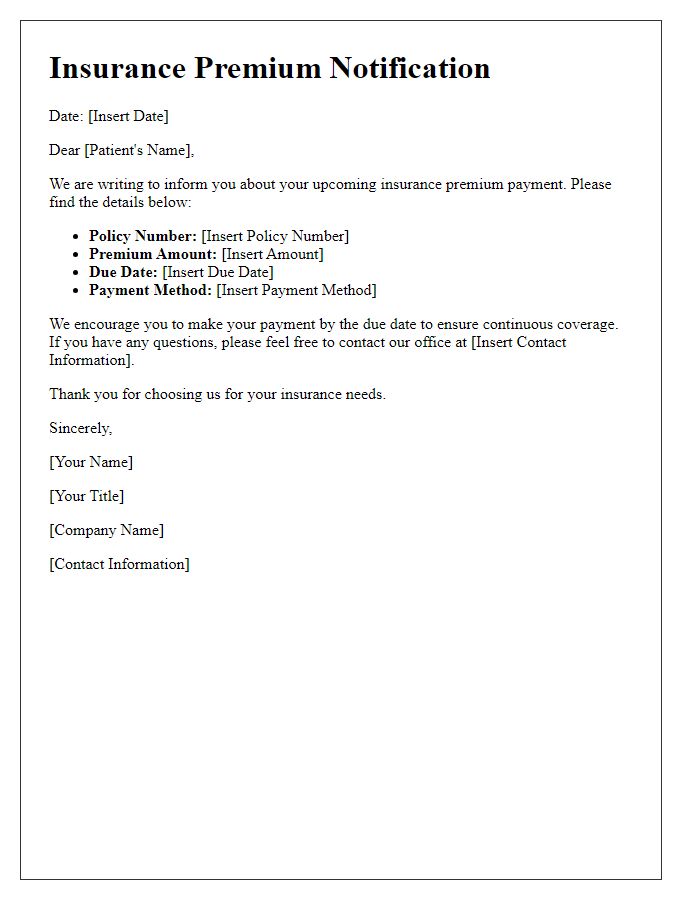
Insurance Premium Notification
Source: Letterin
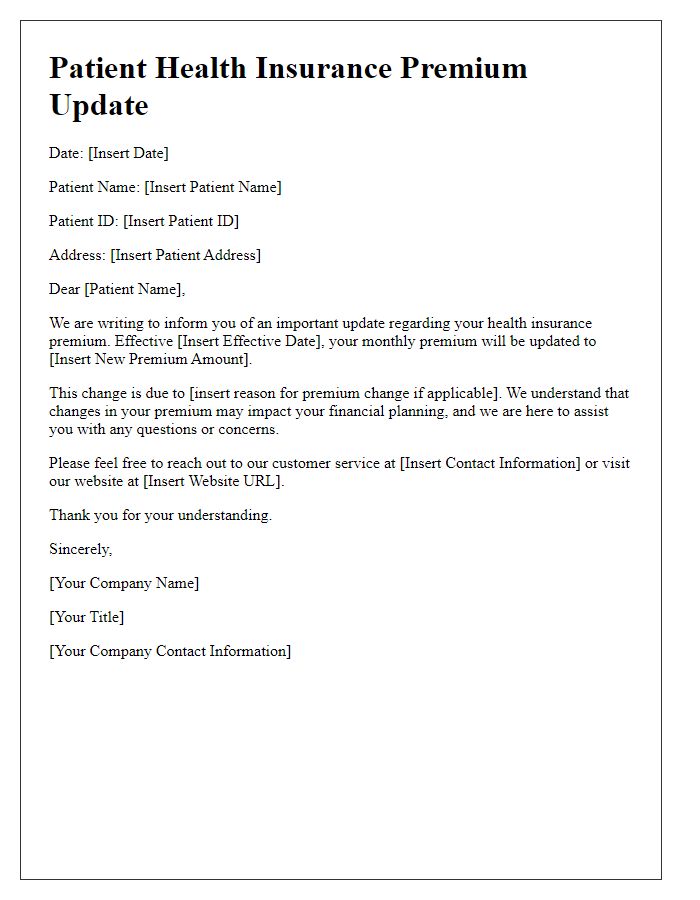
Patient Health Insurance Premium Update
Source: Letterin
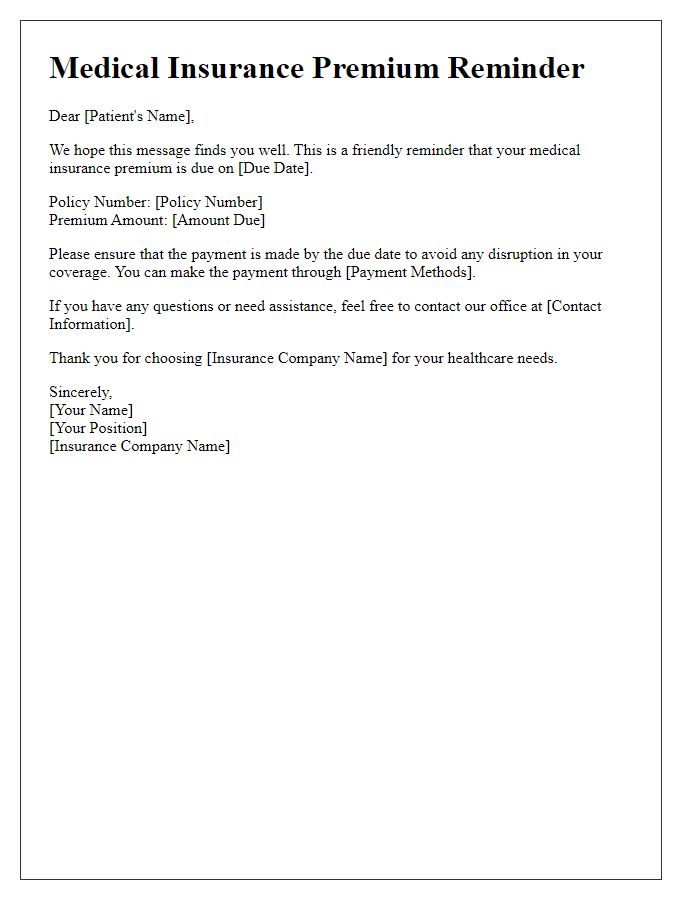
Medical Insurance Premium Reminder
Source: Letterin
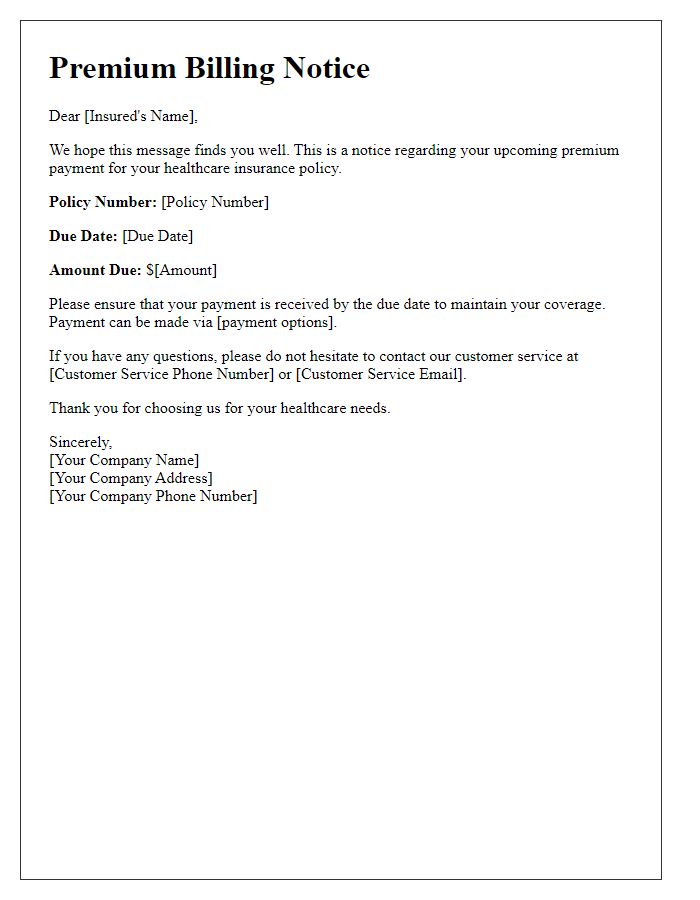
Premium Billing Notice
Source: Letterin
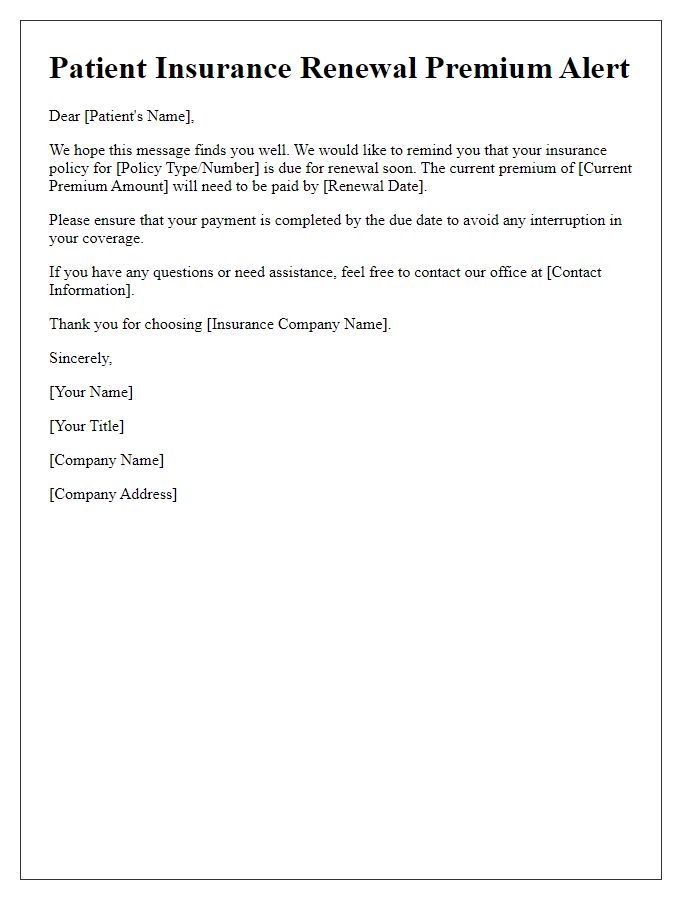
Patient Insurance Renewal Premium Alert
Source: Letterin
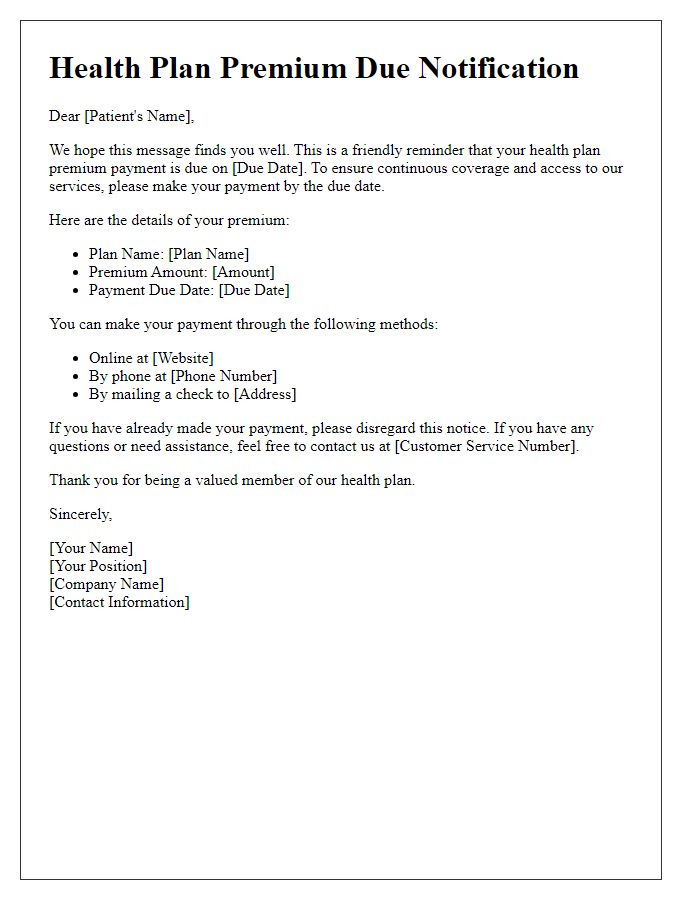
Health Plan Premium Due Notification
Source: Letterin
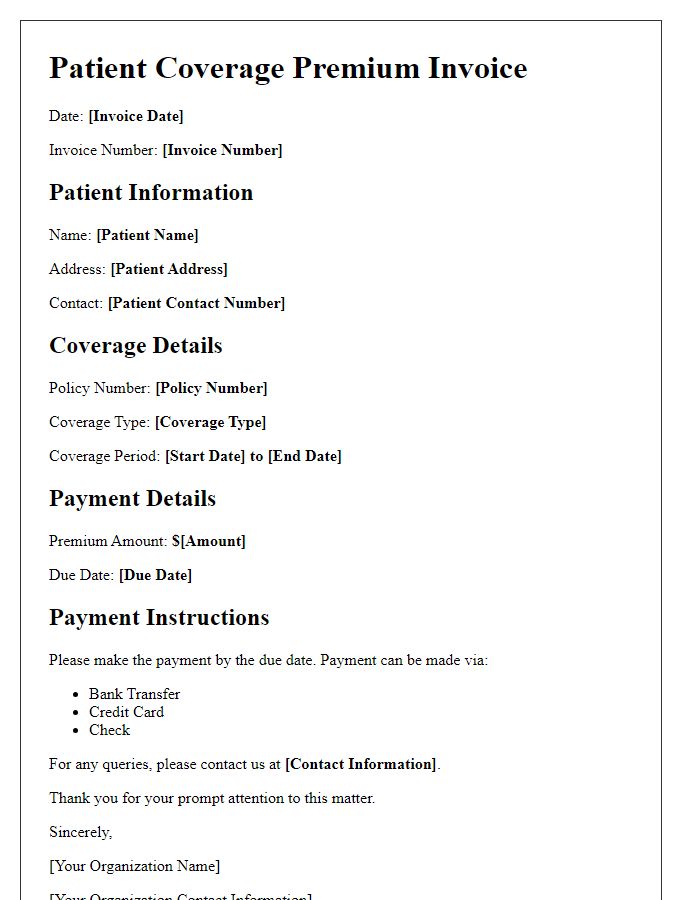
Patient Coverage Premium Invoice
Source: Letterin
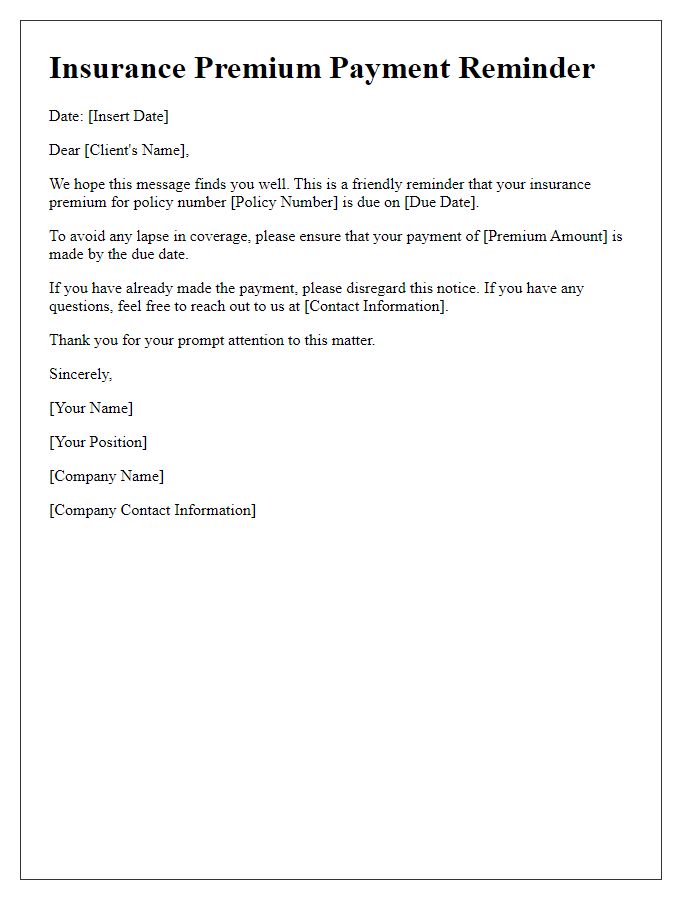
Insurance Premium Payment Reminder
Source: Letterin
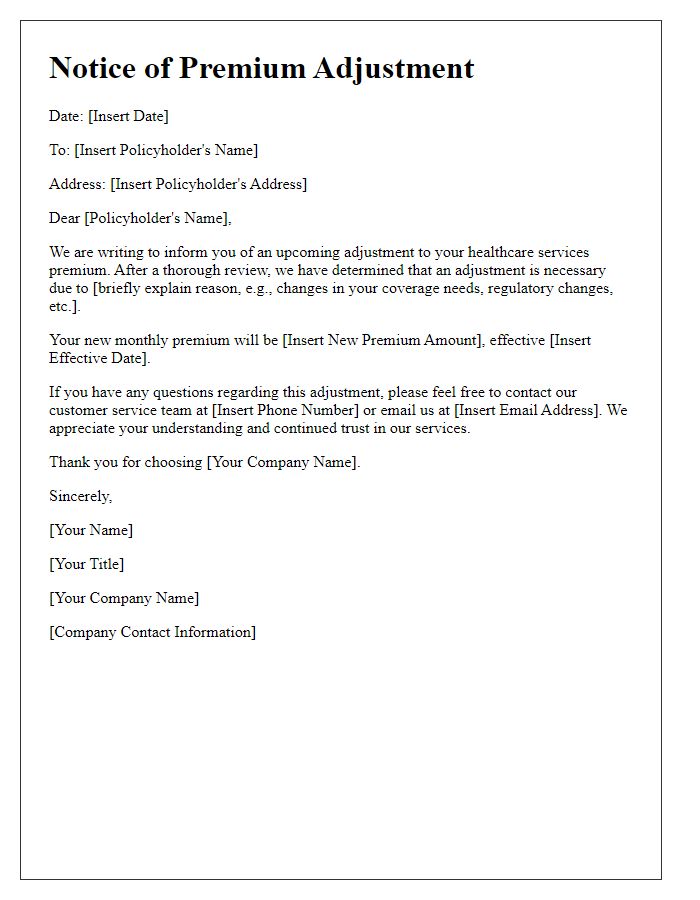
Notice of Premium Adjustment
Source: Letterin
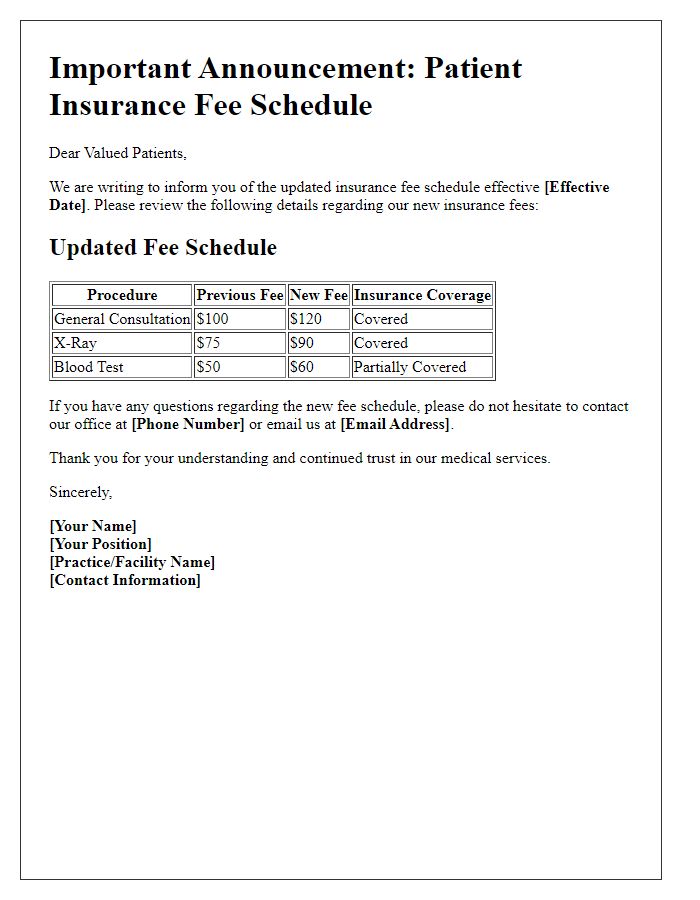
Important Announcement: Patient Insurance Fee Schedule
Source: Letterin
