A strong marketing agency policy Template gives an agency a repeatable way to define responsibilities, protect client information, manage creative work, control access, document decisions, and keep projects moving when several people or vendors are involved. The most useful policy is not simply a polished document. It is an operational framework that tells the agency what should happen, who owns each decision, what records should exist, and what to do when something goes wrong.
Searchers looking for this type of template are often trying to solve a practical documentation problem. They may need a starting structure for a new agency, a client-facing policy, an internal operating standard, or a policy that can sit alongside a contract and project brief. A good starting point should therefore be flexible enough for different agency models while still being specific about confidentiality, intellectual property, data handling, security, content review, communication, project changes, and offboarding.
The best way to use a policy template is to treat it as a framework rather than a substitute for legal review. A policy should reflect the actual services, systems, people, vendors, clients, and jurisdictions involved. If an agency handles customer information, advertising accounts, analytics data, email lists, proprietary brand material, or regulated information, the policy should be reviewed against the obligations that actually apply to that engagement.

What a marketing agency policy should accomplish
A marketing agency policy should establish a shared operating standard. It can explain how the agency receives information, assigns responsibility, prepares work, obtains client sign-off, stores records, handles revisions, protects confidential material, and closes a project. This makes the document useful beyond the legal department because account managers, strategists, designers, media specialists, writers, analysts, and contractors can use the same rules during everyday work.
The policy should also separate different types of documents. A policy describes a recurring rule or standard. A contract defines binding commercial terms between parties. A project brief describes the specific objectives, audience, deliverables, channels, timing, and constraints of a particular engagement. A project management document tracks tasks and deadlines. Keeping these functions distinct prevents a single document from becoming unnecessarily complicated.
For example, an agency might state in its policy that client-owned advertising accounts should remain under the client’s organizational control, while the contract defines who receives access and the project plan identifies which campaigns will be managed. This separation creates a clearer record of ownership and responsibility than relying on scattered messages or informal instructions.

Core sections to include in the policy
A useful policy normally begins with document control. Identify the policy name, owner, effective date, review cycle, version number, and the business area responsible for maintaining it. These details may appear simple, but they make it easier to determine which version governs an activity and who is responsible for updating the document when the agency changes its services or technology.
The next section should define scope. Explain whether the policy covers employees, contractors, freelancers, suppliers, and other third parties. State whether it covers every client or only certain services. If the agency provides strategy, paid media, search marketing, social media, content production, web work, analytics, or email services, clarify which activities fall under the policy and which require additional procedures.
A responsibility section should identify owners without turning the policy into an organizational chart. Account leadership might own client communication, specialists might own technical execution, finance might own billing records, and an assigned security or operations owner might handle access management. The exact roles depend on the agency, but the principle is consistent: every important control should have an accountable owner.

Confidentiality and information classification
Marketing agencies routinely encounter information that clients would not want disclosed publicly. Examples include campaign plans, customer lists, pricing information, unreleased products, advertising performance, business forecasts, credentials, creative concepts, and internal research. A policy should describe how such information is classified and who may access it.
A practical classification model can use categories such as public, internal, confidential, and highly sensitive. The names can vary, but each category should have a clear handling expectation. Public material may be shared broadly, while confidential material may be limited to people assigned to the engagement. Sensitive customer information may require stronger access controls and additional safeguards.
Confidentiality should also continue beyond the moment a campaign is completed. The agency should define how confidential information is handled during the engagement, what happens when personnel leave the project, and what happens when the client relationship ends. The precise duration and legal wording should be aligned with the contract and relevant law rather than copied blindly from another organization.

Data access and security controls
Access management is one of the most important operational elements of an agency policy. Marketing teams often work across advertising platforms, analytics systems, content repositories, customer relationship systems, email platforms, websites, social channels, and cloud storage. A policy should establish that access is granted according to job responsibility rather than convenience.
Use individual accounts wherever the service permits them, avoid unnecessary administrator privileges, and review access when someone changes roles or leaves the agency. Shared credentials create uncertainty because it becomes difficult to determine who performed an action. Where a shared account is unavoidable, the agency should document how credentials are stored and who is authorized to retrieve them.
The policy should also define a basic incident process. Staff should know where to report a suspected credential exposure, unauthorized access, lost device, mistaken disclosure, or other security event. The procedure can identify who receives the report, how evidence is preserved, how affected systems are secured, and when the client or another party must be notified. Legal notification duties vary, so the policy should not promise a universal response period without confirming the relevant requirements.

Intellectual property and ownership rules
Creative ownership is another area where a policy can reduce confusion. Marketing work may include copy, graphics, photographs, video, designs, websites, campaign structures, analytics configurations, strategy documents, research, templates, and other materials. The policy should encourage the agency to identify ownership before production begins rather than waiting until the project is finished.
A useful distinction is between client-specific work and pre-existing agency resources. A client may receive rights to agreed deliverables while the agency retains rights to its underlying methods, reusable systems, internal frameworks, or tools, depending on the contract. Third-party assets can also have separate licensing conditions. The exact ownership arrangement should therefore be documented in the contract or statement of work.
The policy should address portfolio use as well. If an agency wants to display client work publicly, the permission process should be clear. Some clients may allow public case studies while others may require written consent, delayed publication, anonymization, or complete confidentiality. Treating portfolio use as a controlled permission rather than an automatic right protects both the client relationship and the agency’s reputation.


An effective intellectual property policy should also explain how third-party material is checked. Before using stock imagery, fonts, music, software components, illustrations, research, or licensed content, the responsible team should confirm that the intended use is permitted. Keeping licensing records in the project folder makes later audits and client handovers much easier.
The same principle applies to agency-created assets that depend on external platforms. An agency should distinguish between the creative work it produces and the accounts or systems through which that work is delivered. Ownership and access arrangements for advertising accounts, websites, domains, analytics properties, and social channels should be clearly documented.

Finally, the policy should define how ownership questions are escalated. If a client disputes the ownership of a deliverable, the account owner should know which contract, statement of work, license, or internal record to consult. A policy does not need to resolve every legal question itself; its job is to create a reliable path for identifying the governing document and responsible decision-maker.

Compliance, review, and sign-off workflows
Marketing content can involve advertising claims, endorsements, privacy considerations, intellectual property, platform rules, and industry-specific restrictions. A policy should define when content requires additional review. Not every social post needs the same level of scrutiny as a regulated campaign, a sensitive product claim, or a customer-data initiative.
A simple review workflow can identify the creator, reviewer, client owner, final sign-off authority, and record location. It should also distinguish between factual review, brand review, legal or compliance review, and client sign-off. This prevents a situation where a designer believes a campaign is ready because the creative is complete while the account team is still waiting for factual confirmation.
Records matter as much as the review itself. Keep the final approved version, material changes, relevant client instructions, and significant review decisions together. If the agency relies on informal messages for important changes, the project record can become difficult to reconstruct. A policy should encourage important decisions to be summarized in the project’s central record.
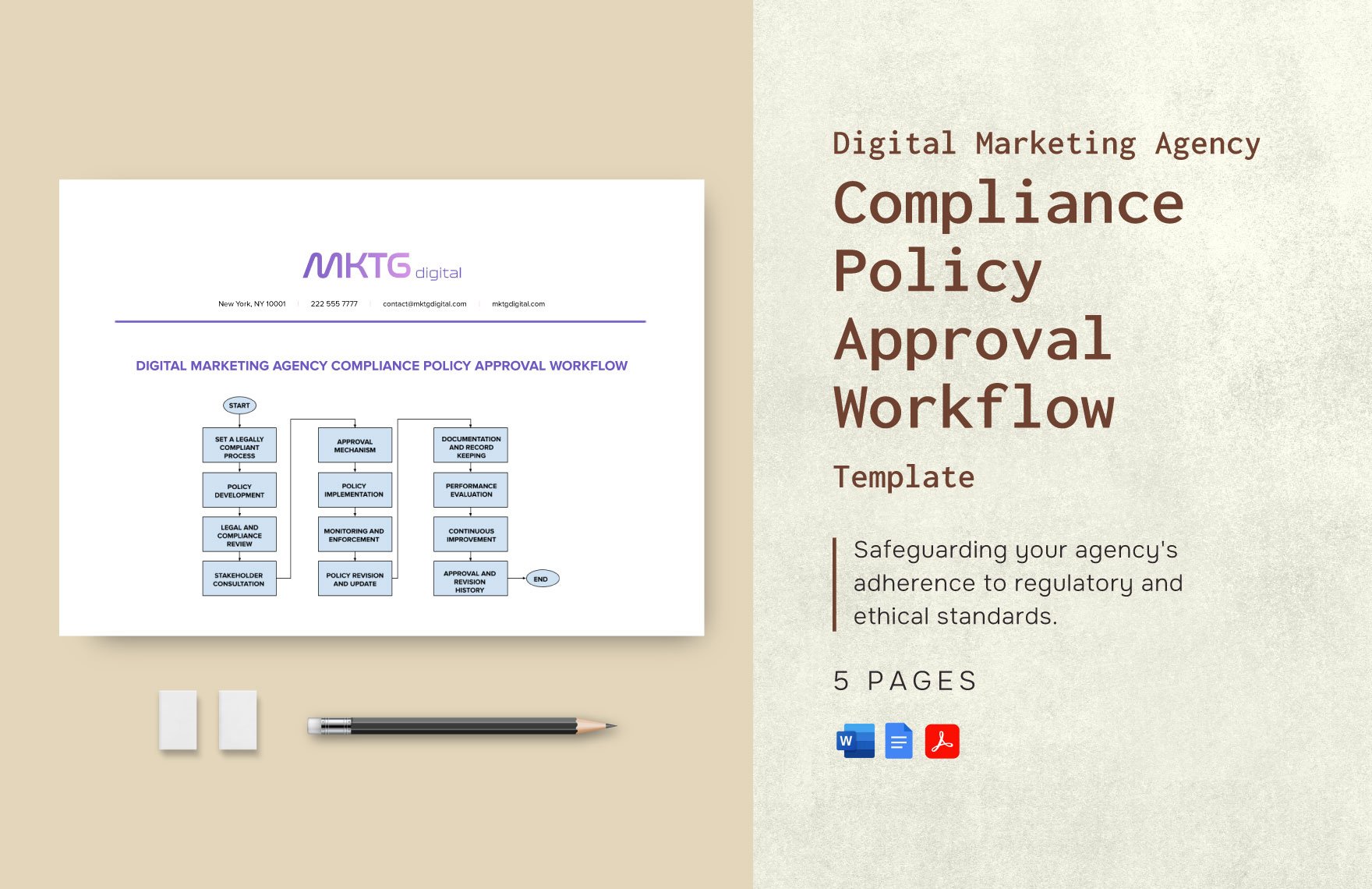

The workflow should also cover exceptions. If a campaign must move quickly and the normal review path cannot be followed, the policy can require a named decision-maker to authorize the exception and record why it was necessary. This is more useful than creating a rule that nobody can follow during urgent situations.

A mature policy also includes periodic review. Policies become unreliable when they describe old systems, old responsibilities, or services the agency no longer provides. The owner should periodically confirm that the document still matches actual operations and update it when there are material changes in technology, services, client requirements, or legal obligations.


Social media and public communication standards
Social media policies deserve their own operational treatment because a single post can represent both the agency and the client. A policy can establish who may publish, who can respond to sensitive comments, which topics require client review, and how credentials and brand assets are protected.
Content standards should cover factual accuracy, respectful communication, disclosure requirements where relevant, protection of confidential information, and escalation of complaints or crises. The policy should not attempt to predict every possible social situation. Instead, it should give staff a reliable decision path for routine publishing and unusual situations.
Publishing calendars can also be connected to the policy. A campaign may have planned publication dates, but the final post should still be tied to the correct approved asset and current instructions. If a client changes a promotion, product detail, landing page, or offer, the agency should have a method for identifying scheduled material that may now require revision.


A social media policy should also address crisis handling. Define who can pause routine publishing, who contacts the client, where sensitive incidents are recorded, and who can issue a public response. The objective is not to create unnecessary bureaucracy; it is to prevent several people from making contradictory decisions during a high-pressure event.


Connecting the policy with briefs, contracts, and project management
A policy works best when it connects naturally with the agency’s other documentation. A marketing agency brief template can capture campaign-specific goals, audiences, messages, channels, deliverables, deadlines, and dependencies. The policy then establishes the recurring standards that govern how the brief is handled.
The same principle applies to a marketing agency contract template. The contract should contain the commercial and legal terms agreed between the parties, while the policy can explain the agency’s operational standards. A contract may establish who owns a deliverable; the policy can explain how ownership information is recorded and how staff should avoid using protected client material outside the engagement.
Project operations can be supported by a marketing agency project template that records milestones, responsibilities, risks, decisions, and deliverables. For more complex teams, a marketing agency project management template can provide a consistent structure for task status, dependencies, review stages, and handover. These documents should complement the policy rather than duplicate it.


When a policy and project documentation are connected, a change in scope becomes easier to manage. For example, if a client adds a new channel, the project record can identify the additional work while the contract determines whether the change affects fees. The policy can then determine how the change is recorded, reviewed, and assigned internally.

Visual consistency can also help. An agency may maintain a marketing agency template website for its public presence while keeping policy documents visually consistent with its brand. A marketing agency website template free may be useful as a starting design reference, but the website and internal policy serve different purposes. The policy should prioritize clarity, traceability, and operational usefulness rather than promotional presentation.

Choosing document formats for agency policies
People searching for a marketing agency policy template free are often looking for a practical starting point rather than a finished policy that can be adopted without review. The important question is whether the structure can be adapted to the agency’s actual work. A visually attractive document is not useful if it leaves out access control, ownership, client responsibilities, review procedures, or project closure.
A marketing agency policy template pdf can be useful when a fixed reference copy is needed for circulation or records. A marketing agency policy template word can be more convenient when the agency needs to revise clauses, insert its own responsibilities, or maintain controlled versions. A marketing agency policy template google docs may suit teams that collaborate on policy revisions and need centralized document access.
Searchers may also look for a marketing agency policy template download or a marketing agency policy template free download. The format itself should not determine whether a policy is trustworthy. Before adopting any external document, review its origin, update history, legal assumptions, terminology, and relevance to the agency’s jurisdiction and services. A generic document may omit important requirements or contain provisions that do not fit the intended business model.


Common mistakes when creating an agency policy
One common mistake is writing a policy that describes an ideal agency rather than the real agency. If a document says every client receives a formal review, but the agency has no person assigned to conduct that review, the policy creates confusion rather than control. Each rule should have an owner, a realistic workflow, and a record that can demonstrate what happened.
Another mistake is mixing commercial terms with operational rules. Pricing, payment schedules, liability, termination rights, ownership, and dispute provisions generally belong in the relevant agreement. The internal policy can explain how staff follow those agreed terms without attempting to replace the contract.
A third mistake is treating security as a technical matter only. Security also depends on behavior. An agency may have strong systems but still create risk if staff share credentials, leave client information in uncontrolled locations, grant unnecessary privileges, or continue access after a project ends. The policy should therefore connect technical safeguards with clear human responsibilities.
Another frequent weakness is failing to define exceptions. Real projects change. Deadlines move, clients revise creative, platforms change their rules, and urgent incidents occur. A policy should explain who can authorize an exception and how the decision is documented instead of assuming that every project will follow an identical path.
How to customize the template for different agency models
A small specialist agency may need a concise policy covering confidentiality, data handling, project records, ownership, access control, communication, and client sign-off. A larger agency may need separate policies for security, social media, intellectual property, vendor management, records retention, content review, and incident response.
Agencies working with many freelancers should pay particular attention to third-party access. The policy should state what contractors may access, what confidentiality commitments are required, how client material is shared, and when access ends. Vendor management should also identify who is responsible for checking whether a supplier receives client information that requires additional contractual or security controls.
Agencies that manage websites and digital properties should define ownership and handover clearly. The policy can require project records to identify domains, hosting relationships, analytics properties, advertising accounts, repositories, and other important systems. The exact ownership terms should come from the client agreement, but the internal process should ensure that the information is documented and recoverable.
Practical Solution
Start by creating one master policy framework with a small number of clearly defined sections: purpose, scope, responsibilities, confidentiality, data handling, access control, intellectual property, content review, client communication, records management, incident response, exceptions, and policy maintenance. Do not begin by copying a long document and changing the company name. Instead, identify the agency’s actual workflows and build the policy around those workflows.
Next, connect the policy to the documents the team already uses. Link campaign briefs to project records, project records to contracts, and access records to the responsible client or internal owner. For each recurring activity, ask five practical questions: who performs it, what information is needed, what permission is required, what evidence should remain, and what happens when the work ends. The answers provide the operational substance of the policy.
Then test the policy against a realistic project scenario. Imagine a client starts a campaign, provides customer data, grants access to advertising systems, requests several creative revisions, adds a new channel, and later ends the engagement. Walk through the policy from onboarding to closure. If the team cannot determine who owns an action, where a decision is recorded, how access is removed, or which document controls a disputed issue, revise the policy before relying on it.
Finally, keep the policy under controlled review. Assign an owner, record its effective date and version, and revisit it when services, systems, vendors, or responsibilities change. If the agency handles personal information or operates across multiple jurisdictions, have qualified legal or privacy professionals review the relevant provisions. The goal is a policy that accurately describes the agency’s real operating environment, not simply a document that looks professional.
For agencies that want to organize the broader operating system around the policy, supporting resources can include a project brief, client agreement, access register, asset ownership record, review checklist, incident record, and handover checklist. A marketing agency project management template can help keep those operational records together, while the policy remains the governing reference for recurring standards.
What a strong policy looks like in practice
A strong policy is specific enough to guide action but flexible enough to support different clients and campaigns. It tells the team what must be protected, who is responsible, when review is required, how decisions are recorded, and what happens when the relationship changes. It does not need to predict every possible event.
The best document is also easy to maintain. If a policy requires ten separate spreadsheets and several manual checks for every small project, staff may avoid using it. A better design places the most important controls close to the workflow where they are needed and reserves detailed procedures for situations that genuinely require them.
Finally, the policy should be measured by operational clarity rather than document length. If a new team member can understand how client information is handled, how work is reviewed, who can access systems, how ownership is determined, and how a completed project is handed back, the policy is doing its job.
Reference Examples
A marketing agency policy Template is easiest to evaluate when readers can see how related policy documents organize information visually. Examples of data security policies, client data handling policies, contract structures, and briefing documents show different approaches to hierarchy, section ordering, ownership, security, and workflow documentation. These visual references should be treated as design and structural examples rather than as ready-made legal standards. The wording, responsibilities, review process, and legal provisions still need to reflect the agency’s own operations and agreements.
The following references also illustrate an important distinction between a policy and supporting agency documentation. A policy may establish a recurring rule, while a client contract defines commercial obligations, a brief defines campaign requirements, and a data handling document explains information practices in greater detail. Reviewing these examples side by side can help an agency build a coherent document system in which each document has a clear purpose instead of repeating the same information in multiple places.
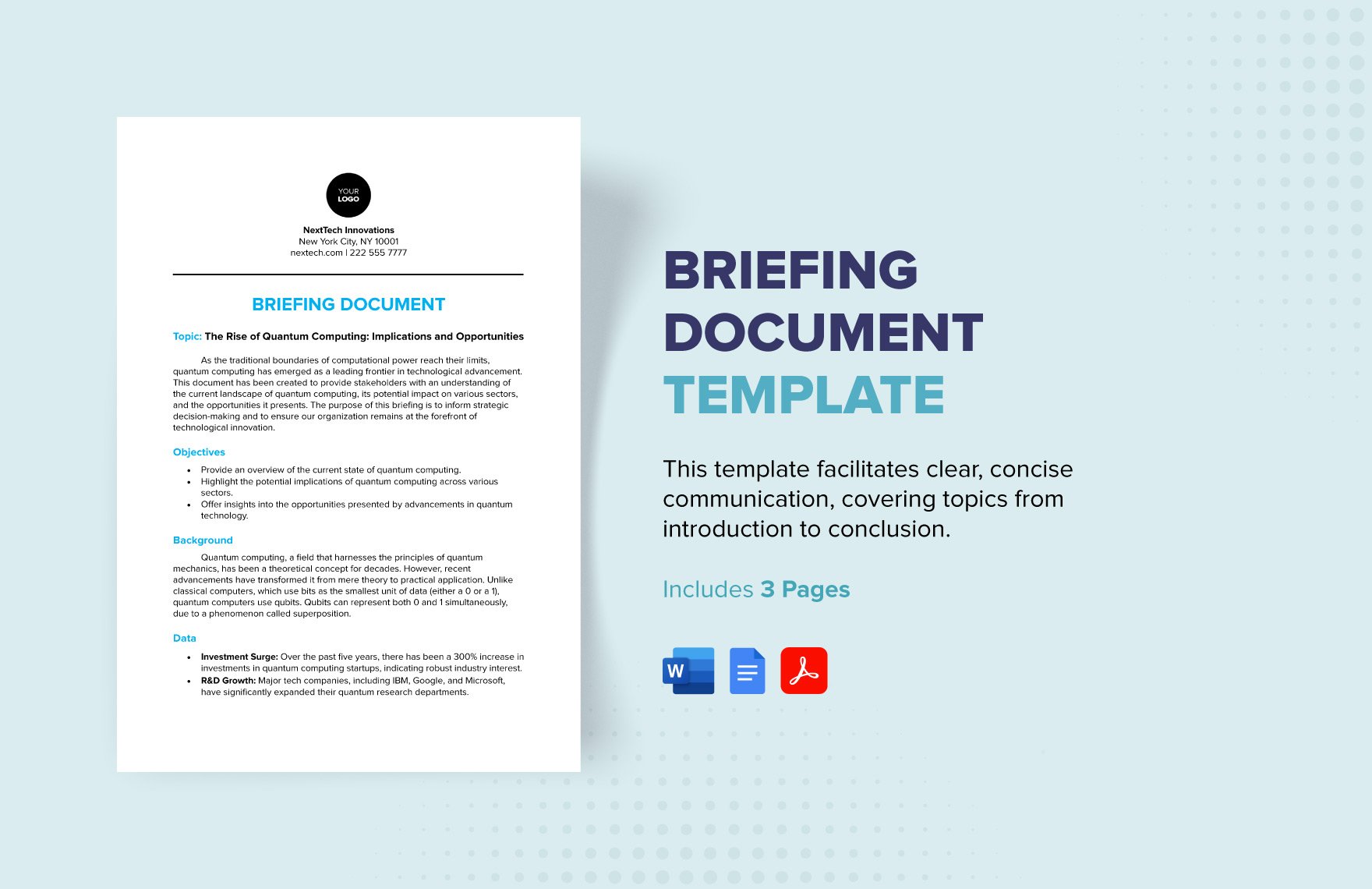
Briefing Document Template
Source: Template.net

Briefing Document Template
Source: Template.net

Briefing Document Template
Source: Template.net

Briefing Document Template
Source: Template.net

Digital Marketing Agency Client Data Handling Policy Template
Source: Template.net

Digital Marketing Agency Client Data Handling Policy Template
Source: Template.net

Digital Marketing Agency Client Data Handling Policy Template
Source: Template.net

Digital Marketing Agency Client Data Handling Policy Template
Source: Template.net

Digital Marketing Agency Client Data Handling Policy Template
Source: Template.net

Digital Marketing Agency Data Security Policy Template
Source: Template.net
