Starting and growing a civil engineering business requires more than technical engineering knowledge. A successful company also needs strong project management, accurate budgeting, effective communication, reliable documentation, and a clear business strategy. Whether you are starting a small engineering consultancy or managing an established construction and infrastructure company, organized business processes can make daily operations more efficient.
A civil engineering company may work on roads, bridges, buildings, drainage systems, land development, utilities, transportation infrastructure, and other construction projects. Because each project can involve different clients, contractors, regulations, schedules, and budgets, having a structured approach is essential.
This guide explains the key elements of running a civil engineering business and provides practical ideas for planning projects, controlling costs, managing risks, improving client relationships, and creating sustainable business growth.
What Is a Civil Engineering Business?
A civil engineering business provides professional engineering services related to the planning, design, construction, inspection, and management of physical infrastructure. Depending on its specialization, a company may serve property developers, government agencies, contractors, businesses, or private clients.
Common services include:
- Structural and civil engineering design
- Road and transportation engineering
- Site planning and land development
- Stormwater and drainage design
- Water and wastewater infrastructure
- Construction supervision and inspection
- Surveying and site assessment
- Project management and consulting
- Infrastructure feasibility studies
- Construction cost estimation and documentation
The exact services depend on the company’s qualifications, staff, equipment, location, and target market. However, every successful engineering firm benefits from combining technical expertise with sound business management.
How to Start a Civil Engineering Business
Launching an engineering company requires careful preparation. Before accepting projects, establish a clear business model and determine which services you can deliver effectively.
1. Define Your Engineering Services
Begin by identifying the services your company will provide. A focused service offering can make it easier to communicate your value to potential clients.
For example, a new company might specialize in residential site development, while another firm may focus on transportation infrastructure or commercial construction projects.
Consider your professional experience, available resources, local demand, and competition when selecting your primary services.
2. Identify Your Target Clients
A clear target market helps guide your marketing and business development efforts. Potential clients can include construction contractors, architects, developers, municipalities, property owners, industrial companies, and other engineering firms.
Understanding your ideal client also makes it easier to create proposals, pricing structures, service packages, and marketing content that address specific needs.
3. Create a Business Plan
A business plan provides a practical roadmap for your company. It should explain your services, target market, operating model, expected expenses, revenue strategy, and growth objectives.
Your plan can also include information about staffing, equipment, software, professional services, insurance, marketing, and working capital.
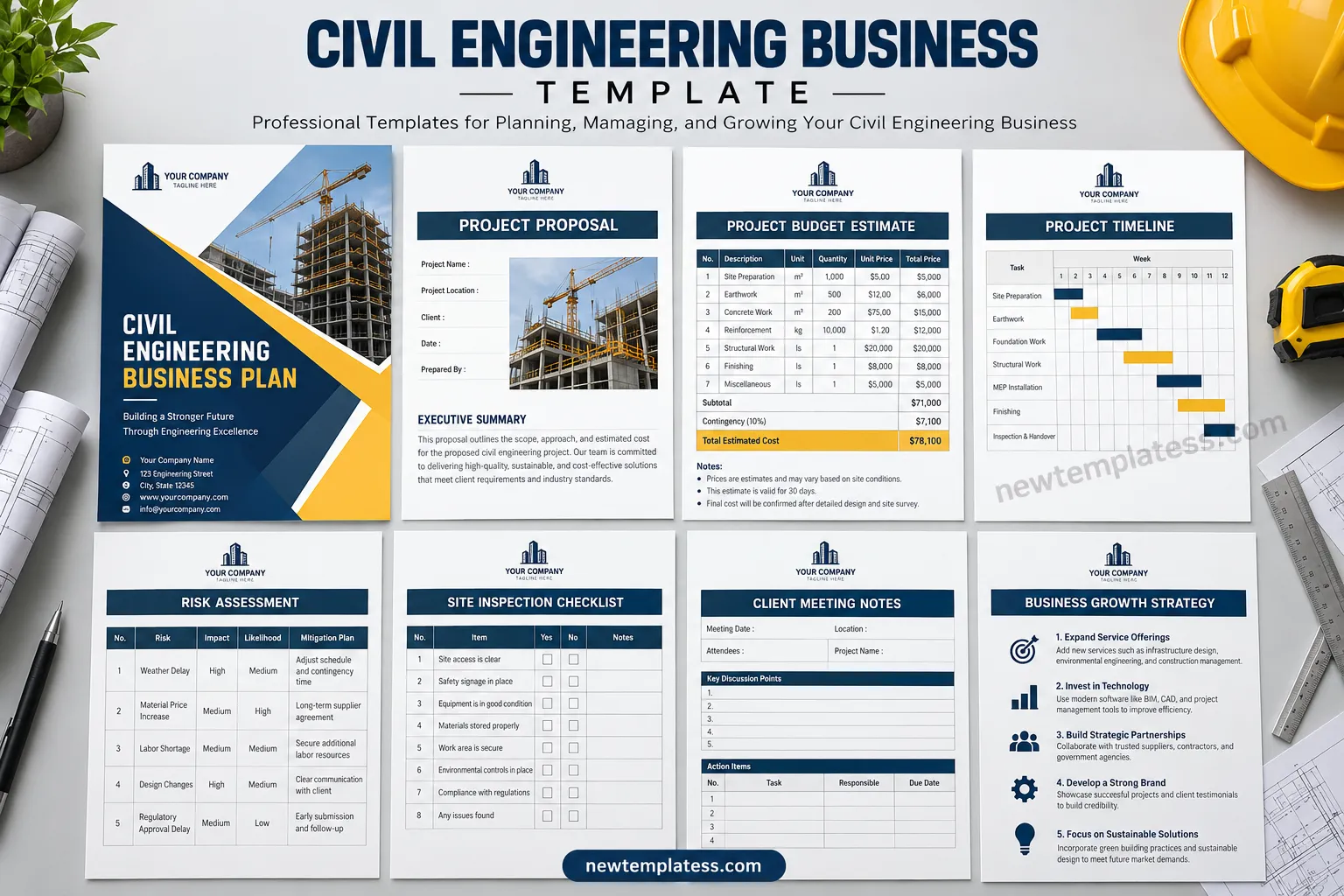
Essential Components of a Civil Engineering Business
Once the company is established, consistent business processes become important. Engineering firms often manage several projects at the same time, so standardized documentation can reduce errors and save valuable time.
Project Proposals
A professional project proposal should clearly explain the scope of work, project objectives, deliverables, schedule, assumptions, and estimated fees. A well-organized proposal allows clients to understand exactly what they are receiving.
It is useful to keep a reusable proposal template. The template can be customized for each project while maintaining a consistent professional appearance.
Project Budgeting
Accurate budgeting is central to construction and engineering project management. Project costs may include labor, materials, equipment, subcontractors, transportation, permits, software, and other professional expenses.
A project budget should be reviewed regularly rather than created only at the beginning. Comparing estimated costs with actual expenses can help identify potential problems early.
Project Scheduling
Engineering projects often involve multiple tasks that depend on one another. A clear project schedule helps teams understand deadlines, responsibilities, and important milestones.
Useful scheduling information can include:
- Project start and completion dates
- Design milestones
- Permit deadlines
- Procurement activities
- Construction phases
- Inspection dates
- Client review periods
- Final handover activities
Keeping the schedule updated is especially important when design changes, weather conditions, material delays, or other unexpected events affect project progress.
Managing Risk in a Civil Engineering Business
Risk management should be part of every engineering project. Civil engineering work can involve technical, financial, environmental, contractual, and scheduling risks.
A simple risk register can help the project team identify potential problems and determine appropriate responses.
Common Engineering Business Risks
- Unexpected site conditions
- Material price increases
- Construction delays
- Design changes
- Labor shortages
- Permit or approval delays
- Communication problems
- Scope changes
- Budget overruns
- Contractual disputes
For each significant risk, document its potential impact, likelihood, responsible person, and mitigation strategy. Regular reviews can then help the team respond before a small issue becomes a major project problem.
Using Technology in a Civil Engineering Business
Technology can improve productivity throughout an engineering organization. Modern firms may use computer-aided design, building information modeling, project management platforms, estimating software, cloud document storage, geographic information systems, and digital inspection tools.
The goal is not simply to adopt more software. Instead, choose technology that solves specific business problems.
For example, project management software can centralize schedules, tasks, documents, and communication. Cloud-based systems can also make it easier for authorized team members to access current project information from the office or job site.
Keep Digital Documents Organized
A consistent file structure can save significant time. Establish naming conventions for drawings, calculations, reports, contracts, photographs, invoices, and revisions.
Version control is also important. Team members should be able to identify which document is current and avoid accidentally using outdated drawings or specifications.
Building Strong Client Relationships
Technical expertise is only one part of a successful engineering company. Clients also value clear communication, reliable deadlines, transparent pricing, and professional service.
At the beginning of every project, confirm the scope, deliverables, responsibilities, assumptions, schedule, and communication process. This reduces misunderstandings later.
Regular progress updates can also build trust. Even when a project encounters difficulties, communicating early gives the client an opportunity to understand the situation and discuss possible solutions.
Marketing a Civil Engineering Business
A professional marketing strategy helps an engineering company reach potential clients. Because engineering services are often based on expertise and reputation, educational content can be particularly useful.
Build a Professional Website
Your website should clearly explain your services, industries served, experience, project capabilities, and contact information. Project case studies can demonstrate how your company approaches real engineering challenges.
Use Search Engine Optimization
SEO can help potential clients discover your company when they search for engineering services. Useful content might target phrases such as civil engineering business, civil engineering services, engineering consulting company, construction project management, infrastructure engineering, and civil engineering project planning.
Each page should provide genuine value rather than repeating keywords excessively. Clear headings, useful information, descriptive page titles, and helpful internal links can improve both user experience and search visibility.
Develop a Strong Professional Network
Relationships with architects, contractors, developers, surveyors, suppliers, and other professionals can create opportunities for collaboration. Industry events, professional associations, referrals, and partnerships can all contribute to business development.
How to Improve Profitability
Revenue growth does not automatically produce higher profitability. Engineering companies should understand where time and money are being spent on every project.
Track important business indicators such as:
- Revenue by project
- Project gross margin
- Billable hours
- Labor utilization
- Accounts receivable
- Project cost variance
- Proposal conversion rate
- Client retention
Review these numbers regularly. If a particular service consistently requires more resources than expected, investigate the reason and adjust pricing, processes, staffing, or project scope as appropriate.
Practical Tips for Managing an Engineering Company
A few simple habits can make daily operations more manageable.
- Standardize recurring documents: Use templates for proposals, budgets, meeting notes, inspections, and reports.
- Track project changes: Document scope changes and obtain appropriate client approval.
- Review project finances: Compare actual spending with the original budget regularly.
- Communicate early: Report potential delays or technical issues before they become larger problems.
- Protect project data: Use appropriate backups, permissions, and document-management procedures.
- Measure performance: Review project and business metrics to identify areas for improvement.
- Invest in employees: Training and professional development can strengthen technical and management capabilities.
Planning Long-Term Growth
Once an engineering company has a stable operating foundation, the next step is sustainable growth. Growth can come from adding new services, entering new markets, developing strategic partnerships, or improving operational efficiency.
However, expansion should be supported by adequate staff, financial resources, project controls, and management capacity. Taking on more projects without sufficient systems can create quality and scheduling problems.
A long-term growth strategy should therefore balance new opportunities with the company’s ability to deliver consistent results.
Conclusion
Building a successful civil engineering business requires a combination of technical knowledge and effective business management. From defining services and creating proposals to controlling budgets, managing risks, communicating with clients, and planning growth, every part of the operation contributes to long-term performance.
Professional templates can make these processes easier by providing a consistent starting point for important business documents. With organized workflows, reliable project controls, useful technology, and strong client relationships, an engineering company can create a more efficient foundation for future projects and sustainable growth.
