When property is used without permission, handled carelessly, damaged, removed, or used for an inappropriate purpose, having a clear record of what happened can make the situation much easier to manage. A misuse of property template provides a structured way to document incidents, identify the property involved, describe the misuse, record its impact, and note the action taken.
Whether you manage workplace equipment, school facilities, company assets, rental property, community resources, or organizational belongings, a consistent documentation process helps keep important information organized. Instead of relying on informal notes or memory, a property misuse report can create a clear record that can be reviewed by supervisors, administrators, property managers, or other responsible parties.
This guide explains what a misuse of property form should contain, when to use one, how to complete it effectively, and how a printable template can simplify the reporting process.
What Is a Misuse of Property Template?
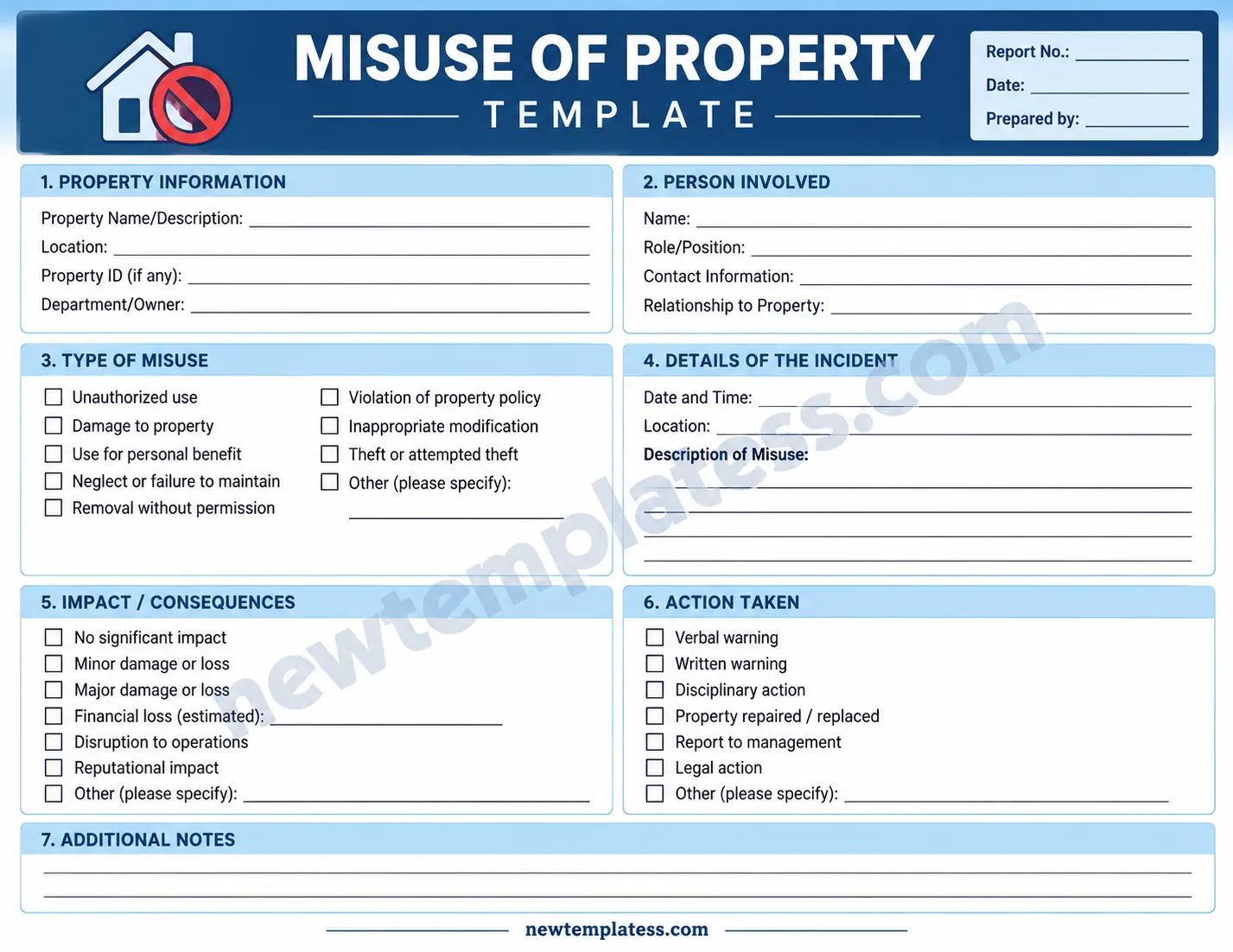
A misuse of property template is a preformatted document used to record an incident involving the inappropriate, unauthorized, careless, or improper use of property. It gives the person completing the report a consistent structure for collecting relevant details.
Depending on the situation, property misuse may include unauthorized use, damage, removal without permission, inappropriate modification, failure to maintain an item, or using organizational property for an unsuitable purpose.
A well-designed template typically includes fields for:
- Property name or description
- Property location and identification number
- Name and role of the person involved
- Date and time of the incident
- Type of misuse
- Description of what happened
- Impact, damage, or financial loss
- Corrective or administrative action
- Additional notes
Using the same format for similar incidents can also make records easier to review and compare over time.
When Should You Use a Property Misuse Form?
A property misuse form can be useful whenever there is a concern about how an item, facility, or other asset was used. The exact reporting requirements depend on the organization and its policies, but a written record can help preserve important facts.
Unauthorized Use
If someone uses equipment, facilities, vehicles, tools, or other property without the required authorization, documenting the incident can establish what property was involved and when the issue occurred.
Property Damage
When an item is damaged through improper handling or use, a report can document the condition of the property and describe the circumstances surrounding the incident.
Removal or Loss of Property
If property is removed from its assigned location without permission or cannot be accounted for, a structured report can provide a useful record for follow-up and internal review.
Improper Modification
Changes made to equipment, facilities, software-controlled assets, or other organizational property without approval may also need to be documented. The report should describe the modification without making unsupported assumptions about intent.
Key Sections of a Misuse of Property Template
A practical form should collect enough information to understand the incident without making the reporting process unnecessarily complicated.
1. Property Information
Start by identifying the property involved. Include the property’s name or description, location, identification number if available, and department, owner, or responsible unit.
Specific identification is important because organizations may have multiple items that look similar. Including an asset number, serial number, room number, or other identifier can reduce confusion.
2. Person Involved
Record the relevant person’s name and role when appropriate under the organization’s reporting procedures. Depending on the situation, the form may also include contact information or the person’s relationship to the property.
Keep this section factual. The purpose is to identify the people connected with the incident, not to make assumptions about their intentions.
3. Type of Misuse
A checklist can make this section faster to complete. Common categories include unauthorized use, property damage, personal use, neglect, removal without permission, policy violations, inappropriate modification, and other specified concerns.
Providing an “Other” option is useful because not every incident will fit neatly into a predefined category.
4. Incident Details
This is one of the most important sections of a property misuse report. Include the date, time, location, and a clear description of what was observed or reported.
Use specific and neutral language. Instead of writing that someone “deliberately destroyed” an item when intent has not been established, describe the observable facts, such as what condition the property was found in and what use was reported or observed.
5. Impact and Consequences
The report can document whether the incident resulted in damage, loss, disruption, financial costs, or another measurable impact. If an estimated financial amount is included, indicate that it is an estimate unless the exact cost has been confirmed.
6. Action Taken
Record the response that actually occurred. Depending on organizational procedures, this might include a warning, management notification, repair or replacement of property, an internal review, or another authorized action.
7. Additional Notes
Use the final section for relevant information that does not fit elsewhere. This could include follow-up requirements, supporting documentation, witness information where appropriate, or details about the property’s condition.
How to Fill Out a Misuse of Property Template
Completing a property misuse form accurately is more important than making it lengthy. Follow a consistent process to make the report clear and useful.
- Identify the property: Provide enough information to distinguish the item or facility from similar property.
- Record the basic facts: Include the date, time, location, and people involved when relevant.
- Describe what happened: Use concise, factual language rather than speculation.
- Document the condition: Note visible damage, missing items, or changes in condition when relevant.
- Record the impact: Include known losses, repairs, disruption, or other consequences.
- Document actions taken: State what response occurred or what follow-up is required.
- Review the report: Check names, dates, numbers, and other important details before filing it.
Tips for Writing a Clear Property Misuse Report
A strong report should allow another person to understand the incident without needing extensive additional explanation.
Stick to Verifiable Information
Separate observations from assumptions. Describe what was seen, reported, recorded, or otherwise documented. If information came from another person, make that clear when appropriate.
Be Specific
“Equipment was damaged” provides limited information. A more useful description identifies the equipment, its location, the type of visible damage, and when the damage was discovered.
Avoid Emotional or Accusatory Language
Property documentation is generally more useful when it remains professional and objective. Avoid unnecessary labels or statements about a person’s character or motivation.
Keep Supporting Records
Where organizational policy permits, supporting materials such as photographs, maintenance records, inventory information, receipts, or related correspondence may help provide additional context.
Benefits of Using a Printable Property Misuse Template
A printable template can make incident documentation more consistent and efficient. Instead of creating a new report from scratch every time an issue occurs, staff can use a familiar structure.
Key benefits include:
- Consistency: Similar incidents can be documented using the same basic format.
- Organization: Important information is separated into clearly labeled sections.
- Efficiency: Checkboxes and predefined fields can reduce repetitive writing.
- Record keeping: Completed forms can become part of an organization’s internal documentation process.
- Review: Supervisors or administrators can quickly locate key facts about an incident.
- Adaptability: The template can be customized for workplaces, schools, property management, clubs, or other organizations.
Who Can Use a Misuse of Property Form?
A misuse of property form can be adapted for many settings. Businesses may use it for company equipment and facilities, while schools can adapt it for classroom resources, technology, furniture, or other institutional property.
Property managers may use a similar document to record issues involving shared facilities or managed assets. Nonprofit organizations, community groups, and other institutions can also customize the form according to their internal procedures.
The important point is to adapt the template to the organization’s actual policies and reporting requirements rather than treating a general template as a substitute for those rules.
What Makes a Good Property Incident Template?
A useful property incident template should balance completeness with simplicity. Too little information can make the record difficult to understand, while an overly complicated form may discourage consistent use.
An effective template should have clear headings, logical sections, enough writing space, and straightforward language. Checkboxes can speed up routine selections, while open fields allow users to explain unusual circumstances.
It is also helpful to include basic document-control information such as a report number, date, and preparer’s name. These details can make completed forms easier to organize and reference later.
Frequently Asked Questions About Misuse of Property Templates
What is the purpose of a misuse of property form?
The purpose is to create a structured record of an incident involving inappropriate, unauthorized, careless, or otherwise improper use of property. It can help organizations document facts and track follow-up actions.
Can I customize a misuse of property template?
Yes. A general template can be adjusted to include organization-specific fields, property categories, approval requirements, reporting procedures, and additional documentation.
Should a property misuse report include financial losses?
If financial impact is known and relevant, the report can include an estimated or confirmed amount. Clearly distinguish estimates from verified costs.
Should the report include opinions about who was responsible?
Reports are generally more useful when they focus on documented facts and relevant observations. Any conclusions about responsibility should follow the applicable organizational process and available evidence.
Conclusion
A misuse of property template provides a practical framework for documenting incidents involving organizational assets, equipment, facilities, and other property. By recording property information, incident details, the type of misuse, its impact, and actions taken, organizations can maintain clearer and more consistent records.
The most effective approach is to keep reports factual, specific, organized, and aligned with the organization’s existing policies. A printable template can make that process easier by providing a ready-to-use structure that can be completed whenever a property-related incident needs to be documented.
