A consulting report letter is a professional document used to present important findings, recommendations, conclusions, and next steps to a client. It combines the clarity of a formal business letter with the practical value of a consulting report. When written well, it gives clients a concise overview of the consulting engagement and makes complex information easier to understand and act upon.
Whether you are an independent consultant, business advisor, management consultant, or part of a consulting firm, a well-structured report letter can strengthen communication with your client. It can also serve as a useful record of the project, document key recommendations, and provide a clear path toward implementation.
This guide explains how to create an effective consulting report letter, what information to include, how to structure the document, and how to make it professional and easy to read.
What Is a Consulting Report Letter?
A consulting report letter is a formal communication that summarizes the results of a consulting project. Instead of presenting every detail from a lengthy report, the letter focuses on the information the client needs most.
A typical consulting report letter may summarize the purpose of the engagement, major findings, recommendations, and proposed next steps. It can accompany a more detailed consulting report or work as a standalone document for smaller projects.
The format is especially useful when a consultant wants to communicate conclusions in a direct and professional way. It also provides a natural opportunity to thank the client and explain how the consultant can support future implementation.
Why Use a Consulting Report Letter?
A strong report letter can make the final stage of a consulting engagement much more effective. Clients often receive large amounts of information during a project. A concise letter helps them focus on the most important conclusions.
There are several practical benefits:
- Clear communication: It presents important conclusions in an organized format.
- Professional presentation: A formal letter reinforces the credibility of the consultant or consulting firm.
- Actionable recommendations: Clients can quickly identify what should happen next.
- Project documentation: The letter creates a useful record of the engagement and its outcomes.
- Client engagement: A thoughtful closing can encourage further discussion and collaboration.
Essential Elements of a Consulting Report Letter
A professional consulting report letter should be easy to scan. The reader should quickly understand who prepared the document, why the engagement took place, what was discovered, and what should happen next.
1. Professional Letterhead
Begin with a clean letterhead that includes the consulting firm’s name, logo, contact information, website, and other relevant details. Consistent branding helps establish a professional appearance.
2. Date and Client Information
Include the date of the letter followed by the client’s name, position, company, and address when appropriate. Accurate information gives the document a formal business structure.
3. Clear Document Title
Use a descriptive title such as Consulting Report Letter, Project Findings and Recommendations, or Consulting Engagement Summary. The title should immediately tell the reader what the document contains.
4. Introduction
The opening paragraph should briefly explain the purpose of the letter. Mention the consulting engagement and introduce the main findings or conclusions without adding unnecessary background information.
5. Engagement Overview
Explain why the consulting project was conducted. You can mention the project objectives, timeframe, research methods, interviews, data analysis, workshops, or other activities that contributed to the final recommendations.
6. Key Findings
Present the most important findings in a concise format. Bullet points work well because they allow clients to scan the information quickly.
7. Recommendations
Connect each recommendation to a relevant finding. Strong recommendations should be specific enough to guide action while remaining appropriate for the client’s circumstances.
8. Next Steps
Explain what should happen after the report is delivered. Next steps may include implementation planning, additional analysis, stakeholder meetings, performance tracking, or a follow-up consulting engagement.
9. Professional Closing and Signature
Close with a professional expression of appreciation. Include the consultant’s name, title, company, and signature area. A simple closing can leave the client with a clear and positive understanding of the engagement.
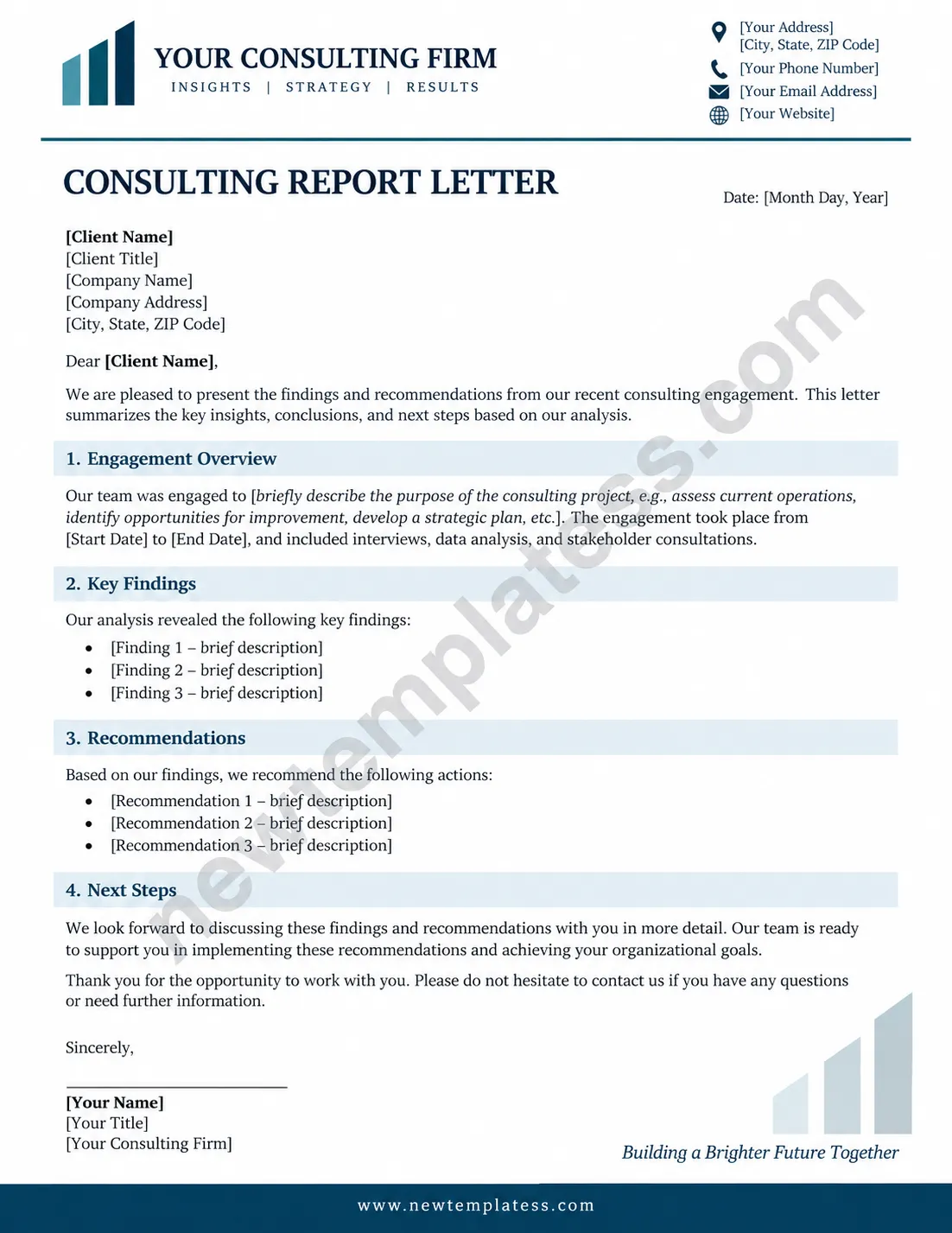
For a visual example of how these elements can be organized on one professional page, see the template below.
How to Structure a Consulting Report Letter
The structure should follow a logical sequence. Start with context, move to evidence and findings, and then present recommendations and actions.
A simple structure is:
- Consulting firm letterhead
- Date and client information
- Document title
- Opening greeting
- Introduction and purpose
- Engagement overview
- Key findings
- Recommendations
- Next steps
- Closing statement
- Consultant signature and contact information
This structure works for many types of consulting projects. You can adapt the sections based on the size, industry, and objectives of the engagement.
Tips for Writing an Effective Consulting Report Letter
Focus on the Client
Write the letter from the client’s perspective. Instead of describing everything your consulting team did, emphasize what the client learned and what the findings mean for the organization.
Keep the Language Clear
Avoid unnecessary jargon. Even when the project involves technical or specialized information, explain important concepts in plain English whenever possible.
Make Recommendations Actionable
Weak recommendations can sound vague. For example, saying that a company should “improve its operations” does not provide much direction. A stronger recommendation identifies a specific area, action, and intended outcome.
When appropriate, include information such as:
- The recommended action
- The person or team responsible
- The suggested timeframe
- The expected benefit
- Any important resources or dependencies
Use Evidence Carefully
Recommendations should be supported by the findings from the consulting engagement. Where useful, mention relevant data, interviews, customer feedback, financial analysis, operational measurements, or other evidence.
Make the Document Easy to Scan
Use short paragraphs, meaningful headings, bullet points, and adequate white space. A client should be able to skim the document and still understand its main message.
Common Mistakes to Avoid
A consulting report letter can lose its effectiveness when it becomes too long, vague, or difficult to navigate. Avoid these common problems:
- Too much background: Keep the introduction focused on information that helps explain the findings.
- Unclear recommendations: Tell the client what action is being recommended and why.
- Excessive jargon: Use terminology only when it improves clarity.
- Unsupported conclusions: Connect important recommendations to relevant evidence.
- Inconsistent formatting: Use consistent headings, spacing, typography, and branding.
- No clear next step: Tell the client what should happen after receiving the letter.
- Overly long paragraphs: Break complex information into smaller sections or lists.
When Should You Use a Consulting Report Letter?
This type of document can be useful at several points during a consulting engagement. It may be used at the conclusion of a project, as an executive summary accompanying a detailed report, or as a formal communication after presenting recommendations.
Common applications include management consulting, business strategy, marketing consulting, financial advisory projects, operations consulting, human resources consulting, technology consulting, and organizational development.
For a small consulting assignment, the letter may contain most of the project’s conclusions. For a large engagement, it can serve as a concise introduction to a longer report containing detailed research, charts, financial models, or implementation plans.
How to Customize a Consulting Report Letter Template
A template saves time, but it should always be customized for the specific client and project. Start by replacing placeholder information with the client’s actual details. Then adjust the sections to match the engagement.
For example, a strategy consulting project might emphasize market findings and strategic recommendations. An operations project may focus on process improvements, efficiency opportunities, and implementation priorities.
You should also adapt the visual design to your brand. Use your organization’s logo, colors, typography, contact details, and preferred document style. However, avoid excessive decoration that makes the document harder to read.
Final Checklist Before Sending
Before delivering your consulting report letter, review the document carefully. A final quality check can prevent simple errors from undermining an otherwise professional presentation.
- Confirm the client’s name and company information.
- Check the date and project timeframe.
- Verify all important findings and figures.
- Make sure recommendations are specific and relevant.
- Confirm that the next steps are clear.
- Check spelling, grammar, punctuation, and formatting.
- Ensure the branding is consistent.
- Review the document on screen and, if appropriate, as a printed page.
- Confirm that the correct attachments or supporting reports are included.
Conclusion
A well-designed consulting report letter gives clients a clear and professional summary of a consulting engagement. By combining a concise introduction, engagement overview, key findings, practical recommendations, and clearly defined next steps, the document can turn complex project information into an easy-to-use business communication.
The most effective approach is to keep the client at the center of the document. Use clear language, support conclusions with relevant evidence, make recommendations actionable, and maintain a consistent professional design. With a flexible consulting report letter template, consultants can also reduce preparation time while maintaining a polished presentation across different projects.
Whether you are preparing a final project summary or a formal letter to accompany a detailed consulting report, a thoughtful structure makes the information easier to understand and more useful to the reader.
