A well-planned marketing material purchase can help a business maintain a consistent brand image, support sales activities, and prepare for campaigns, events, and customer outreach. From brochures and business cards to banners, promotional products, presentation folders, and printed campaign materials, every purchase should have a clear purpose and budget.
Without a structured purchasing process, marketing teams can easily overspend, order the wrong quantities, or receive materials that do not match brand standards. A simple marketing materials purchase form can make the process more organized by bringing purchase details, supplier information, quantities, costs, and approvals into one place.
This guide explains how to plan a marketing material purchase, what information to include in a purchase request, how to manage suppliers, and how to make each purchase more efficient.
What Is a Marketing Material Purchase?
A marketing material purchase is the process of buying physical or digital resources used to promote a company, product, service, campaign, or event. These materials can support both everyday marketing activities and specific promotional campaigns.
Common examples include:
- Business cards and letterheads
- Brochures, flyers, and catalogs
- Posters, banners, and signs
- Presentation folders and sales kits
- Product samples and promotional items
- Branded stationery
- Event displays and trade show materials
- Printed advertising materials
- Packaging inserts and promotional cards
- Digital marketing assets purchased from external providers
The goal is not simply to buy marketing supplies. The goal is to purchase the right materials, in the right quantity, at an appropriate cost, and at the right time.
Why a Structured Marketing Material Purchase Process Matters
Marketing departments often manage multiple campaigns at the same time. Without a clear purchasing process, small expenses can become difficult to track. A structured process helps connect each purchase to a specific campaign, project, department, or business objective.
Better Budget Control
A purchase request can show the estimated unit price, quantity, and total expected cost before an order is placed. This gives managers an opportunity to review spending and compare the request with the available marketing budget.
Fewer Purchasing Errors
Written specifications reduce misunderstandings between the marketing team, purchasing department, and supplier. The request can clearly state quantities, sizes, materials, colors, delivery requirements, and other important details.
Improved Brand Consistency
Marketing materials represent your brand. A documented purchasing process makes it easier to confirm that designs, logos, colors, messaging, and production specifications meet company standards before materials are produced.
Faster Approvals
When all essential information is included in one purchase request, decision-makers do not have to search through separate emails or messages for missing details. This can make internal approval faster and easier.
What to Include in a Marketing Material Purchase Request
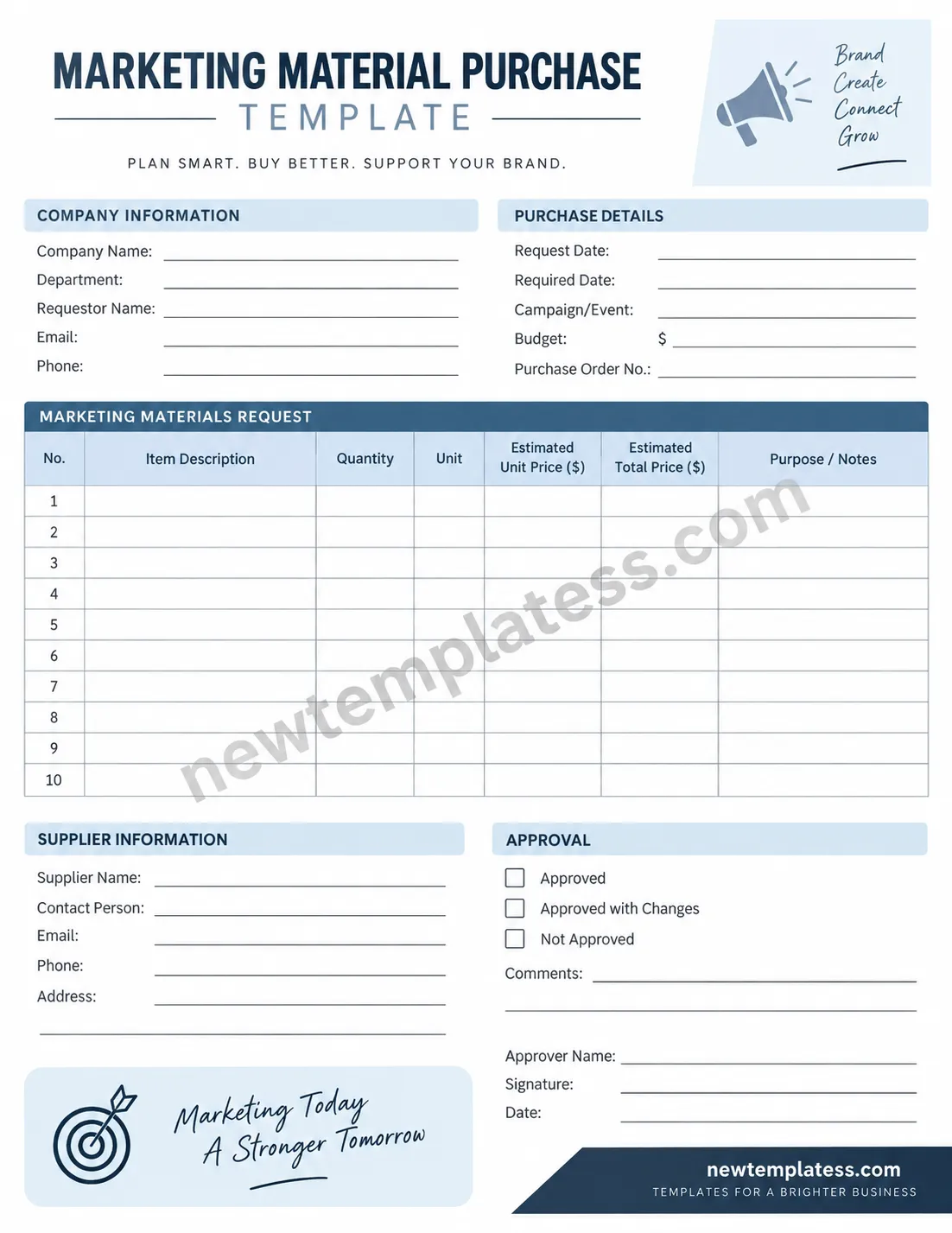
A useful marketing purchase request should provide enough information for another person to understand exactly what is being purchased and why. A standardized template can make this information easier to collect.
1. Company and Requestor Information
Start with basic information about the person or department making the request. Useful fields include the company name, department, requestor name, email address, and phone number.
This information makes it easier for purchasing staff or suppliers to follow up when clarification is needed.
2. Purchase Details
The request should also include important purchasing information, such as:
- Request date
- Required delivery date
- Campaign or event name
- Available budget
- Purchase order number, if applicable
Adding a campaign or event name is particularly useful because it connects the expense with a specific marketing activity.
3. Item Description and Quantity
Each marketing item should have a clear description. Instead of writing only “brochures,” provide useful specifications such as brochure size, paper type, number of pages, printing requirements, and quantity.
The more precise the description, the less likely the supplier is to misunderstand the request.
4. Estimated Pricing
Include the expected unit price and estimated total price whenever possible. If the exact price is not known, request a supplier quotation before final approval.
Comparing estimated costs with the approved marketing budget can help prevent unexpected spending.
How to Plan a Marketing Material Purchase
Good purchasing begins before the order is placed. Taking a few minutes to define the purpose, quantity, specifications, and budget can prevent costly mistakes later.
Define the Purpose
First, determine why the materials are needed. Are they for a product launch, trade show, sales presentation, seasonal campaign, customer event, or ongoing brand promotion?
A clear purpose helps determine the type and quantity of materials required.
Estimate the Required Quantity
Estimate demand based on the number of customers, attendees, sales representatives, locations, or expected campaign interactions. Avoid ordering significantly more than necessary unless the materials have a long shelf life and can be used in future campaigns.
Set a Realistic Budget
Consider more than the advertised unit price. The actual purchase cost may also include design fees, setup charges, shipping, taxes, rush production fees, and other expenses.
A useful budget calculation is:
Total estimated cost = quantity × unit price + additional costs
Confirm Specifications
Before submitting the order, verify the specifications. Depending on the material, this may include dimensions, paper weight, finish, printing method, colors, artwork requirements, packaging, and delivery instructions.
How to Choose a Marketing Materials Supplier
The supplier you choose can affect cost, quality, delivery time, and the overall success of your campaign. Price should be considered alongside reliability and production quality.
When comparing suppliers, consider:
- Product quality and sample availability
- Pricing and minimum order quantities
- Production and delivery times
- Printing or manufacturing capabilities
- Customer service and communication
- Experience with similar marketing materials
- Revision and proofing procedures
- Shipping costs and delivery options
For important campaigns, requesting a sample or digital proof before approving full production can reduce the risk of receiving materials that do not meet expectations.
Common Marketing Material Purchase Mistakes
Even simple marketing purchases can create problems when planning is rushed. Recognizing common mistakes can help teams improve their purchasing workflow.
Ordering Without Checking Inventory
Before buying new materials, check existing inventory. Your team may already have enough brochures, folders, banners, or promotional products for the upcoming activity.
Ignoring Lead Times
Marketing materials often require design approval, proofing, production, and shipping. Waiting until the last minute can lead to rush fees or missed event deadlines.
Focusing Only on Unit Price
The cheapest supplier is not always the lowest-cost option overall. Poor quality, high shipping charges, excessive waste, or unreliable delivery can increase the true cost of a purchase.
Leaving Specifications Too General
A vague request can lead to incorrect quantities, materials, dimensions, or finishes. Specific descriptions make supplier communication more efficient.
Skipping the Approval Process
Marketing purchases should follow the organization’s internal spending rules. Proper approval provides accountability and helps prevent unauthorized or unexpected expenses.
Tips for Making Marketing Purchases More Efficient
A few simple improvements can make recurring marketing procurement much easier.
- Use a standardized purchase template: Keep company information, item details, costs, supplier information, and approval fields together.
- Maintain a supplier list: Record reliable suppliers, typical prices, lead times, and product capabilities.
- Track previous purchases: Historical purchasing data can help with future quantity and budget estimates.
- Order strategically: Combine compatible purchases when doing so reduces production or shipping costs.
- Review inventory regularly: Monitor existing stock before approving new orders.
- Build in delivery time: Allow extra time for revisions, production delays, and shipping problems.
- Keep approval records: Store completed purchase requests with invoices, quotations, and purchase orders.
Using a Marketing Material Purchase Template
A dedicated template can simplify the entire purchase workflow. Instead of creating a new request from scratch each time, marketers can complete the same core fields for every order.
A practical template should contain sections for company information, purchase details, item descriptions, quantities, estimated prices, supplier information, and approval. It can also include a space for notes so the requestor can explain the campaign purpose or special requirements.
This approach creates a consistent record for each marketing material purchase. It also makes it easier for managers and finance teams to review requests and understand how marketing funds are being used.
When a Printable Template Is Useful
A printable purchase form can be particularly helpful for businesses that use physical approval workflows, work across multiple departments, or need a simple record for recurring marketing procurement.
It can also be adapted into a digital form or spreadsheet if your organization prefers electronic purchasing processes.
Final Checklist Before Approving a Marketing Material Purchase
Before submitting or approving a purchase request, review the following checklist:
- Is the marketing purpose clearly identified?
- Are the item descriptions specific enough?
- Is the required quantity accurate?
- Has existing inventory been checked?
- Is the estimated cost within budget?
- Have additional costs been considered?
- Has the supplier been evaluated?
- Is the delivery date realistic?
- Have artwork and brand specifications been confirmed?
- Has the appropriate person approved the purchase?
Conclusion
An organized marketing material purchase process helps businesses control costs, reduce errors, maintain brand consistency, and ensure marketing materials are available when they are needed. Whether you are purchasing brochures for a sales campaign, banners for an event, or promotional products for customers, clear documentation can make the process significantly easier.
A well-designed marketing material purchase template provides a practical starting point. By recording purchase details, quantities, pricing, supplier information, and approvals in one place, marketing teams can make better-informed purchasing decisions and create a more consistent procurement workflow.
With careful planning, accurate specifications, realistic budgets, and reliable suppliers, every marketing materials purchase can support the broader goals of your brand and campaign.
