A network service contract defines the commercial and technical relationship between a customer and a provider responsible for connectivity, managed networking, security, monitoring, maintenance, or related infrastructure. A well-built contract does more than identify a price and a start date. It converts technical expectations into measurable duties, establishes who owns each task, explains what happens when service levels are missed, and sets a workable process for changes, incidents, billing, renewal, and termination. This makes the document useful to procurement teams, IT leaders, operations managers, vendors, and legal reviewers.
The search intent behind network service contract Template is usually practical. Readers are often looking for a structure they can adapt, a clear explanation of the clauses that matter, a sample layout, or guidance on choosing between editable document formats. The goal should not be to copy a generic form without review. A network contract works best when the language matches the actual service architecture, locations, support model, security responsibilities, and commercial arrangement.
Current template resources commonly organize the agreement around parties, scope, service levels, pricing, security, confidentiality, liability, term, termination, dispute handling, and transition. Those categories appear in contemporary network-services template resources and service-agreement examples, although the exact wording and legal effect vary by provider and jurisdiction. A template should therefore be treated as a drafting framework rather than as a substitute for legal review.

What a network service contract should accomplish
The central purpose of a network service contract is to remove ambiguity. A customer needs to know what the provider will deliver, where it will be delivered, when support is available, how performance will be measured, and what the customer must do to maintain the service. The provider needs the same clarity about access, site readiness, payment, approved changes, customer equipment, and incident cooperation. When those expectations are written in measurable language, operational teams have a common reference point.
A strong agreement also separates the commercial relationship from technical detail without disconnecting the two. The main body can establish legal and business terms, while schedules can describe circuits, bandwidth, locations, equipment, support contacts, maintenance windows, monitoring points, and service-level metrics. This structure makes later revisions easier because a new site or service can be added through an agreed schedule rather than rewriting every general clause.
Another objective is accountability. If a provider manages a firewall, router, switch, wireless network, WAN connection, or monitoring platform, the contract should identify the boundary of responsibility for each component. A useful document makes it possible to answer questions such as who opens a carrier ticket, who replaces failed hardware, who approves configuration changes, who keeps credentials current, and who communicates during a major outage.
Scope, exclusions, and service boundaries
The scope clause is the technical heart of the document. It should name the services rather than rely on broad phrases such as reliable connectivity or comprehensive support. Depending on the engagement, the scope may cover internet access, private connectivity, WAN links, VPN services, managed routers, managed switches, wireless infrastructure, firewall administration, monitoring, configuration backup, patch coordination, incident response, and technical support.
Exclusions matter just as much as included work. A provider might manage a router but not the customer’s internal endpoints. It might monitor a firewall but require the customer to approve policy changes. It might supply a circuit but exclude building cabling beyond a defined demarcation point. Each boundary should be stated so that an outage or change request does not become a debate over what the monthly fee was supposed to cover.
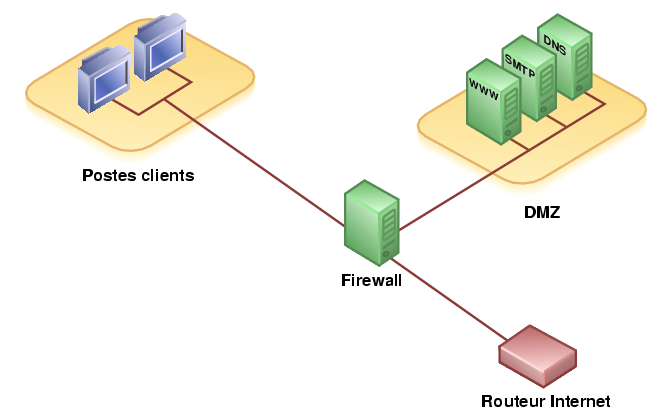
Technical schedules should capture details that are too specific for a general clause. A schedule may list site addresses, circuit identifiers, committed bandwidth, interface handoff, service type, managed equipment, monitoring location, maintenance window, and support priority. A visual such as a network topology can help readers understand those boundaries, especially where multiple sites or security zones are involved.

Key sections to include in the contract
A practical network service contract template should identify the legal parties, effective date, purpose, defined terms, scope, service levels, fees, security duties, confidentiality, ownership, warranties, liability, indemnification, term, renewal, termination, dispute process, notices, governing law, and signature authority. The exact set of clauses depends on the transaction, but omitting a core operational topic can create uncertainty later.
The parties section should use the legal names of the contracting entities and identify the relevant business addresses and notice contacts. If a provider uses a brand name that differs from its legal entity, the agreement should make the relationship clear. The definitions section can then establish terms such as Services, Service Availability, Incident, Maintenance Window, Customer Equipment, Provider Equipment, Confidential Information, and Service Credit.
The contract should also identify documents that form part of the agreement. A master agreement might be accompanied by a service schedule, pricing schedule, security addendum, data-processing terms, and service-level schedule. State clearly which document controls if provisions conflict. This is especially important when a sales proposal, order form, technical statement, and general terms all contain overlapping promises.

Service levels and measurable performance
A service-level section should define measurable performance rather than broad promises. Typical metrics can include availability, response time, restoration target, latency, packet loss, monitoring frequency, and maintenance-window rules. The contract should specify how each metric is measured, which monitoring source controls, what exclusions apply, and what evidence is used to calculate performance.
Availability deserves careful drafting because a percentage by itself does not explain the measurement method. The parties should identify the measurement point, measurement interval, planned maintenance treatment, force-majeure treatment, customer-caused incidents, and any agreed exclusions. If the provider measures availability at its core while the customer’s actual service depends on a local access circuit, the two parties may be measuring different realities.
Service credits can be used as a contractual remedy when agreed performance is missed. The schedule should explain the trigger, calculation, claim process, maximum credit, and whether a credit is the customer’s sole remedy for the particular service-level failure. These details should be reviewed alongside liability provisions so the economic effect of the contract is understood as a whole.

Pricing, billing, and changes
The commercial schedule should identify recurring charges, one-time charges, usage-based amounts, taxes, billing frequency, invoice timing, payment due dates, disputed-invoice procedures, and any permitted price adjustments. If different services have different billing rules, separate them clearly. The contract should also state whether equipment, installation, travel, after-hours work, or third-party carrier costs are included or billed separately.
Change control is essential when network services evolve during a multi-year relationship. A change process can require a written request, technical impact assessment, pricing impact, implementation window, rollback plan, and approval by authorized representatives. This prevents informal requests from becoming disputed contractual commitments and gives both sides a record of what changed.
When comparing a network service contract template format, look for a structure that keeps recurring commercial terms separate from technical schedules. A well-organized network service contract template word document can be convenient for drafting, while a network service contract template pdf can be useful for reviewing a fixed version before signature. The format matters less than whether the underlying terms are complete, internally consistent, and reviewable.

Security, confidentiality, and access control
Network services often involve privileged access to routers, firewalls, switches, monitoring systems, logs, credentials, and configuration files. The contract should therefore define security responsibilities with enough specificity to be operational. It can address account management, authentication, privileged access, logging, vulnerability handling, configuration protection, remote access, credential exchange, and incident escalation.
Confidentiality should cover non-public technical and business information that the parties exchange. Network diagrams, addressing plans, security policies, credentials, pricing, customer records, and operational procedures may all require protection. The agreement should define permitted use, permitted disclosure, handling of compelled disclosure, return or destruction obligations where appropriate, and any provisions that continue after termination.
Incident response language should identify notification duties and cooperation expectations. A useful clause explains what constitutes a security incident for the contract, who must be notified, what information should be supplied initially, how updates are communicated, and how evidence is preserved. Contractual timing should be coordinated with any statutory, regulatory, or sector-specific obligations that actually apply to the parties.
Data protection and technical evidence
If the provider can access personal information or other regulated data, the agreement may need additional data-protection terms. The correct approach depends on the services, data flows, parties, and jurisdictions involved. A network contract should not simply name a compliance framework without determining whether it applies and which obligations each party can actually perform.
Evidence requirements are equally important. The parties can agree on what records support service reviews, such as monitoring reports, incident tickets, maintenance notices, configuration histories, and monthly performance summaries. A contract that defines evidence in advance is easier to administer than one that waits until a dispute arises to decide what records should count.
Where security responsibilities are shared, an attachment can map each control to a responsible party. For example, the provider may manage perimeter firewall rules while the customer controls identity administration. Another arrangement may reverse those duties. The contract should reflect the actual operating model rather than assuming that the party supplying connectivity also controls every security layer.
Network architecture and technical schedules
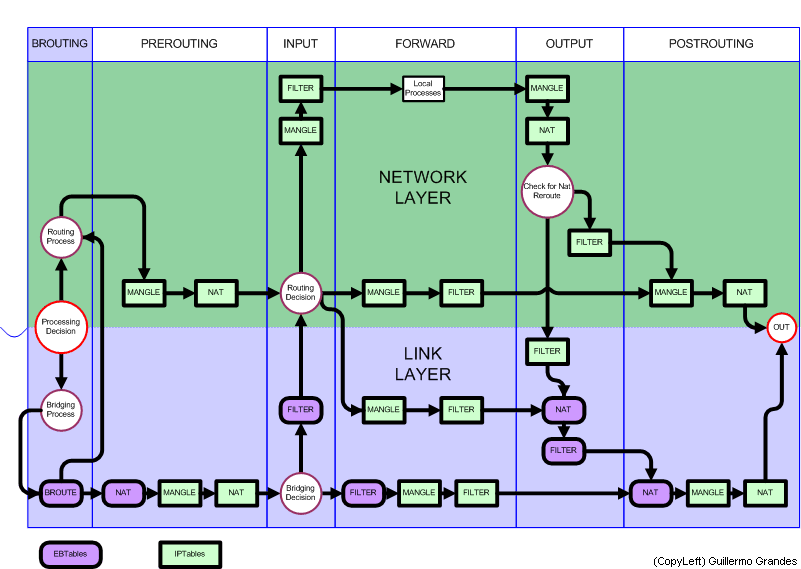
A network service agreement becomes easier to administer when the contract connects legal obligations to a clear technical baseline. Architecture diagrams can show the relationship among customer sites, provider infrastructure, internet connections, security zones, routing boundaries, and managed devices. The contract itself should remain authoritative, but the diagram can provide a shared visual reference for implementation and support.
For multi-site services, identify each location and the service delivered there. A location schedule can record the site identifier, service type, committed capacity, handoff, equipment responsibility, support priority, and any special access restrictions. If a site is added or removed, the parties can update the schedule through the change process without making the general agreement harder to read.
Routing and authentication responsibilities should be explicit when they affect service performance or security. A provider may operate routing protocols, VPN tunnels, address translation, or authentication infrastructure, while the customer maintains internal policies and endpoint identity. The contract should define interfaces and dependencies so that an incident can be assigned to the correct party without delay.

Monitoring and operational support
Monitoring clauses should explain what is monitored, how often, and what happens when an alert is generated. A provider may monitor availability, interface status, bandwidth utilization, device health, environmental alarms, or security events. The contract should avoid promising monitoring capabilities that are not actually included in the service design.
Support procedures should define channels, hours, priority levels, escalation contacts, and expected response behavior. A simple priority model might distinguish a complete service outage from a degraded service and from a routine request. The important point is that the definitions are objective enough for support teams to classify incidents consistently.
Maintenance language should explain planned work, notice periods, emergency maintenance, customer coordination, and service-level treatment. If the provider can perform changes remotely, the agreement should also address authorized access, change records, and any customer approval requirement. This reduces the risk that a routine maintenance action is later interpreted as an unauthorized change.

Term, renewal, termination, and transition
The term clause establishes when the agreement begins and how long it remains in effect. Renewal language should state whether renewal is automatic, how long each renewal period lasts, and how much notice is required for non-renewal. These provisions should align with procurement calendars and technical migration realities rather than being treated as boilerplate.
Termination provisions normally distinguish termination for uncured material breach, insolvency-related events where legally appropriate, prolonged service failure, and termination for convenience if the commercial deal permits it. A cure period can give the breaching party a defined opportunity to correct a problem. The agreement should also state what happens to unpaid invoices, prepaid amounts, equipment, credentials, data, and outstanding support work when termination occurs.
Transition assistance is especially important for managed network services. A customer may need configuration exports, diagrams, asset records, circuit information, credentials transferred through an approved process, and cooperation with a replacement provider. The contract should define the duration and cost of transition assistance and protect security-sensitive information during the handover.

Liability, indemnification, and insurance
Liability provisions allocate financial risk if a party breaches the agreement or causes legally recoverable harm. A liability cap may be expressed as a fixed amount or as a multiple of fees paid during a defined period. The parties should review the cap together with exclusions, service credits, indemnities, confidentiality duties, security obligations, and insurance requirements.
Indemnification is different from a general liability cap because it typically addresses specified third-party claims or categories of loss. The contract should define the covered claims, procedures for notice and defense, settlement control, and any relationship between indemnified amounts and the general liability provisions. The exact allocation should be reviewed for the particular transaction rather than copied from an unrelated service agreement.
Insurance requirements, where appropriate, should be proportionate to the services and risks involved. Relevant policies may include commercial general liability, professional liability, cyber coverage, workers’ compensation where applicable, or property coverage. The agreement should identify required evidence and whether coverage must remain in force for the contract term.

California considerations for a network service contract
A search for a network service contract template california often reflects a desire to adapt a general business contract to California operations. The important point is that a California-oriented template is not automatically an official state form. Contracting parties should identify the actual governing law, business structure, service locations, data obligations, and any sector-specific requirements that apply to the transaction.
California contracts may also intersect with state rules on electronic transactions, privacy, consumer or commercial arrangements, employment issues, and other subject-specific requirements depending on the facts. For example, the California Judicial Branch publishes specific rules for certain contracts involving electronic filing service providers, but those court rules should not be treated as general requirements for ordinary commercial network-service agreements.
For a California customer, the governing-law clause should be reviewed alongside venue, notice, dispute resolution, limitation-of-liability language, and any mandatory statutory provisions. If the provider serves multiple states, the parties should also examine whether different locations or service types create separate legal requirements. A jurisdiction-specific legal review is appropriate when the contract carries significant operational or financial exposure.

Choosing a practical template structure
A useful network service contract template sample should be easy to audit from both a legal and technical perspective. Start with the parties and definitions, then move through scope, service levels, pricing, security, confidentiality, ownership, risk allocation, term, termination, and miscellaneous provisions. Put variable technical details into schedules so the main agreement remains stable as the network changes.
A network service contract template example is most useful when it demonstrates relationships among clauses rather than simply displaying attractive formatting. For instance, an SLA should connect to the measurement method, the reporting process, and the remedy. A security obligation should connect to access controls, incident notification, and evidence. A termination clause should connect to transition duties and data handling. The document becomes stronger when these provisions work together.
Readers comparing a network service contract sample with a network service contract example should check whether the document reflects the actual service model. An internet connectivity agreement can be much shorter than a managed network arrangement covering firewalls, routing, monitoring, security operations, and on-site support. Length alone is not a quality measure; completeness and internal consistency matter more.
How to review the document before signing
Begin with a factual comparison between the contract and the proposed technical service. Confirm that every promised service appears in the scope, every managed component has an identified owner, and every site is represented. Check that commercial figures match the current quotation or approved pricing schedule and that taxes, setup charges, recurring charges, and optional services are clearly separated.
Next, test the agreement against realistic operational events. Ask what happens if the primary circuit fails, if a managed firewall needs an emergency rule change, if a security incident occurs, if a site opens late, if an invoice contains an error, or if the customer decides to change providers. A good review does not merely search for missing words; it walks through actual scenarios and checks whether responsibilities, timelines, evidence, and remedies are clear.
Finally, conduct a consistency review. Defined terms should be used consistently, cross-references should point to the correct schedules, service-level calculations should match the remedy section, and termination rights should not conflict with renewal language. Signature blocks should identify authorized representatives. Keep a final controlled version so the parties can demonstrate exactly which terms were accepted.
Common mistakes to avoid
One common mistake is using vague technical language. Terms such as high availability, rapid response, secure network, or proactive monitoring can mean different things to different teams. Replace broad descriptions with measurable or verifiable obligations wherever practical. If a metric cannot be measured reliably, explain the service behavior in a way that can still be administered consistently.
Another mistake is overlooking dependencies. Network performance can depend on building power, customer equipment, local cabling, third-party carriers, cloud services, or customer configuration. The contract should distinguish provider-controlled failures from dependencies outside the provider’s responsibility and should explain how those events affect support and service-level calculations.
A third mistake is treating the contract as finished when it is signed. Managed networks change. Sites are added, bandwidth increases, devices are replaced, security policies evolve, and support contacts change. Establish a controlled change process and a regular service-review process so the agreement remains aligned with the operational environment.
Practical Solution
Start by building a contract workbook or drafting checklist around six operational questions: what service is being delivered, where is it delivered, who owns each component, how is performance measured, what does it cost, and what happens when the relationship changes or ends. Use those answers to populate the agreement and its schedules. This approach keeps the document grounded in the real service rather than in generic legal wording.
Then validate the technical schedule with the people who will operate the network. Confirm site names, service identifiers, bandwidth, equipment ownership, support contacts, maintenance windows, escalation paths, monitoring points, and security boundaries. Have procurement verify pricing and renewal terms, while legal reviewers assess governing law, liability, confidentiality, indemnification, dispute resolution, and other legal provisions relevant to the transaction.
Before execution, run scenario tests against the completed document. Simulate a major outage, a security incident, a requested configuration change, a disputed invoice, an additional site, and an early termination. Record whether the contract gives a clear answer for each event. If a scenario produces uncertainty, revise the relevant clause or schedule before signature. This is often more useful than adding more boilerplate because it tests whether the agreement can actually guide operations.
For teams that need a network service contract template pdf, network service contract template word, network service contract template format, network service contract template sample, network service contract template example, network service contract sample, network service contract example, network service contract pdf, or network service contract agreement, the practical choice is to use a structured source as a starting point and then tailor it to the real service. The same review discipline should apply whether the document is maintained in an editable format or circulated as a fixed review copy.

Reference Examples
A network service contract template is best understood as a structured document that connects business terms with technical responsibilities. The visual references below show how contracts can present headings, clauses, signatures, handwritten amendments, dates, and supporting details. They are not network-service agreements and should not be treated as ready-made legal language. Their value is visual: they help readers recognize how contractual documents can organize obligations and evidence in a form that is easier to inspect.
When evaluating a network service contract template, visual structure can help reveal whether important information has a clear home. A readable document should make parties, scope, payment, performance, security, term, termination, and signatures easy to locate. The following examples come from Wikimedia Commons and represent historical or general contract documents rather than authoritative network-service templates. They are useful as visual references for layout, document density, signatures, and clause presentation while the substantive terms should be drafted for the actual network relationship.

Contract 1.jpg
Source: Wikimedia Commons
Contract 2.jpg
Source: Wikimedia Commons

Contract – CC-BY-SA – Gunnar Wrobel.jpg
Source: Wikimedia Commons

Contracto2 copy.jpg
Source: Wikimedia Commons

Contrat Heidelberger USVA.jpg
Source: Wikimedia Commons

Contract between Rachel Greene and Isabella Greene.jpg
Source: Wikimedia Commons

Contract of land trade Zhubei c.1908.jpg
Source: Wikimedia Commons
