A well-structured contractor cover letter Template can help present your experience, project knowledge, technical strengths, and professional value in a concise format. For contractors, the strongest letters do more than state that a candidate is experienced. They connect specific construction responsibilities to the needs of the company, explain the type of work the candidate can handle, and show evidence of dependable project delivery.
Searchers looking for a contractor cover letter template are usually trying to solve a practical problem: they know what work they have performed, but they are unsure how to turn that experience into a persuasive letter. A useful template provides the structure, while the candidate supplies the evidence. This distinction matters because a polished layout cannot compensate for vague claims, irrelevant skills, or a letter that simply repeats the résumé.
Construction employers can evaluate candidates across very different roles, including general contracting, subcontracting, site supervision, project coordination, estimating, construction management, equipment operation, and skilled trades. The best letter therefore starts with the target role rather than with a generic description of the candidate. Current career guidance consistently emphasizes tailoring the opening, highlighting relevant achievements, and connecting experience directly to the position. :contentReference[oaicite:0]{index=0}
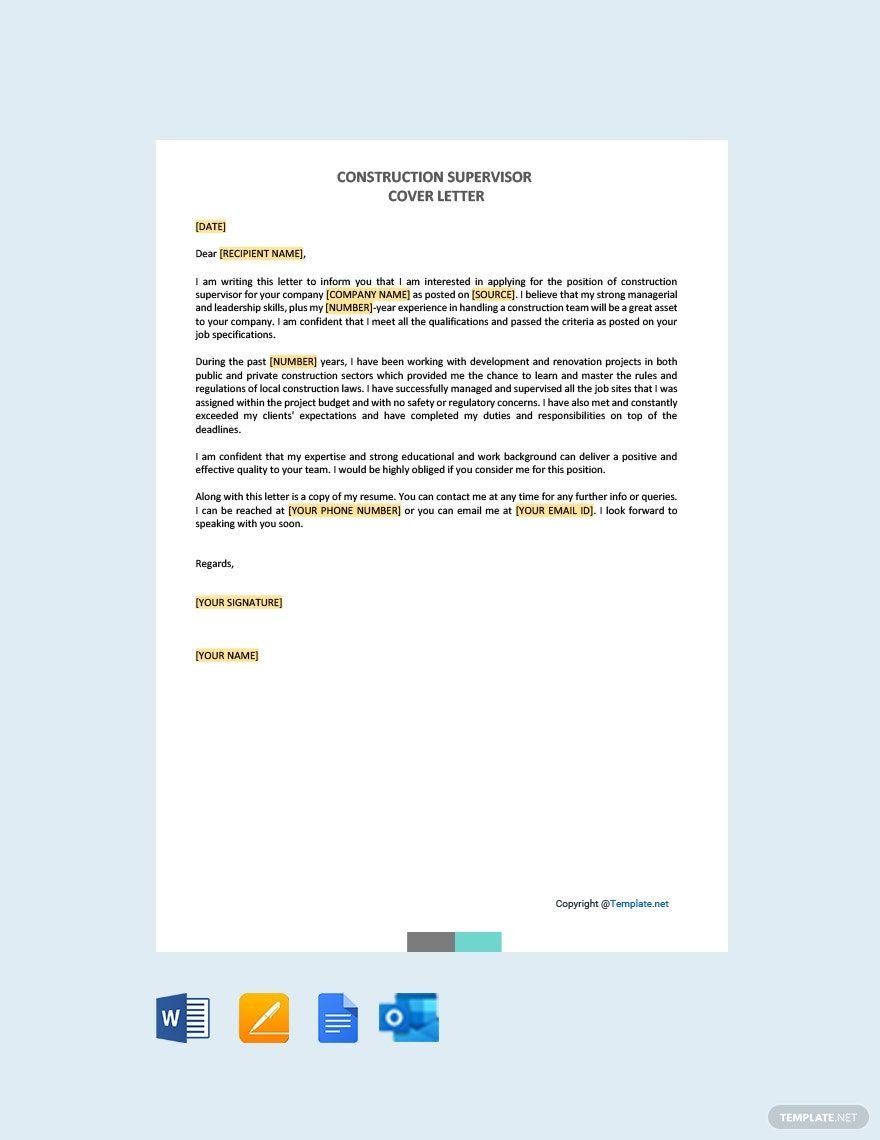
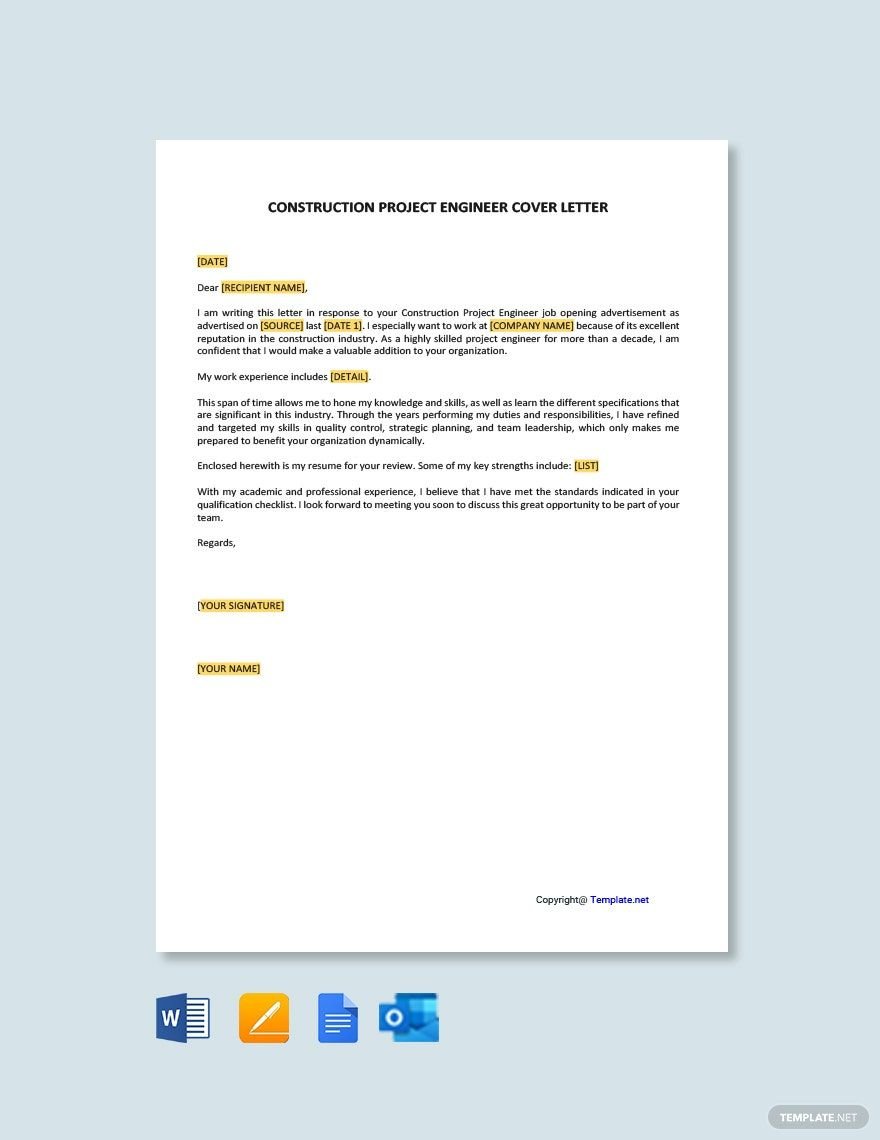
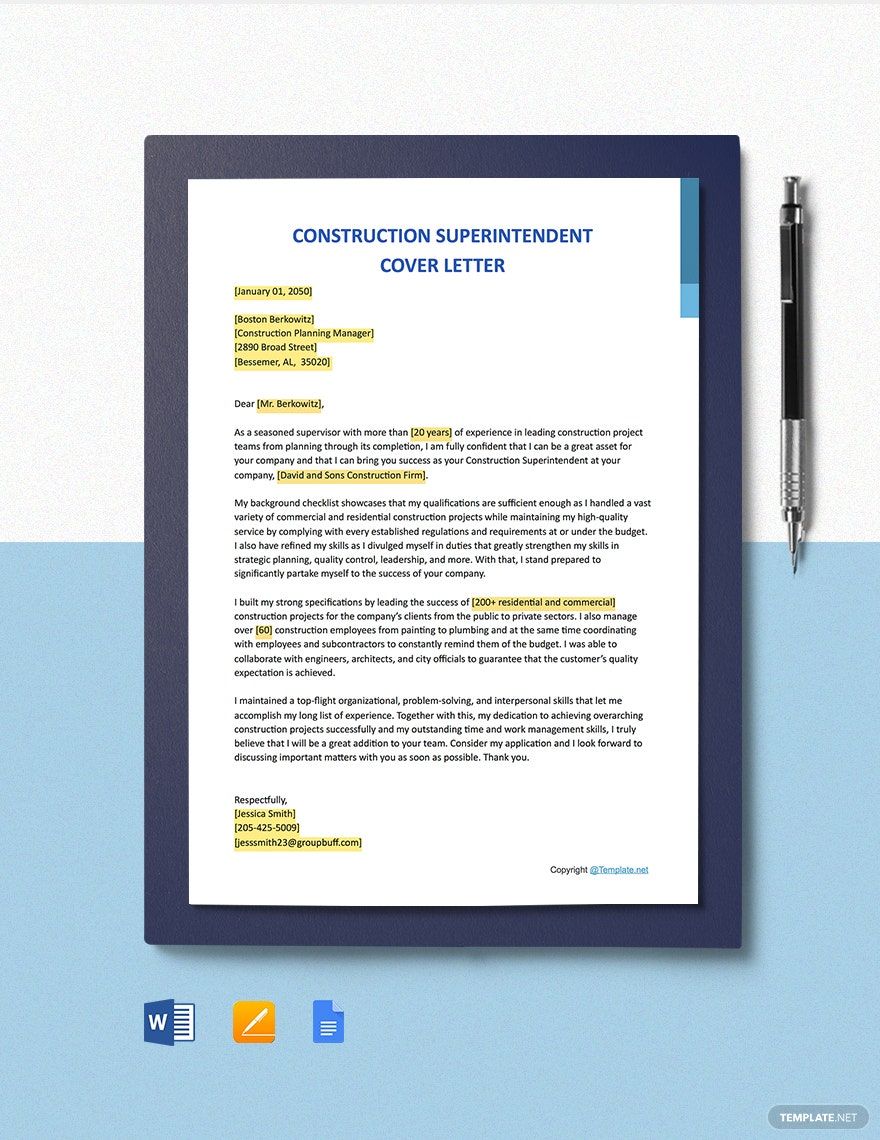
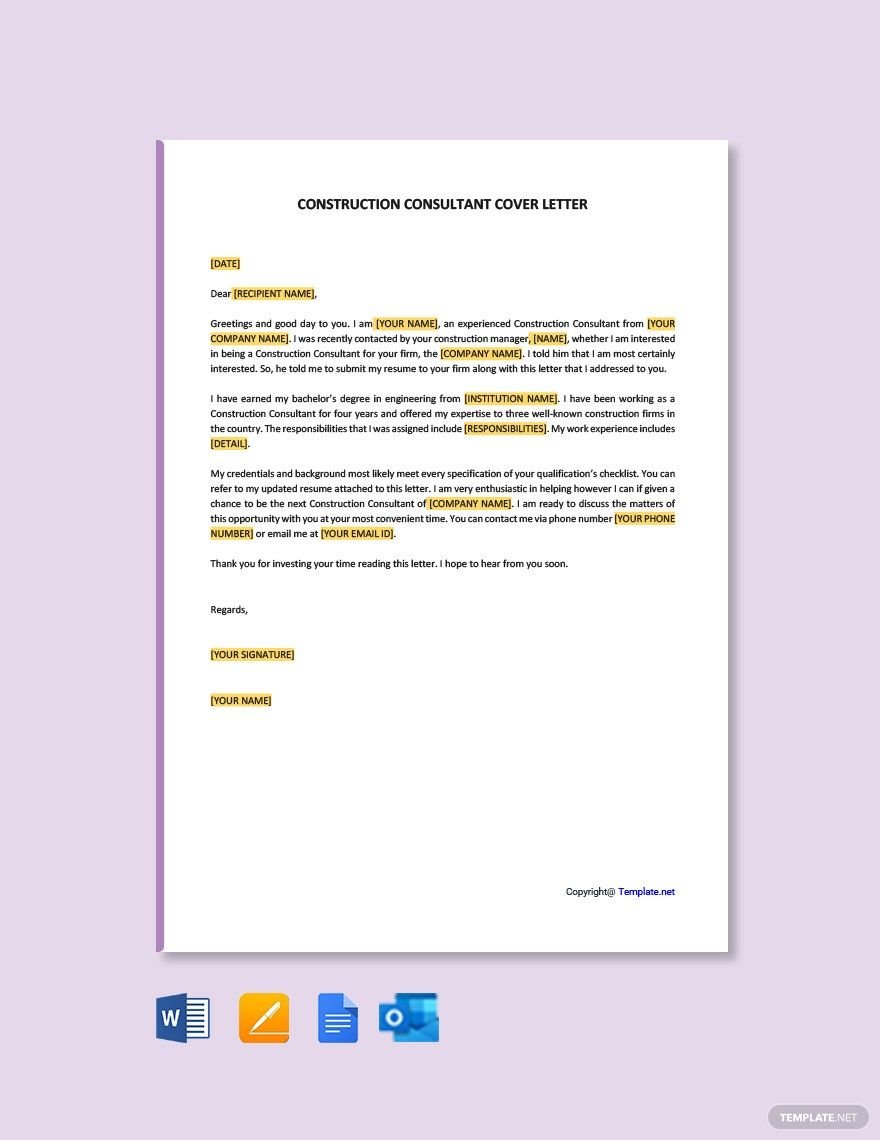
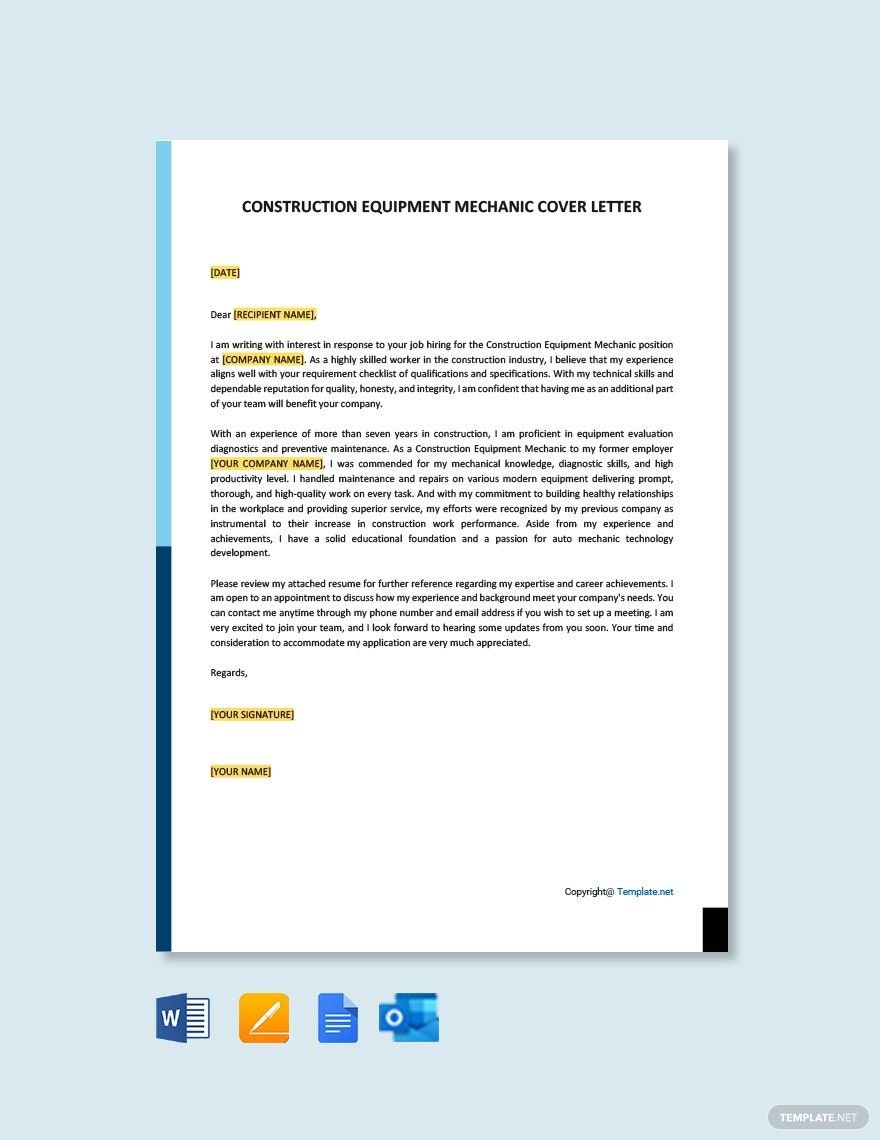
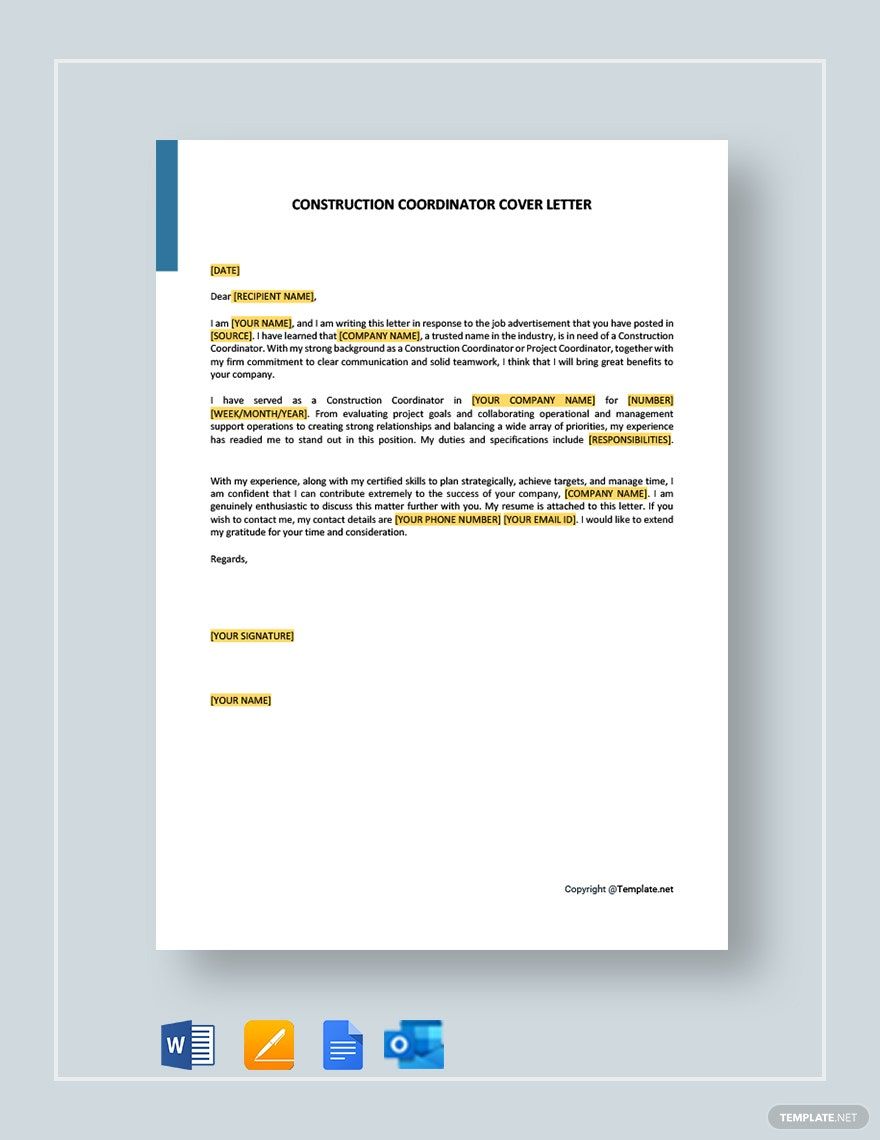
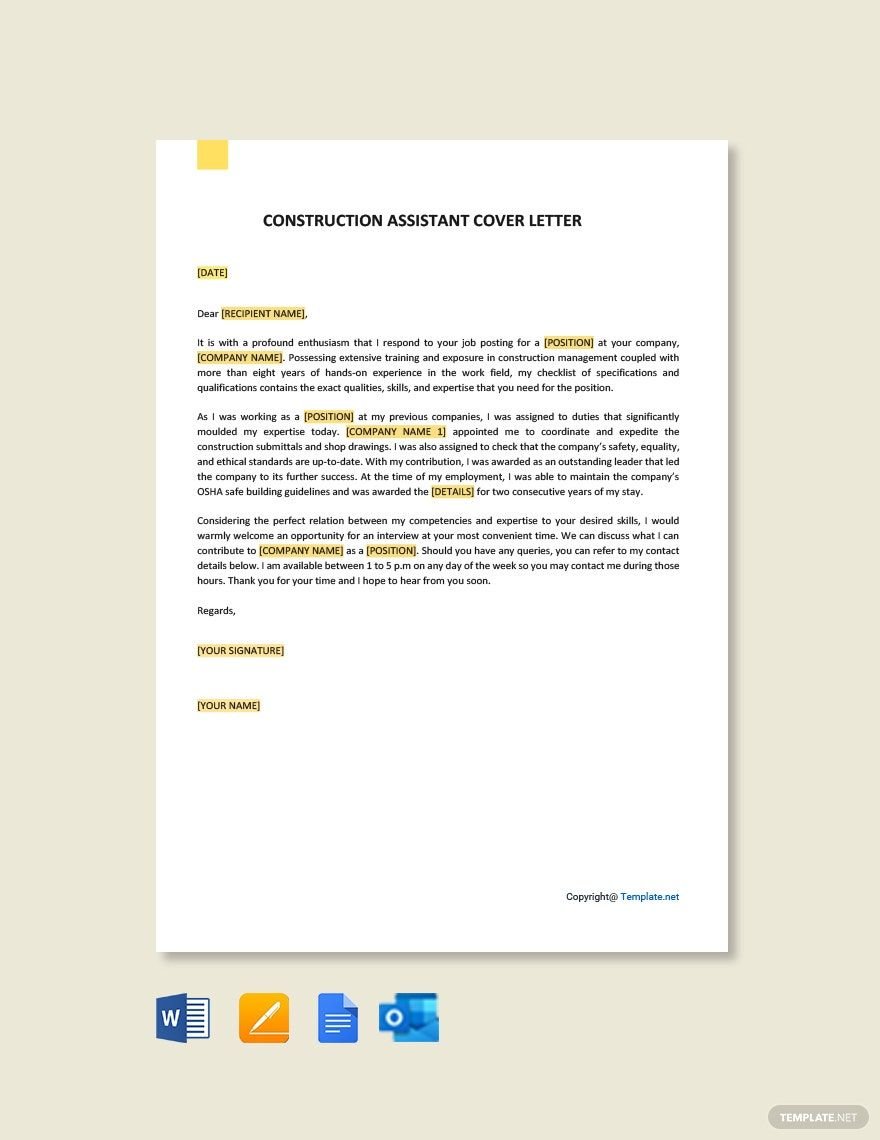
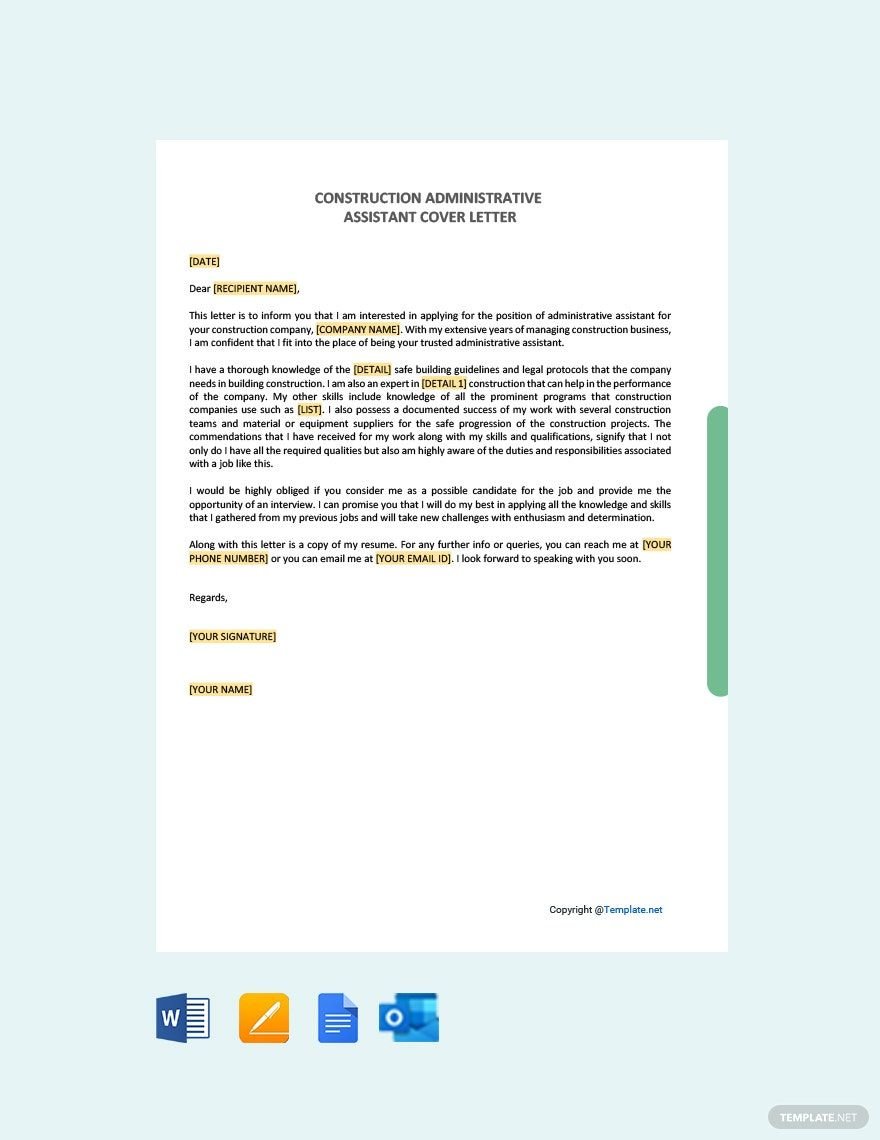
The examples and visual references throughout this article show how contractor and construction cover letters can vary in layout while retaining the same fundamental structure: contact details, a targeted introduction, evidence of relevant experience, role-specific strengths, and a professional closing. The goal is not to copy any one design, but to understand which elements make a contractor letter easier to read and more convincing.
What a Contractor Cover Letter Should Accomplish
A contractor cover letter should answer three questions quickly: what position are you pursuing, what relevant experience do you bring, and why does that experience matter to this employer? The first paragraph establishes direction. The middle section provides evidence. The final paragraph reinforces interest and makes it easy for the employer to continue the conversation.
For construction professionals, relevant evidence can include project coordination, estimating, scheduling, subcontractor management, site supervision, quality control, safety practices, client communication, procurement coordination, blueprint interpretation, cost awareness, or hands-on trade expertise. The exact combination depends on the position. A construction superintendent should not sound identical to an estimator, just as an independent contractor should not use the same emphasis as an entry-level construction assistant.
A useful letter also avoids turning every sentence into a résumé bullet. Instead of listing every responsibility from previous positions, choose two or three experiences that demonstrate the abilities most relevant to the vacancy. Career guidance from Indeed similarly recommends explaining relevant experience without simply repeating the résumé and using concrete achievements where possible. :contentReference[oaicite:1]{index=1}
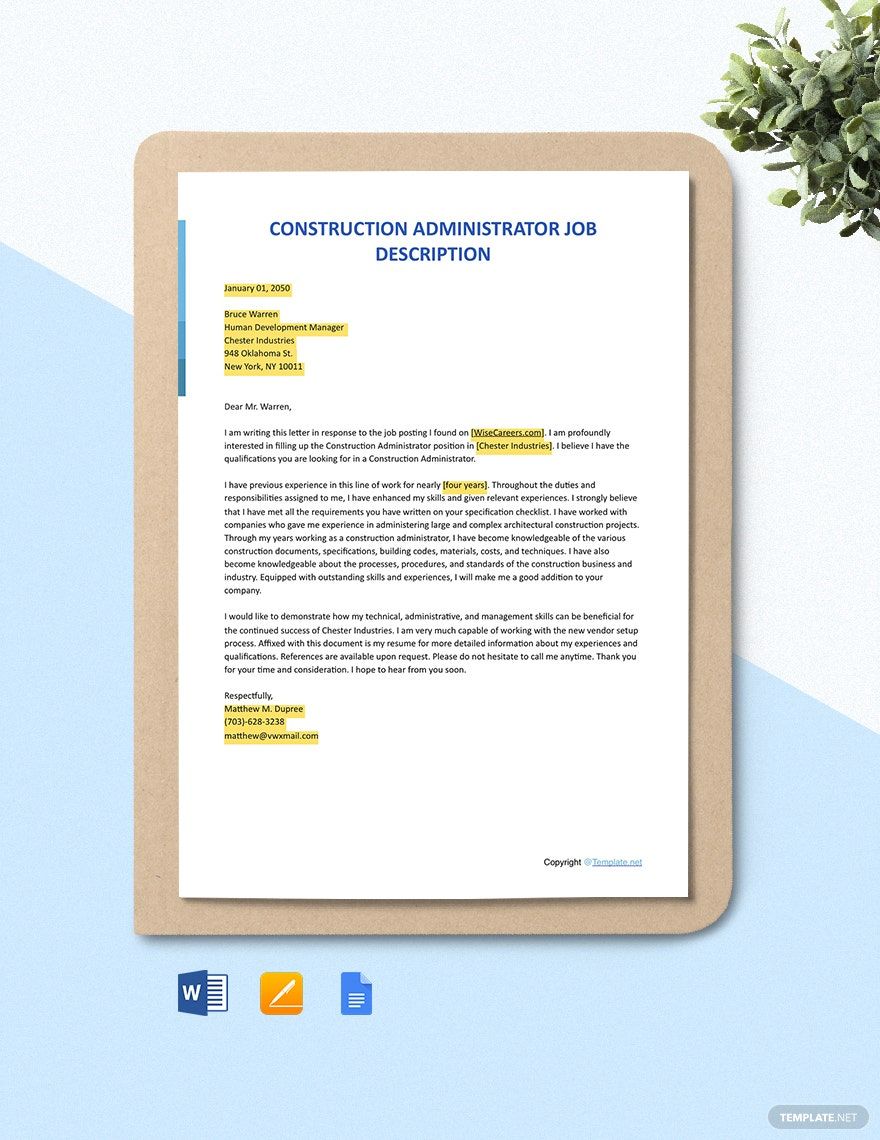
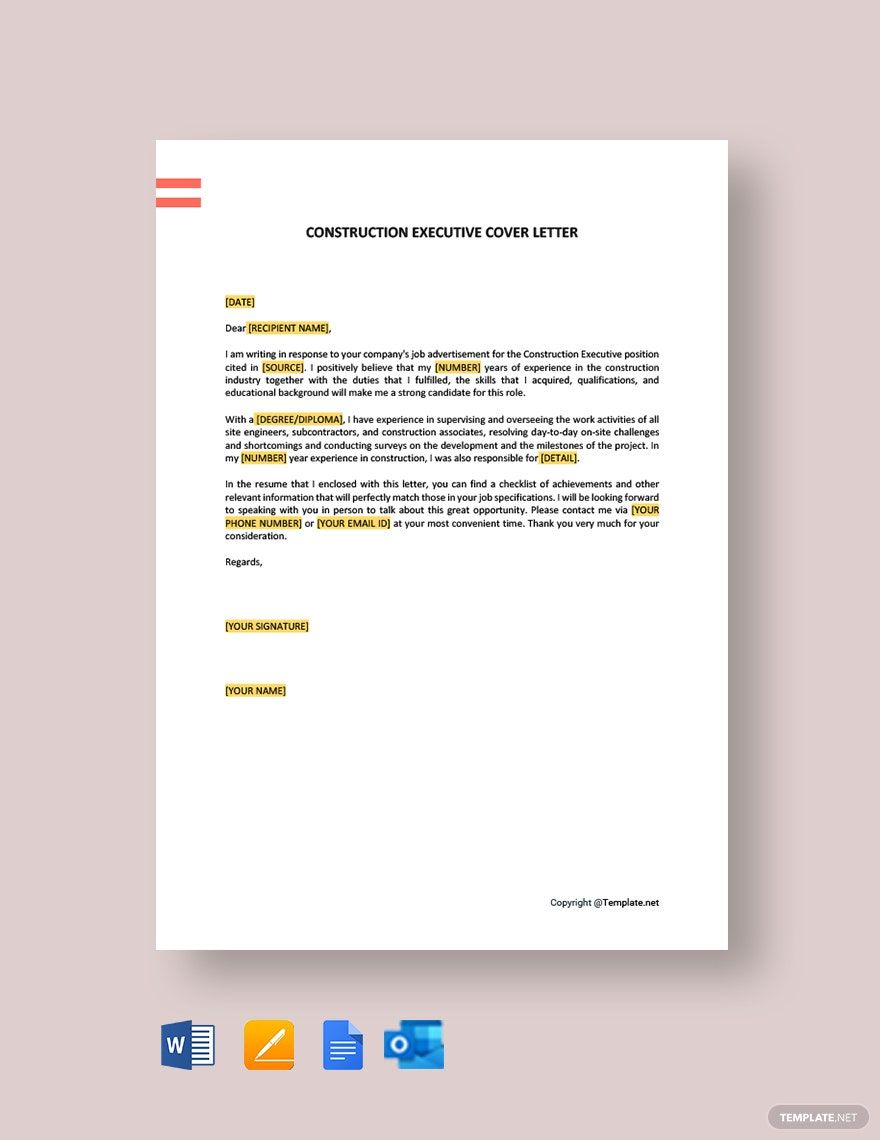
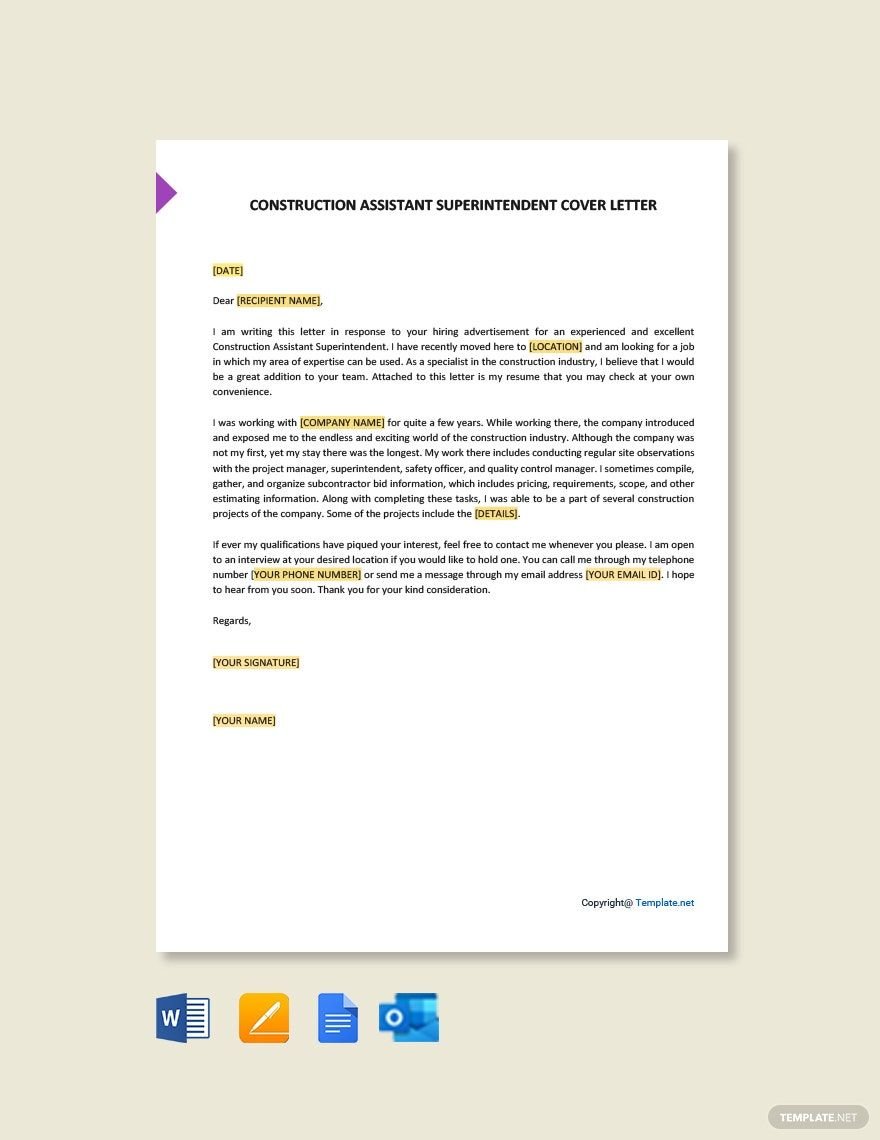
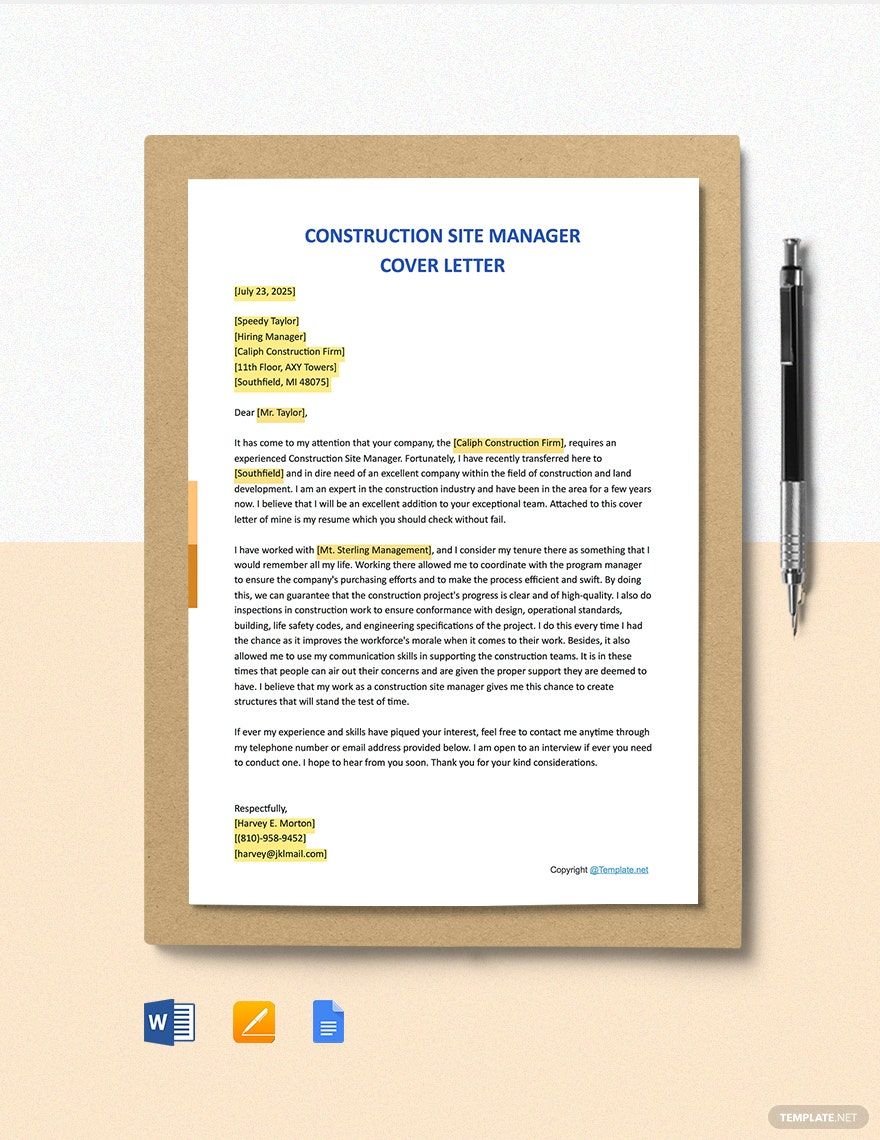
Visual examples of contractor letters often reveal an additional lesson: readability matters. A letter may contain excellent information but still be difficult to scan if the paragraphs are dense, the hierarchy is unclear, or the contact section is poorly organized. A restrained professional layout helps the reader identify the position, qualifications, supporting evidence, and closing without unnecessary visual distractions.

Essential Sections of a Contractor Cover Letter
Header and contact details
The header should make it easy to identify the candidate and establish a professional point of contact. Include your name, phone number, email address, city or region when appropriate, and the date. If the employer has provided a specific contact person, use that person’s name. If no recipient is identified, a professional greeting such as “Dear Hiring Manager” is generally safer than guessing a name.
The employer section should contain the company name and, when relevant, the hiring contact or department. The purpose is not to create a decorative business-letter block; it is to establish who the letter is addressing. Keep formatting consistent with the résumé so the documents look like parts of the same professional package.
Contractors who work across different clients or projects should pay particular attention to the contact section because their professional identity may be broader than one previous employer. If you operate independently, identify your professional role clearly and avoid creating confusion about whether you are seeking a direct position, a contract engagement, or subcontracting work.

Opening paragraph
The opening should identify the target position and establish your strongest point of relevance. Instead of beginning with a generic statement such as “I am hardworking and motivated,” name the role and immediately connect it to your experience. For example, a contractor pursuing a site manager role could lead with experience coordinating residential and commercial projects, supervising subcontractors, and maintaining project schedules.
The strongest introductions are specific without becoming overloaded with detail. If the job description emphasizes scheduling, cost control, client communication, and safety, the opening should reflect those priorities when they genuinely match your background. This creates an immediate connection between the employer’s needs and your qualifications.
For candidates with extensive experience, the introduction can briefly establish the scope of their background. For candidates changing specialties, it can explain the transferable value of previous construction work. For an entry-level candidate, the emphasis can shift toward training, internships, technical education, site exposure, and evidence of reliability.

Evidence-based experience section
The central part of the letter should demonstrate what you can contribute. Construction employers often need more than a list of job titles because contractor work involves practical coordination among schedules, materials, trades, clients, inspectors, vendors, and project requirements. Use short examples that show how you handled those responsibilities.
Whenever your experience allows it, include measurable details that are genuinely accurate. A statement such as “managed several concurrent renovation projects” is more informative when you can add the real project count, approximate budget range, schedule responsibility, or size of the team involved. Do not invent figures simply to make the letter appear stronger. A modest but verifiable achievement is more credible than an impressive unsupported claim.
Strong evidence can also describe outcomes without relying exclusively on numbers. Examples include reducing coordination problems, improving documentation, resolving scheduling conflicts, maintaining quality standards, strengthening client communication, coordinating subcontractors, or completing work according to agreed specifications. The important point is to show what you did and why it mattered.
How to Tailor the Letter to Different Contractor Roles
General contractor and construction manager roles
A general contractor or construction manager should usually emphasize coordination, planning, budgeting, scheduling, subcontractor relationships, client communication, quality oversight, and problem solving. The letter should demonstrate an ability to see the project as a whole rather than focusing only on one trade or task.
For these roles, project examples are particularly useful. Describe the type of project, your responsibility, the major challenge, and the result. A concise example might explain how you coordinated multiple subcontractors during a renovation while keeping work sequences aligned with the agreed schedule. The purpose is to demonstrate judgment and control, not merely activity.
Construction management cover letters should also show awareness of communication. Contractors frequently interact with owners, architects, engineers, suppliers, trades, inspectors, and internal staff. A candidate who can coordinate these relationships while maintaining documentation and project priorities presents a broader value proposition than someone who only describes technical knowledge.
Independent contractor and subcontractor roles
An independent contractor cover letter template should place greater emphasis on self-management, client service, reliability, scope awareness, communication, and the ability to deliver agreed work with limited supervision. Independent professionals should make their working style clear without making exaggerated claims about availability or credentials.
A subcontractor letter can focus on the specific service or trade being offered, relevant project experience, coordination with general contractors, documentation, scheduling, quality, and communication. The reader should quickly understand what type of work the contractor performs and how that experience can support the project.
The phrase contractor employment cover letter can apply to situations where a construction professional is pursuing a contractor position within an organization rather than marketing services directly to a client. In that case, the letter should be written like an employment-focused cover letter and should emphasize the qualifications listed in the vacancy.
Construction worker and skilled trade roles
A cover letter for construction worker should prioritize practical experience, trade skills, safety awareness, equipment familiarity, reliability, teamwork, and the ability to follow plans or instructions accurately. A worker does not need to imitate the language of a senior project manager to sound professional. Clear evidence of hands-on capability is more relevant.
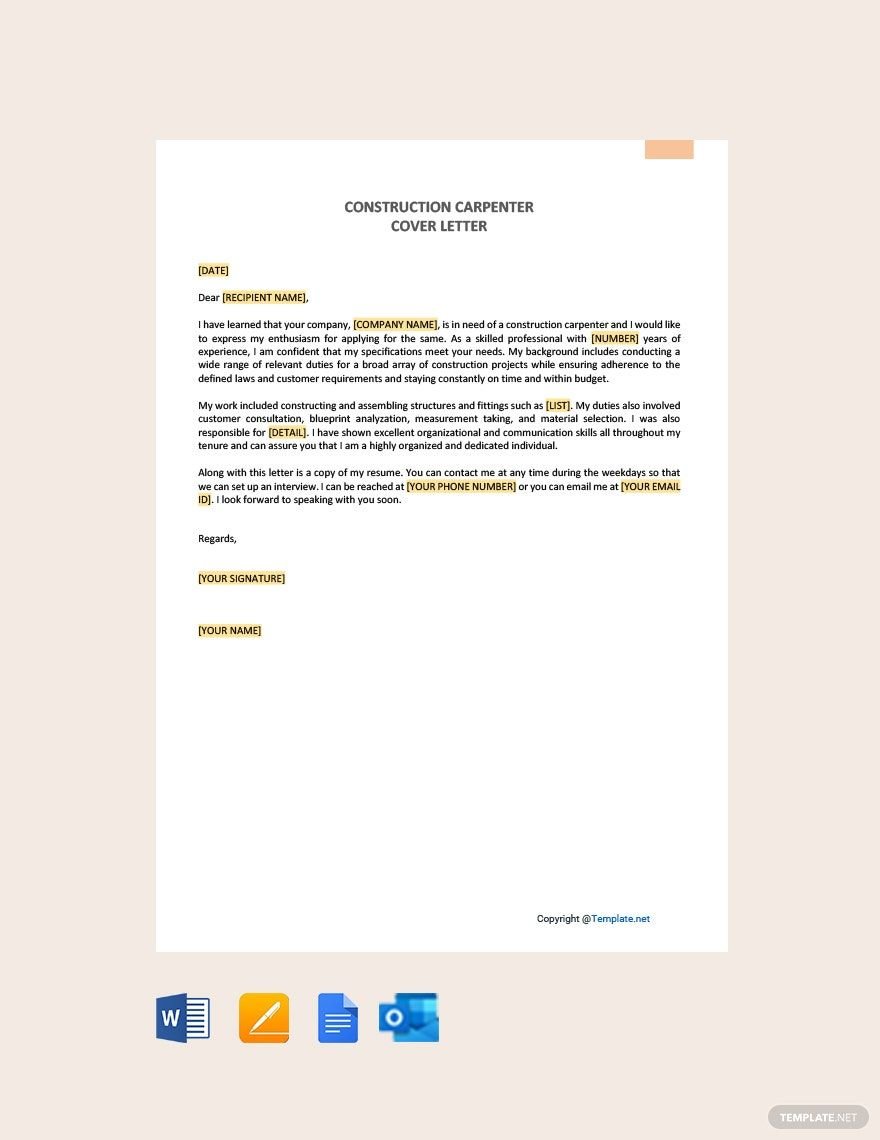
A sample cover letter for construction job can therefore be adapted according to the exact trade. A carpenter might discuss framing, finishing, measurements, drawings, materials, and quality. An equipment operator could highlight machinery experience, site awareness, inspection routines, and safe operation. A painter could focus on surface preparation, coatings, finishing standards, and project coordination.
A strong construction cover letter example should make the connection between experience and the vacancy obvious. If the employer requests experience with a particular construction environment, mention genuine experience in that environment. If the role requires physical stamina, teamwork, or strict attention to site procedures, demonstrate those qualities through real work examples rather than generic adjectives.
Construction Management and Technical Roles
For project managers, engineers, estimators, coordinators, and supervisors, the letter should balance technical competence with organizational ability. Employers may want evidence that a candidate understands drawings, specifications, schedules, budgets, materials, quality expectations, and site coordination. The letter should select only the areas that match the vacancy rather than presenting an unfocused list of every skill ever used.
The phrase cover letter examples construction management reflects a common need for examples that show leadership and project responsibility. A useful management-oriented letter can describe how the candidate planned work, coordinated teams, monitored progress, communicated with stakeholders, and responded when conditions changed. The strongest examples demonstrate decision-making rather than simply describing a job title.
For estimating roles, emphasize quantity takeoffs, cost analysis, bid preparation, supplier communication, scope interpretation, and attention to detail when these are genuinely part of your background. For engineering roles, emphasize technical planning, design coordination, documentation, standards, site observations, and collaboration with project teams. For supervisory roles, emphasize workforce coordination, quality, safety, scheduling, and communication.
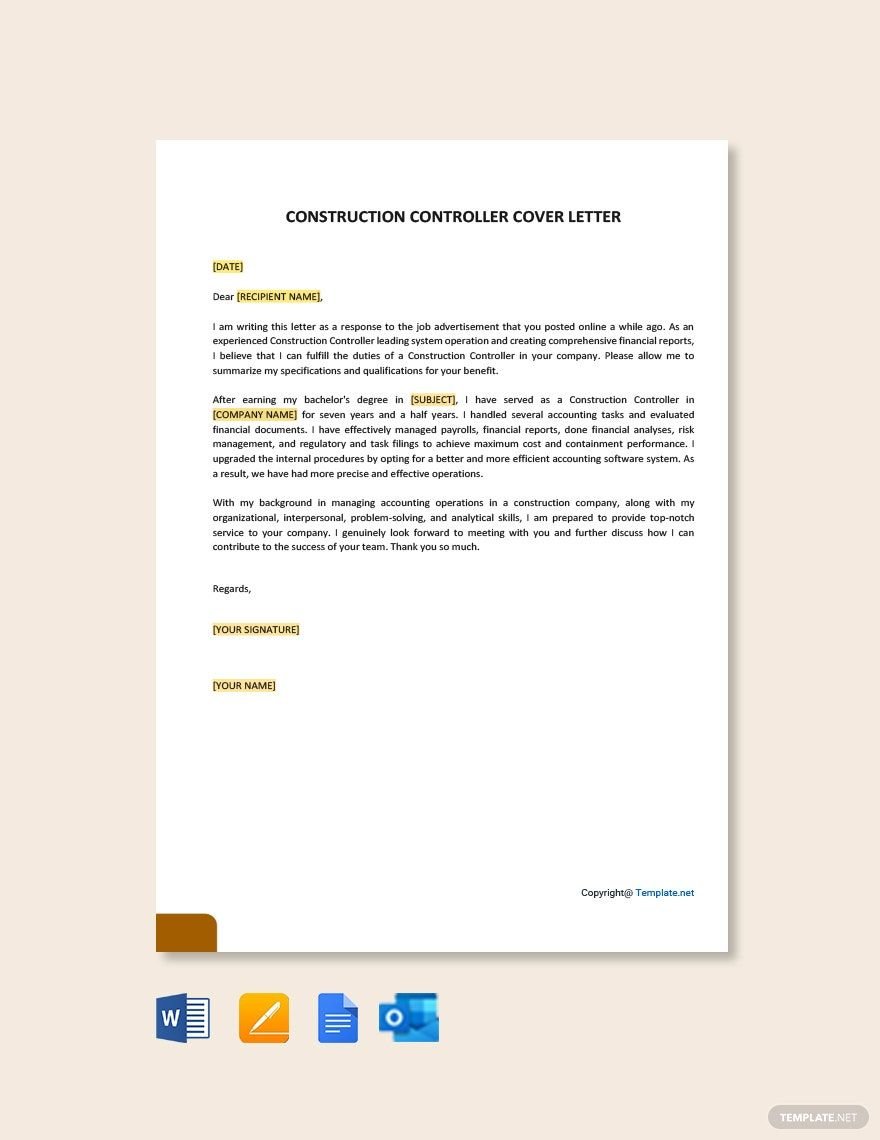
A cover letter for construction company should also show why the company itself is relevant when the available information makes that possible. Mention a type of project, specialization, market, or professional focus that genuinely interests you. Avoid generic praise that could be sent unchanged to dozens of employers.
Choosing the Right Format for the Letter
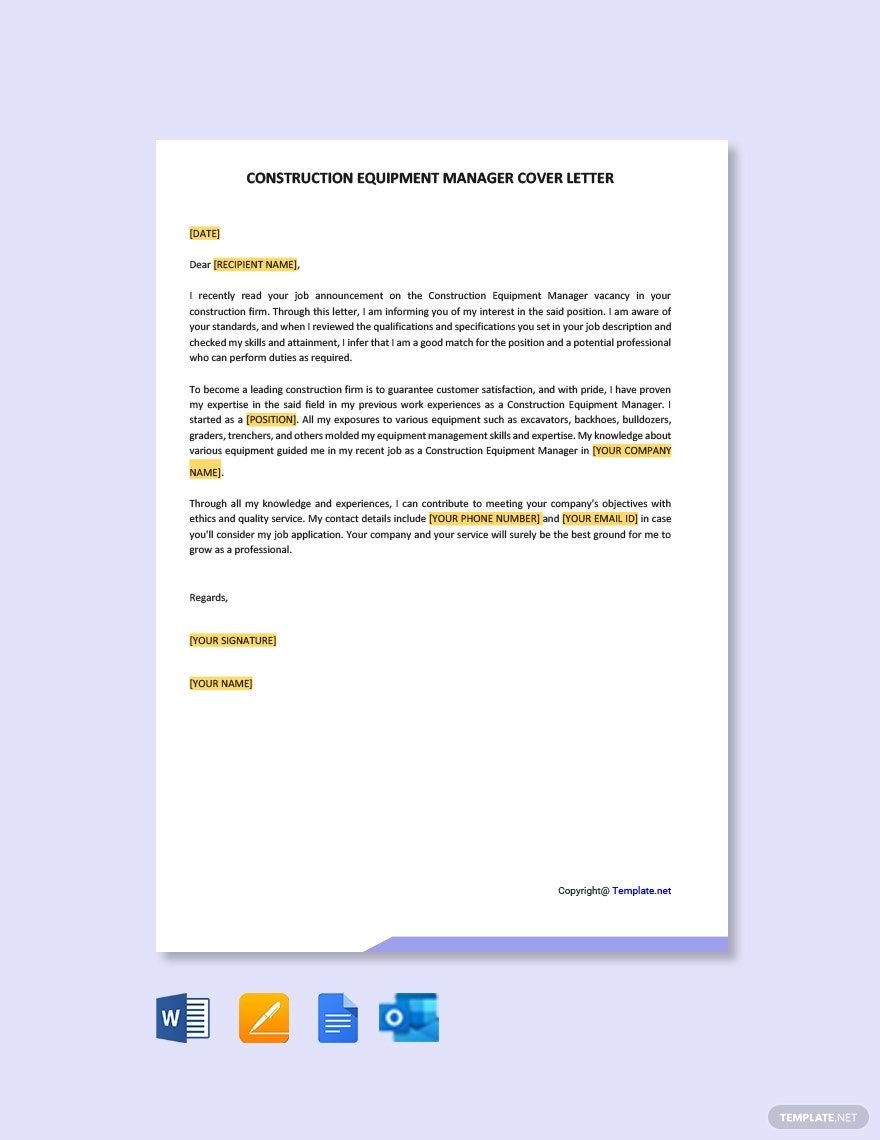
People searching for a contractor cover letter template word often want an editable document structure that can be customized before submission. A Word-based format can be useful when you need to change paragraphs, adjust spacing, or maintain a consistent visual style with a résumé. The important consideration is not the software itself but whether the final document remains readable and professional.
Someone searching for a contractor cover letter template pdf is usually focused on a stable presentation format. A PDF can preserve the appearance of the final letter across devices, but the correct format depends on the employer’s stated submission instructions. If a company specifically requests another format, follow those instructions rather than assuming one format is always preferable.
The search phrases contractor cover letter template free and contractor cover letter template free download show that many candidates want a practical starting point without unnecessary expense. The more important issue, however, is whether the template can be customized effectively. A basic one-page structure with strong content is often more useful than an elaborate design that does not match the position.
How to Write a Contractor Cover Letter Step by Step
Start by reading the job description and identifying the responsibilities that genuinely match your experience. Mark recurring requirements such as project scheduling, estimating, site supervision, safety, client communication, equipment operation, subcontractor coordination, or quality control. These priorities should guide which experiences you select for the letter.
Next, choose one or two achievements that demonstrate those priorities. Think about projects where you solved a problem, improved coordination, completed an important stage, managed competing priorities, or received positive client or supervisor feedback. Write these examples in plain language first. Only after the content is strong should you refine the wording and formatting.
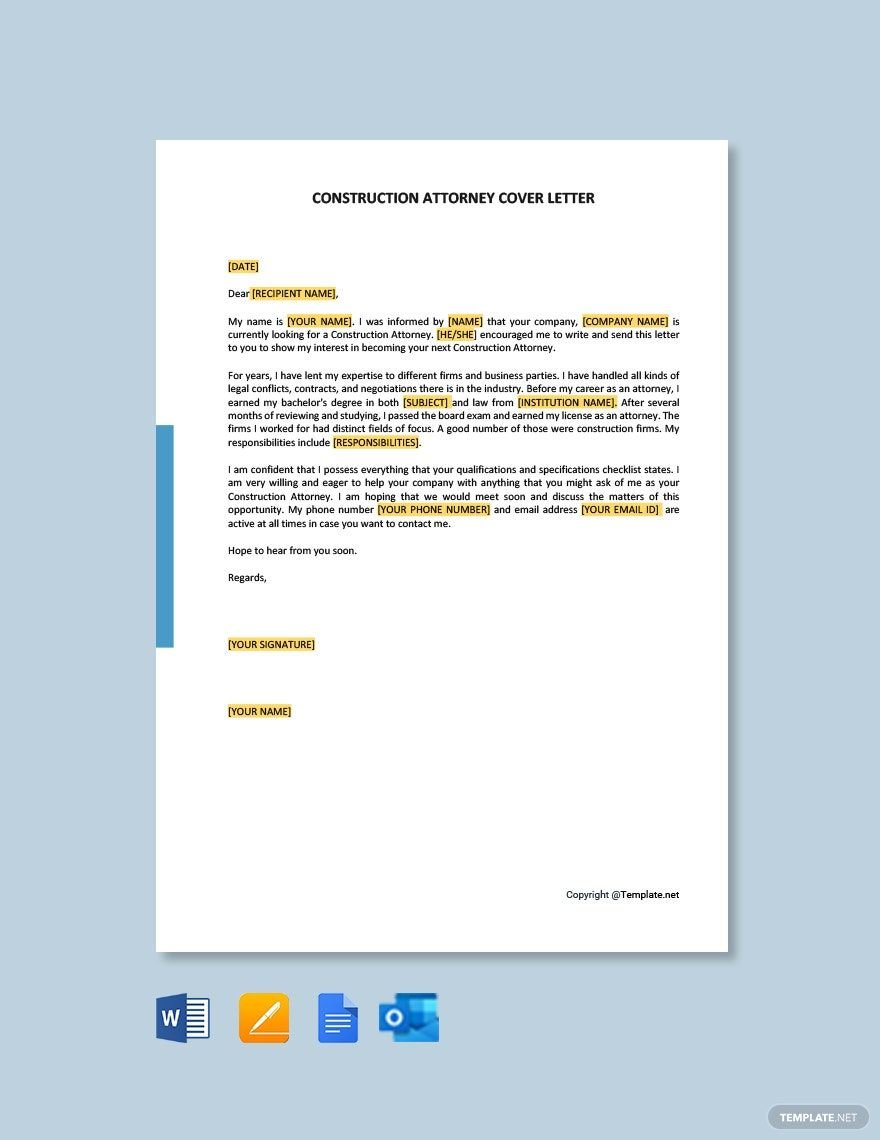
Then create a three-part structure. The first paragraph establishes the role and your strongest connection to it. The middle paragraphs provide evidence and explain your value. The closing reinforces your interest and provides a clear way to contact you. This approach mirrors common professional guidance for contractor cover letters and keeps the document focused. :contentReference[oaicite:2]{index=2}
After drafting, compare the letter against the vacancy again. Remove skills that have no meaningful connection to the position. Replace vague phrases with specific evidence. Check company names, job titles, dates, project details, contact information, and technical terms carefully. A single incorrect company name can make an otherwise polished letter look generic.
Finally, read the letter aloud. This can reveal repeated phrases, awkward sentences, unnecessary jargon, and overly long paragraphs. The finished document should sound like a professional explaining their experience rather than a collection of keywords assembled for a search engine or screening system.
What to Include When You Have Limited Experience
Not every contractor candidate has a long project history. New entrants can still create a credible letter by emphasizing relevant training, internships, apprenticeships, coursework, supervised site experience, equipment familiarity, technical knowledge, and transferable workplace skills. The goal is to show readiness for the position without exaggerating professional experience.
An entry-level candidate should explain what they have actually done. If they assisted with site inspections, material tracking, documentation, measurements, scheduling support, or basic construction tasks, those experiences can become useful evidence. Academic projects can also be relevant when they demonstrate planning, construction methods, estimating, safety awareness, or technical problem solving.
A free sample construction cover letter can provide a useful structural reference, but the candidate should replace generic language with personal evidence. A hiring manager needs to understand what the applicant can realistically contribute, not simply see a polished paragraph filled with broad claims such as “hardworking,” “passionate,” or “team player.”
Common Contractor Cover Letter Mistakes
One of the most common mistakes is sending the same letter to every construction employer. Even when two vacancies have the same job title, their priorities can differ. One company may emphasize commercial construction, another may prioritize residential renovation, and another may need a contractor with strong scheduling or estimating experience. The letter should reflect the actual opportunity.
Another mistake is repeating the résumé line by line. A cover letter should add context rather than reproduce every employment detail. If the résumé says you managed subcontractors, the letter can explain a situation in which you coordinated trades, resolved a scheduling conflict, or maintained progress against a project requirement.
Overdesign is another potential problem. Construction roles generally benefit from professional clarity more than decorative graphics. A strong heading, readable typography, balanced spacing, and logical paragraphs are usually sufficient. The visual references in this article demonstrate several restrained approaches that keep attention on the document’s content.
Do not make unsupported claims about licenses, certifications, project values, safety records, or technical expertise. If a qualification is required and you possess it, state it accurately. If you are currently pursuing it, describe the status honestly. Professional credibility is built through precision, not inflated language.
How to Make Achievements More Persuasive
Strong contractor letters turn responsibilities into evidence of performance. Instead of writing “responsible for project scheduling,” explain what scheduling involved and what you achieved. You might describe coordinating trade sequences, communicating changes, monitoring milestones, or helping keep work aligned with the agreed timeline.
The same approach works for budgets. Instead of merely saying that you “managed costs,” explain whether you prepared estimates, tracked expenditures, compared supplier pricing, reviewed change requests, or monitored labor and material usage. Only include activities you actually performed.
Safety should also be described carefully. Rather than claiming to have “ensured complete safety,” which may overstate individual responsibility, explain your actual contribution: conducting site checks, following established procedures, maintaining documentation, communicating hazards, or supporting compliance with company requirements.
Communication achievements can be equally valuable. Contractors frequently need to explain technical information, coordinate schedules, respond to client concerns, and communicate changes among several parties. A short example showing that you resolved a misunderstanding or coordinated multiple stakeholders can demonstrate professional maturity.
Practical Solution
The practical solution is to build one master contractor cover letter structure and customize it for every serious opportunity. Begin with a standard header and closing, then maintain several versions of the middle section for different roles such as general contracting, site supervision, estimating, project management, skilled trades, or independent contracting. This saves time while preventing the letter from becoming generic.
For each vacancy, extract three priorities from the job description. Match each priority with one genuine example from your background. Then write the letter around those matches. For example, if a company emphasizes subcontractor coordination, scheduling, and quality control, choose one project that demonstrates those areas and explain your responsibilities and outcome in two focused paragraphs.
Use the following workflow: identify the position, research the employer, select two or three relevant achievements, draft a targeted opening, connect evidence to the employer’s needs, write a concise closing, and proofread every factual detail. Keep the document focused on professional value rather than personal circumstances unless a particular circumstance genuinely requires explanation.
Before sending the letter, compare its terminology with the vacancy. If the employer uses terms such as project scheduling, cost control, site supervision, estimating, quality assurance, subcontractor coordination, or construction documentation, use those terms naturally when they accurately describe your experience. This improves relevance without turning the letter into a keyword list.
Also check the final visual presentation. The header should be easy to locate, paragraphs should have comfortable spacing, and the closing should not be separated awkwardly onto another page. The document should complement the résumé rather than compete with it. If both documents use similar typography and contact information, the overall professional package will feel more deliberate.
Final Editing Checklist for Contractor Candidates
Before submitting a contractor cover letter, verify that the company name and position title are correct. Confirm that your contact details are current and that the greeting is appropriate. Read every paragraph specifically for relevance: if a sentence does not explain your qualifications, demonstrate value, or support your interest in the role, consider removing it.
Check that your strongest achievement appears early enough to capture attention. Confirm that technical claims are accurate and that numbers, project descriptions, certifications, and responsibilities are truthful. Avoid vague superlatives when a concrete example can communicate the same idea more effectively.
Finally, make sure the letter complements the résumé. The résumé provides breadth; the cover letter provides context. Together, they should communicate a consistent professional story about the type of contractor you are, the work you have performed, and the contribution you can make to the next project or organization.
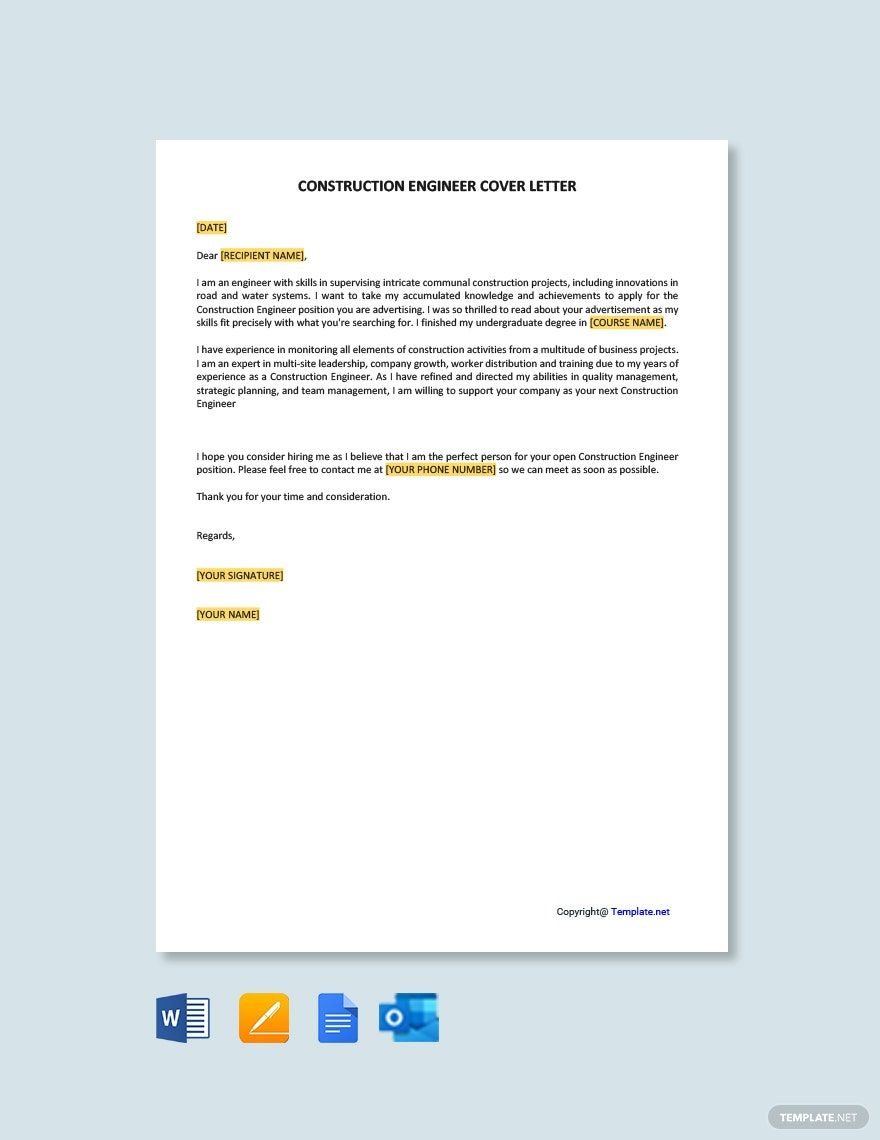
A carefully tailored letter is particularly valuable when your background includes several construction specialties. You can use the same underlying structure while changing the emphasis for each position. A project manager version may focus on leadership and delivery, an estimator version on cost analysis and scope, a site supervisor version on coordination and safety, and an independent contractor version on client service and self-management.
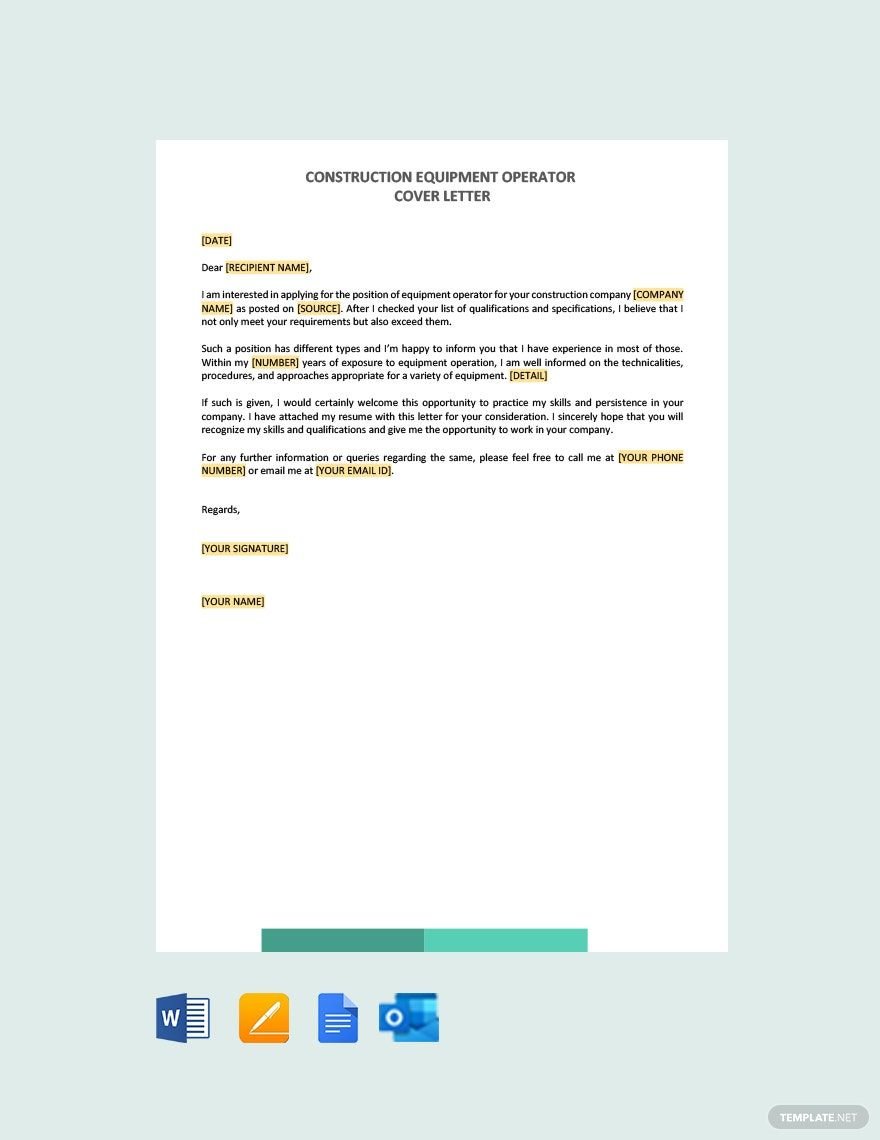
The visual examples also show why the word “template” should be interpreted as a starting framework rather than a finished letter. Placeholders should disappear before submission, generic achievements should be replaced with real evidence, and the wording should reflect the candidate’s actual experience. A professional structure is useful only when the content inside it is authentic and targeted.
When the target role involves significant coordination, emphasize your ability to organize information and communicate clearly. When it is hands-on, emphasize practical competence and reliable execution. When it is managerial, demonstrate leadership, planning, decision-making, and project oversight. This role-based approach makes the same basic contractor letter framework adaptable without making every version sound identical.
For candidates working independently, the letter should communicate professionalism without sounding like a sales brochure. Explain what you do, the types of projects you understand, how you collaborate with clients or contractors, and the qualities that make your work dependable. For candidates seeking an internal contractor position, shift the emphasis toward the employer’s requirements and the contribution you can make as part of its team.
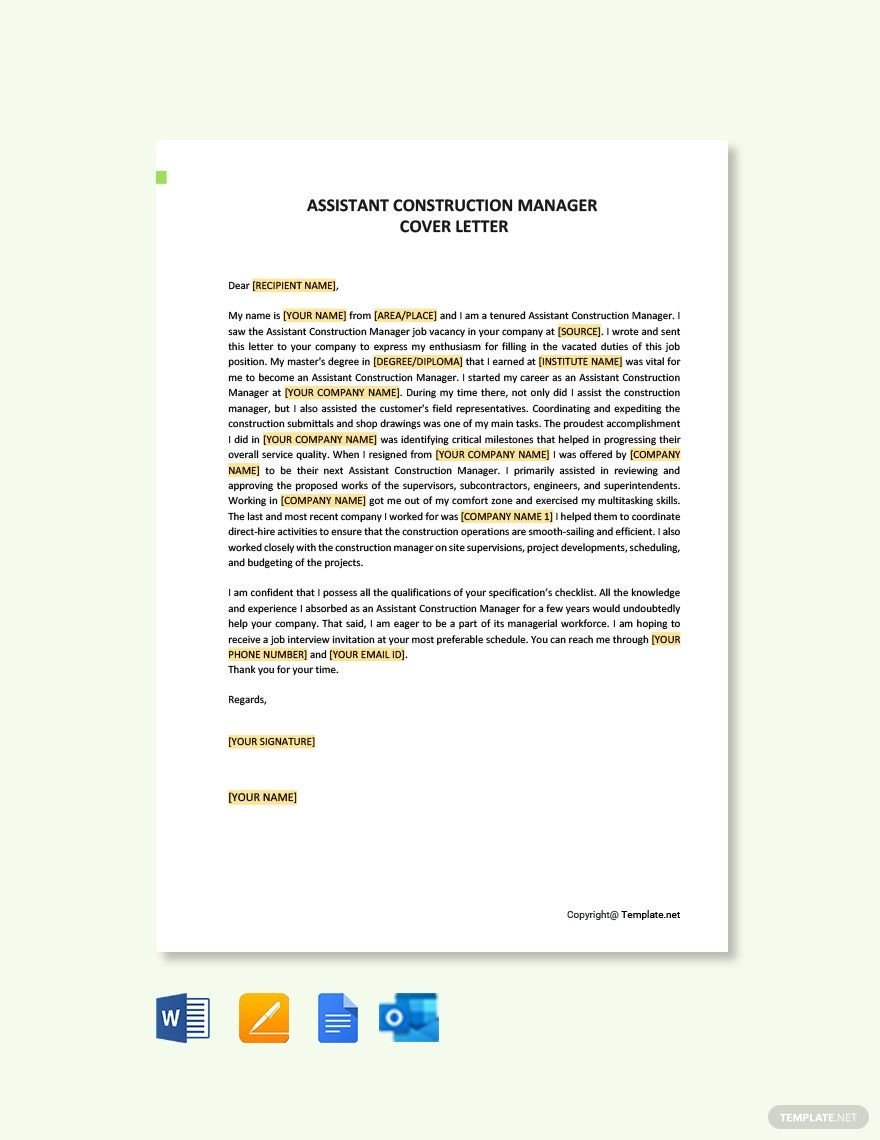
A final useful test is to remove your name from the letter and ask whether a reader could still identify the type of professional you are. If the answer is no, the letter probably needs more specific evidence. The strongest contractor letters make the candidate’s specialty, level of responsibility, project experience, and professional value apparent without requiring the reader to guess.
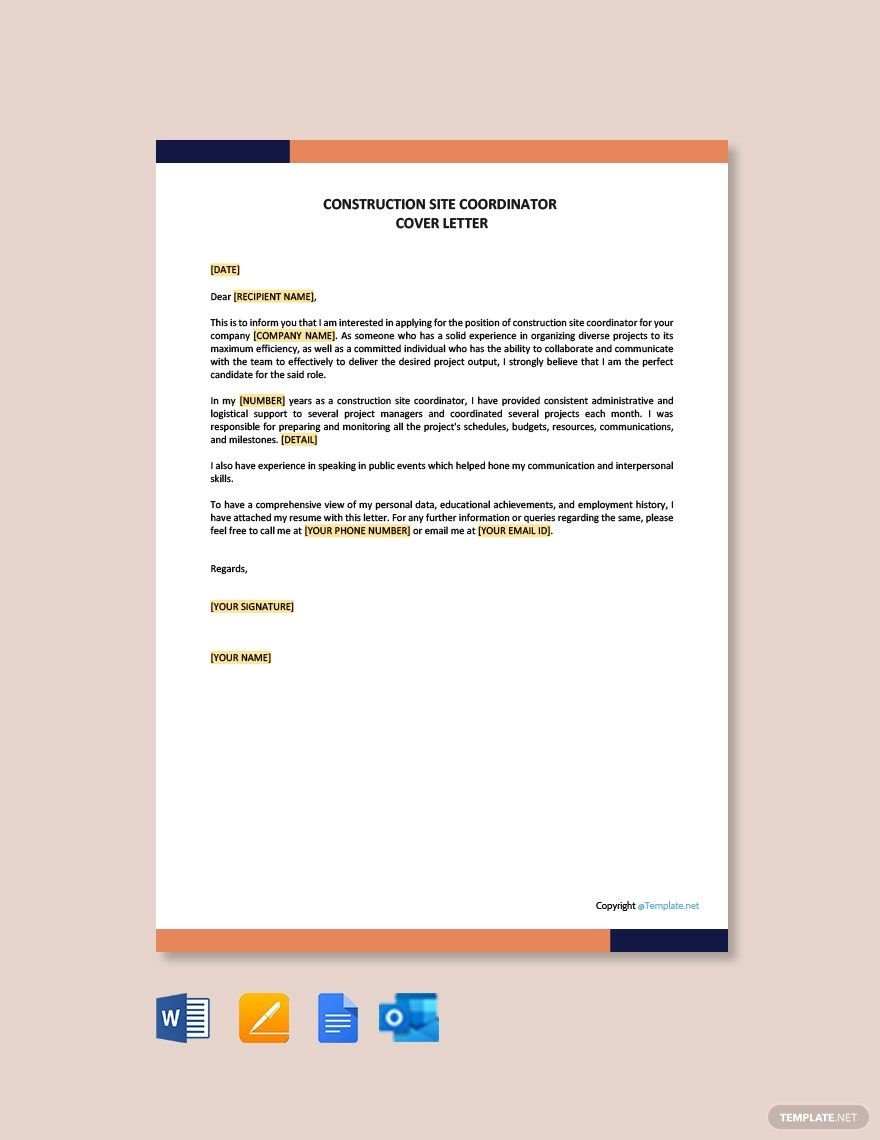
The result should be a concise, role-specific document that supports the résumé and gives the employer a reason to continue the conversation. Whether you are pursuing a construction company position, independent contract work, subcontracting opportunities, or a management role, the underlying principle remains the same: show relevant evidence, connect it to the employer’s needs, and keep every statement accurate.
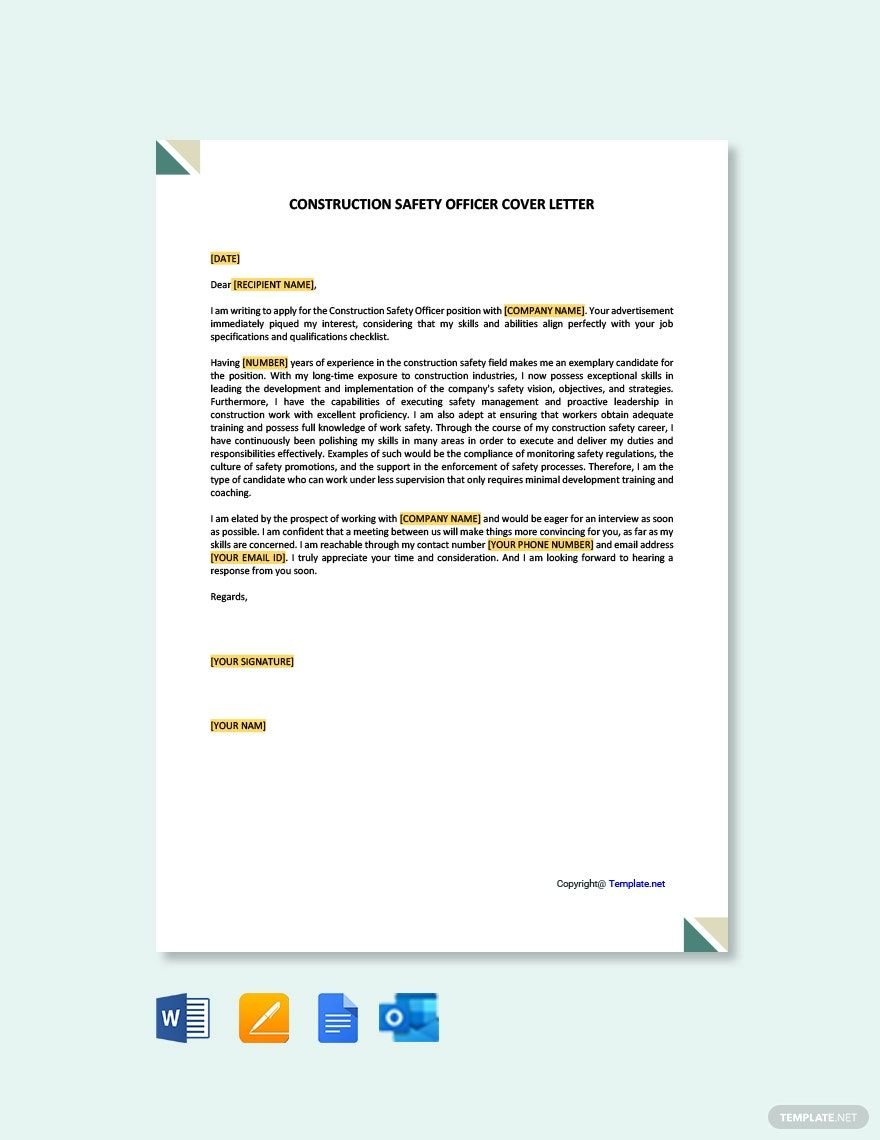
For management-level candidates, a strong letter can also communicate professional judgment. Describe situations where you had to prioritize work, coordinate competing requirements, communicate with stakeholders, or respond to unexpected project conditions. These examples help distinguish someone who has merely participated in construction projects from someone who has taken meaningful responsibility for outcomes.

For administrative and coordination roles, emphasize organization, documentation, scheduling support, communication, and attention to detail. These skills can be especially persuasive when illustrated through concrete construction-related responsibilities. Avoid making the letter sound like a general office résumé if the vacancy is specifically connected to construction operations.
Reference Examples
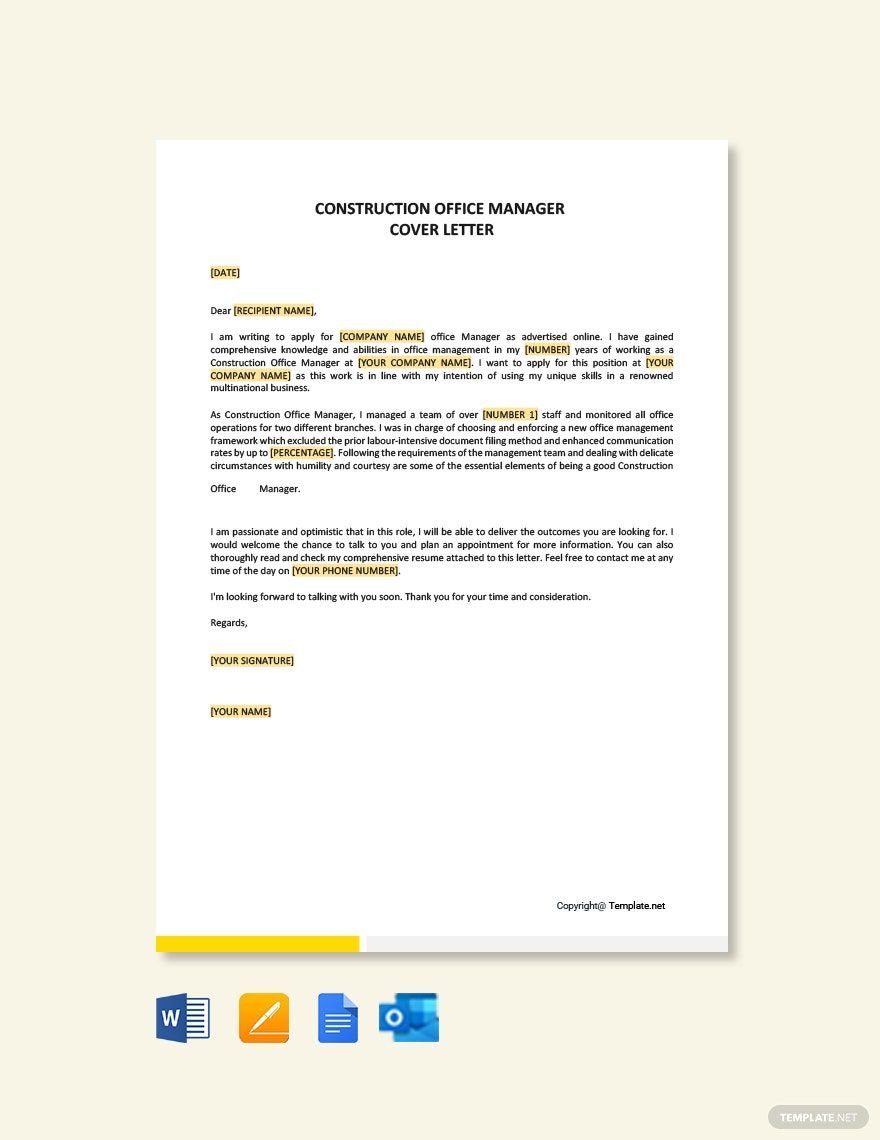
A contractor cover letter Template is most useful when readers can see how professional construction letters organize information visually. The references below show several approaches, including subcontractor, business, entry-level, independent contractor, and inspection-focused formats. These examples are useful for studying hierarchy, paragraph length, placement of contact information, treatment of the opening statement, and the balance between body text and whitespace. They should be treated as visual references rather than letters to reproduce word for word.
When comparing these reference examples, pay attention to the elements that remain consistent even when the designs differ. A strong contractor letter identifies the intended role, presents relevant qualifications, provides evidence of experience, and closes professionally. The visual format can be simple or more distinctive, but the content should always be customized to the position and supported by genuine professional experience.

Construction Subcontractor Cover Letter
Source: Template.net

Construction Business Cover Letter
Source: Template.net

Construction Entry Level Cover Letter
Source: Template.net

Independent Contractor Cover Letter
Source: Template.net

Construction Inspector Cover Letter
Source: Template.net
