People searching for a letter for supporting medical research template may be looking for a formal grant attachment, a collaborator letter, an external-site permission letter, a student research support letter, or a general institutional endorsement. These documents can look similar while serving very different purposes. The safest approach is therefore to begin with the requirements of the specific application rather than copying a generic letter and assuming that it will satisfy every sponsor.
Current research administration guidance illustrates this distinction. The University of California Davis School of Medicine, for example, describes a process in which researchers provide the purpose of the letter, addressee, grant title when applicable, and funding announcement before a draft is reviewed and routed for approval. :contentReference[oaicite:0]{index=0} Other medical research offices similarly request proposal-specific information and may impose their own turnaround times or approval procedures. :contentReference[oaicite:1]{index=1}
There is also an important policy consideration for researchers working with U.S. federal funding. In July 2026, the National Institutes of Health announced that, beginning with Forms J in fiscal year 2027, NIH will replace letters of support with letters of collaboration for certain collaborative relationships. :contentReference[oaicite:2]{index=2} That change demonstrates why a template should be treated as a drafting aid rather than a permanent rule.
The purpose of this guide is to explain what a good support letter contains, how to adapt one for medical research, which formats work best, how students can use one, how to handle Word, PDF, Google Docs, and spreadsheet-related workflows, and how to avoid common problems such as vague promises, unauthorized commitments, inconsistent project descriptions, or language that conflicts with the funding announcement.

Source: Template.net
What Is a Letter for Supporting Medical Research Template?
A medical research support letter template is a reusable document framework that helps a researcher or supporting organization organize the information expected in a formal endorsement. It is not normally the research proposal itself. Instead, it provides evidence that a person, department, institution, community partner, laboratory, clinical site, or other stakeholder understands the project and is willing to provide a specified form of support.
The word “support” can mean several things. One letter may simply express enthusiasm for a proposal. Another may confirm access to a laboratory, database, clinical population, equipment, specialized expertise, or community organization. A third may describe a collaborator’s responsibilities. A fourth may document an institutional commitment involving resources or cost sharing. These distinctions matter because vague statements can be much less useful than specific descriptions of what the supporting party will actually do.
A useful template therefore separates endorsement from commitment. A sentence such as “we support this project” communicates approval, but it does not necessarily explain the practical relationship. A stronger letter might state that the organization will provide access to a particular facility, participate in specified research activities, contribute expertise, or assist with recruitment, subject to applicable approvals and policies.
NIH research-plan guidance has historically required letters of support to document support from consortium participants and collaborators and has specified additional information for certain consultants and resource-access arrangements. :contentReference[oaicite:3]{index=3} Researchers should always check the current funding announcement because the governing instructions may change.
A good template should also make it easy to remove irrelevant material. A medical research letter is stronger when it is tailored to one project rather than filled with generic praise. The document should identify the research question or project title, establish why the writer is an appropriate supporter, describe concrete contributions, and close with reliable contact and signature information.
Why a Supporting Letter Matters in Medical Research
Medical research frequently depends on relationships beyond the principal investigator. A study may need a hospital department to provide access to records, a community organization to help communicate with potential participants, a laboratory to perform specialized testing, a university center to provide methodological expertise, or a collaborator to contribute a defined research component.
A support letter gives reviewers a concise way to understand those relationships. It can demonstrate that a proposed activity is not merely theoretical and that the people or institutions named in the application are aware of the project. In some applications, the letter can also clarify who is responsible for a particular contribution.
University research offices commonly emphasize specificity. Tufts University recommends that a strong letter identify the project, explain alignment with the collaborator’s goals, describe the collaborator’s role, explain why that collaborator is appropriate, and include information required by the funding agency. :contentReference[oaicite:4]{index=4} The University of Arizona similarly advises applicants to customize support or collaboration letters and focus on the collaborator’s unique contributions. :contentReference[oaicite:5]{index=5}
This is especially important in medical research because access to people, clinical environments, specimens, data, or facilities may involve separate permissions. A support letter should not be written as though it automatically replaces ethics approval, institutional authorization, data-use agreements, contracts, or other required approvals. Those processes are separate unless the applicable institution explicitly states otherwise.
For that reason, the best letter functions as one piece of a larger documentation system. It should agree with the protocol, application narrative, budget, recruitment plan, data-management plan, and any relevant institutional requirements rather than introducing commitments that appear nowhere else in the application.
Core Components of a Strong Medical Research Support Letter
The first component is the letterhead or identifying information of the supporting organization. Depending on the context, this may be institutional letterhead, a department heading, or another appropriate formal identifier. The letter should make it clear who is writing and in what capacity.
The second component is the date and recipient information. If the sponsor provides a required addressee, use it exactly. If no recipient is specified, a suitable formal salutation can be used. Avoid addressing a letter generically when the funding announcement clearly identifies a program officer, review committee, or institution.
The third component is the project identification. Include the project title, grant mechanism, protocol identifier, application number, or other reference when required. A reviewer should be able to connect the support letter to the correct application without guessing.
The fourth component is the relationship statement. Explain who the supporting party is and why that relationship is relevant. For example, a laboratory director might state that the laboratory has the expertise and infrastructure needed to conduct a defined assay. A community organization might explain its role in community engagement.
The fifth component is the actual support commitment. This is usually the most important part. State what will be provided, by whom, and under what reasonable conditions. Specificity makes the letter more credible and reduces ambiguity during review.

Source: Scribd document preview
Project Identification
The project identification section should be brief. A useful structure is: “This letter is provided in support of [project title], submitted by [principal investigator] to [program or sponsor].” If the application has a formal opportunity number or protocol number, include it when appropriate.
Avoid copying a project title from an old draft if the application has changed. Inconsistency between the support letter and the proposal can make the document look recycled or careless. Before signature, compare the title, investigator name, institution, grant mechanism, and project description against the final submission.
Role of the Supporting Organization
The writer should briefly establish authority and relevance. A department chair might explain that the department supports the proposed work and will provide a defined institutional resource. A collaborator might describe expertise relevant to the proposed methodology. An external research site might confirm awareness of the proposed activities.
The explanation should be factual rather than promotional. Phrases such as “world-leading,” “revolutionary,” or “guaranteed to succeed” usually add little value unless they are supported and appropriate. Reviewers generally benefit more from clear information about responsibilities, resources, experience, and feasibility.
Specific Contributions
Specific contributions can include methodological expertise, laboratory services, access to equipment, data access, clinical-site participation, recruitment assistance, community engagement, consultation, training, sample processing, statistical support, or other defined activities.
If the contribution has financial implications, describe it carefully and consistently with the application budget. Do not promise unrestricted funding, personnel time, facility access, or other resources unless the authorized institution has approved the commitment.
How to Create a Letter for Supporting Medical Research Template
Start by reading the funding announcement or institutional instructions. Look specifically for page limits, required language, signature rules, file format, addressee, collaborator information, financial commitments, and submission procedures. A general template should never override explicit sponsor instructions.
Next, collect the facts needed for the letter. At minimum, this usually includes the project title, principal investigator, supporting organization, writer’s role, type of support, relevant resources, and contact details. For a collaboration letter, also identify the specific responsibilities of each party.
Then create a short outline before drafting prose. A practical outline is: opening support statement, project identification, relationship and expertise, specific contribution, conditions or limitations where necessary, and closing endorsement. This keeps the letter focused.
After drafting, compare every factual statement with the application. Check names, dates, project title, study population, methods, facilities, funding mechanism, and promised resources. The support letter should never accidentally describe a different study.
Finally, route the document through the appropriate institutional approval process. Some research offices review and edit drafts before signature. UC Davis School of Medicine, for example, describes a process in which a draft is reviewed by its research office and then routed for approval and signature. :contentReference[oaicite:6]{index=6}
Source: Template.net
Recommended Step-by-Step Workflow
Step 1: Identify the document purpose. Decide whether the letter is an endorsement, collaboration statement, site permission, institutional commitment, resource-access confirmation, or another type of support. This prevents the document from becoming unnecessarily broad.
Step 2: Identify the authorized writer. The strongest letter comes from someone who has the authority to make the stated commitment. If an institution must approve access to a facility, for example, an individual without that authority should not promise access independently.
Step 3: Review the sponsor instructions. Determine whether the sponsor uses “letter of support,” “letter of collaboration,” “letter of commitment,” or another defined category. Terminology can have administrative consequences.
Step 4: Draft from facts rather than praise. Begin with what the project is and what the supporting party will contribute. Replace generic language with verifiable details wherever possible.
Step 5: Obtain review and signature. Allow enough time for institutional review. Medical schools and research offices may have internal deadlines that are earlier than the sponsor deadline. University of Florida’s College of Medicine, for example, asks researchers to provide specified proposal information and requests letters in advance of submission deadlines. :contentReference[oaicite:7]{index=7}
Source: National Center for Biotechnology Information
Letter Formats: PDF, Word, Google Docs, and Other Options
The best format depends on the submission instructions. Word is usually convenient during drafting because institutional reviewers can edit text, insert tracked changes, and manage letterhead. PDF is commonly useful for final submission because it preserves layout and reduces accidental formatting changes.
Google Docs can be practical for collaborative drafting, particularly when multiple researchers need to review a document before it is converted to the required final format. However, the final file should still follow the sponsor’s requested format. If a funding agency asks for a PDF, a Google Docs document should normally be exported and checked as a PDF rather than submitted as an editable document.
Spreadsheet formats such as Excel are generally better suited to budgets, timelines, resource calculations, data dictionaries, or tracking sheets than to the support letter itself. A spreadsheet may nevertheless be part of the same research-administration workflow.
PDF is particularly useful when a letter must be signed and attached to a proposal. The researcher should inspect the final PDF after conversion to ensure that the letterhead, signature, page breaks, dates, and contact information remain readable.
The format should never be confused with the substance. A polished PDF with vague language is weaker than a straightforward document that clearly states the actual research contribution.

Source: Smartsheet
How Students Can Use a Research Support Letter
Students may need a support letter for a thesis, dissertation, capstone, summer research award, clinical research placement, undergraduate research program, or grant application. The student should first determine whether the letter must come from a supervisor, department chair, research center, clinical site, community organization, or another authorized person.
A student-oriented letter should clearly explain the educational or research context. It can identify the student’s project, explain why the project is appropriate, describe the supervisor’s or institution’s role, and confirm resources that are genuinely available.
The letter should not exaggerate the student’s experience. A supervisor can support a project enthusiastically while still describing the student accurately. Statements about training, prior work, skills, or research performance should be factual and defensible.
When the project involves human participants, student researchers should also separate support from ethics review. A supervisor’s letter does not by itself authorize research involving human participants. The appropriate institutional review and consent requirements still apply.
A well-prepared student support letter can also help reviewers understand feasibility. It can show that the student has supervision, access to appropriate resources, a realistic project scope, and a defined research environment.

Source: Scribd document preview
Using Templates for Medical Research Planning
A support letter is only one document in a medical research workflow. A complete project may also require a protocol, research proposal, participant information sheet, consent form, questionnaire, data collection form, statistical analysis plan, budget, timeline, and reporting framework.
A research proposal template can help organize the scientific rationale and methodology. A protocol template generally goes further into operational details such as study design, participants, procedures, safety monitoring, data collection, and analysis. These documents should complement the support letter rather than repeat it.
For example, the University of Rochester research proposal template describes sections for the study title, purpose, background and rationale, study design, sample population, inclusion and exclusion criteria, recruitment and consent, and related methodological information. :contentReference[oaicite:8]{index=8} A medical research support letter should not attempt to reproduce the entire protocol.
Instead, the support letter should identify the supporting relationship and the relevant contribution. If a laboratory is supporting the project, the letter might state which laboratory capability is available. If a clinical site is involved, the letter might explain the site’s role while recognizing that additional permissions may be required.
This separation makes the overall application easier to evaluate. The proposal explains the science; the protocol explains how the study will be conducted; the budget explains resources and costs; and the support letter explains who is backing or contributing to the proposed work.

Source: Yumpu document preview
Research Data Collection and Documentation
Medical research support letters frequently refer to data access, participant recruitment, specimen handling, or specialized measurements. These statements should be consistent with the actual data-collection plan.
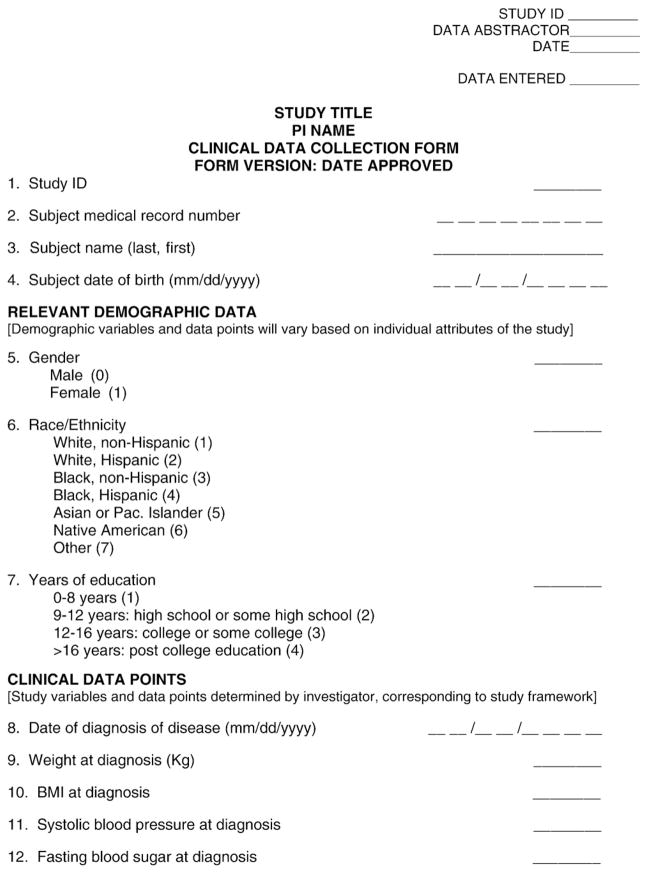
A data collection form should define what information is captured and how it is recorded. Structured fields can reduce ambiguity and make later analysis easier. The form should distinguish identifiers from research variables and should use appropriate confidentiality procedures.
The National Center for Biotechnology Information hosts examples of clinical data collection forms that organize study identifiers, participant information, demographic variables, and clinical data points. Such examples demonstrate why consistent field definitions are valuable when multiple records or researchers are involved.
When a support letter promises data access, researchers should verify whether the underlying dataset is actually available and whether additional approvals, agreements, privacy controls, or institutional permissions are required.
It is better for a support letter to say that an organization “intends to facilitate access subject to applicable institutional and regulatory requirements” when those conditions genuinely apply than to make an absolute promise that the organization cannot independently guarantee.
Source: Haematologica
Data Analysis, Results, and Reporting
Although a support letter is not an analysis document, it should be compatible with the analytical approach described in the research proposal. If a statistician, data center, laboratory, or research unit is providing analytical support, the letter should describe that contribution accurately.
For example, a statistical collaborator might support study-design consultation, sample-size planning, analysis programming, or interpretation. The precise contribution should match the collaborator’s actual role and the proposal’s methods.
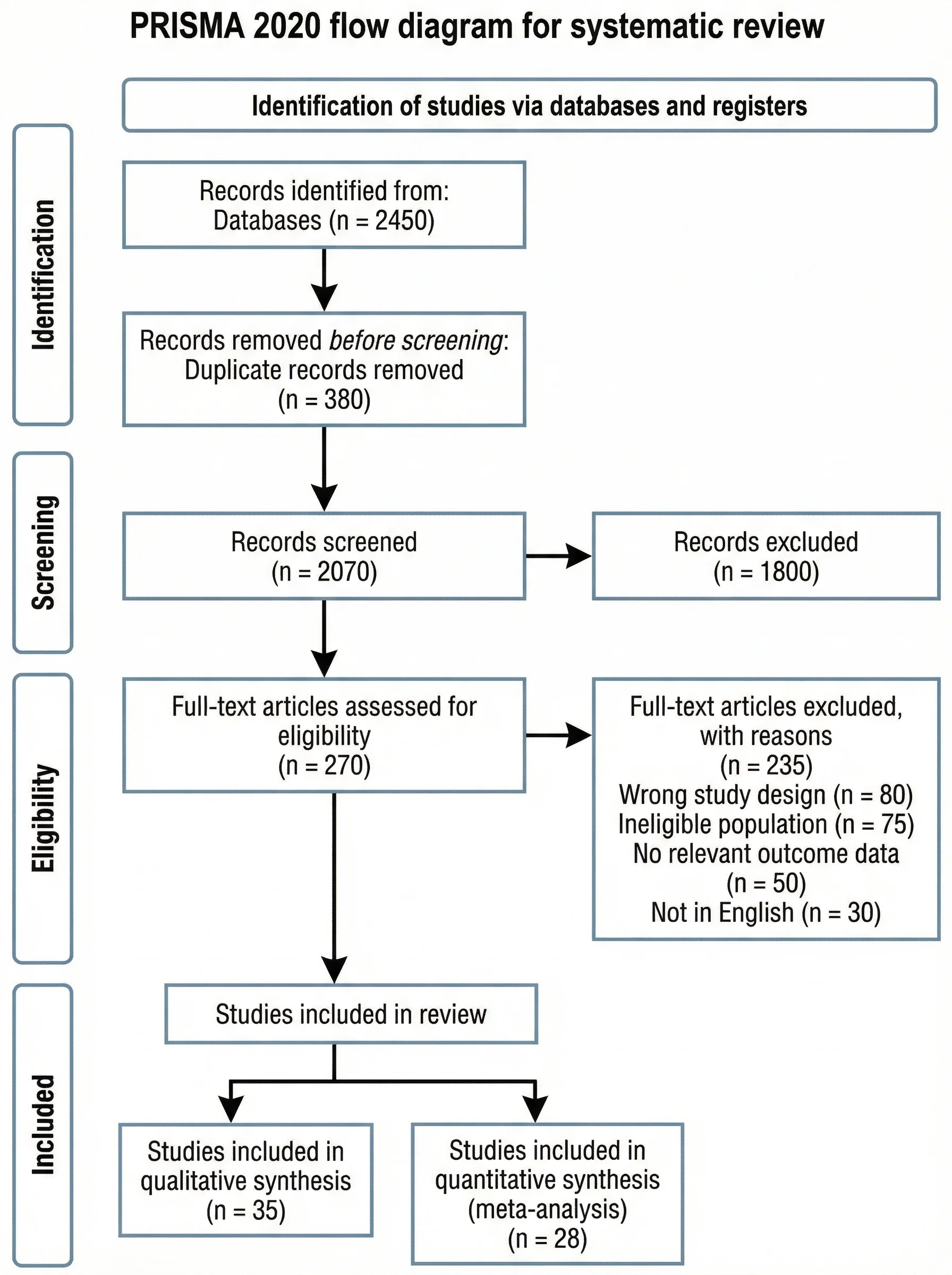
Medical research reports commonly use tables, charts, confidence intervals, flow diagrams, and other visual summaries. The support letter does not need to contain these results because the study may not yet have produced results. It should instead explain how the supporting party contributes to the research process.
Researchers should be especially careful not to imply that a supporter has endorsed conclusions that do not yet exist. A pre-award support letter should normally describe planned activities rather than present hypothetical findings as established facts.
A clean distinction between planned work and completed work also protects the credibility of the application. If a document uses hypothetical numbers or example outcomes, they should be clearly identified as examples rather than real findings.

Source: Medium article image
Clinical Research Flow, Timelines, and Responsibilities
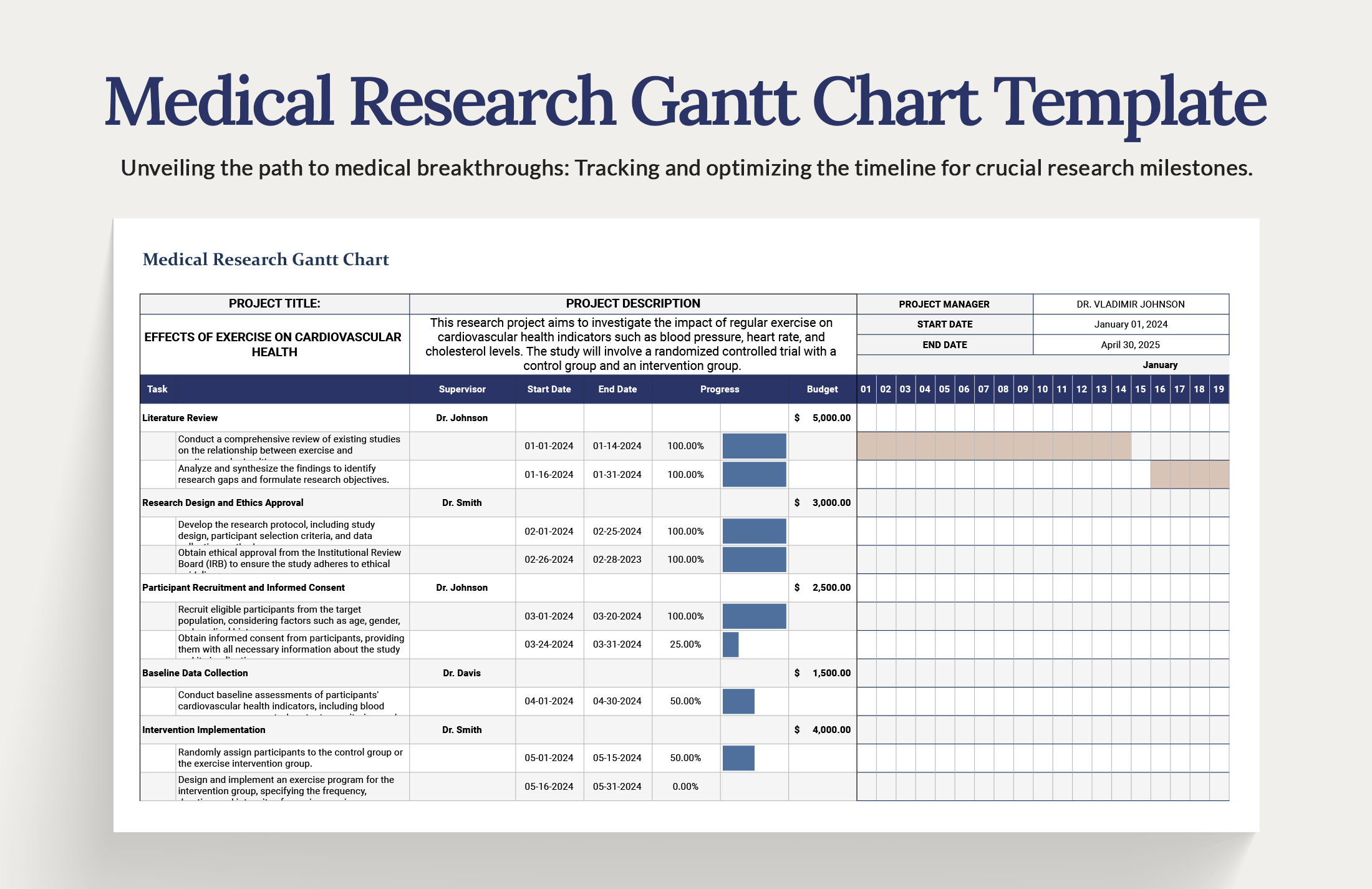
Medical research often involves multiple stages, including protocol development, ethics review, recruitment, intervention or observation, data collection, analysis, and reporting. A timeline helps the team understand how the support described in the letter fits into the larger project.
A support letter becomes more useful when its commitments are connected to identifiable project activities. For example, a clinical site may support recruitment during a defined period, while a laboratory may provide testing during the data-collection phase.
Flow diagrams can also help teams identify where responsibilities change. CONSORT-style diagrams, for example, show participant progression through eligibility, randomization, allocation, follow-up, and analysis. The structure is useful for planning because it forces the research team to think about how participants and data move through the study.
A timeline should not promise that an activity will occur before the approvals needed to conduct it. Recruitment, data access, specimen collection, or intervention activities may depend on ethics or institutional authorization.
Therefore, the letter and project timeline should use realistic language. The supporting organization can confirm its intended role without implying that regulatory or institutional approval has already been granted when it has not.
Source: ConceptViz
Common Types of Support Letters
Collaborator letter: This explains what another investigator or organization will contribute to the project. It is particularly useful when the collaborator brings expertise or resources that are important to the study.
Institutional support letter: This may confirm support from a university, hospital, research center, department, or other institution. The letter should specify the actual institutional contribution rather than merely state that the institution approves of the research.
External-site letter: This can confirm that research activities are proposed at a location outside the investigator’s primary institution. Depending on the circumstances, it may describe site permission, awareness of the project, access arrangements, or planned cooperation.
Community partner letter: This type of letter may describe community engagement, recruitment assistance, dissemination, advisory participation, or other activities. Community partners should describe their actual role in their own terms rather than being presented as generic endorsers.
Resource-access letter: This confirms planned access to equipment, facilities, specimens, databases, specialized services, or other resources. Such letters should clearly identify any fees, scheduling limitations, eligibility conditions, or institutional requirements that matter to feasibility.

Source: Scribd document preview
Practical Examples
Example: University Research Center
A university research center supporting a medical study might begin by identifying the project and principal investigator. It could then state that the center supports the proposal and explain that its research staff will provide methodological consultation during study development.
The center could specify the planned contribution, such as protocol consultation, data-management advice, or statistical support. If the center is not committing funding, the letter should not imply that it is providing financial support.
The writer should identify their institutional position and authority. If a signature requires review by a dean, director, research office, or other official, that process should be completed before the letter is submitted.
The language should remain consistent with the application. If the proposal says the center will provide statistical support during the entire study, the letter should not describe the role as a one-time consultation.
The final paragraph can express confidence in the project’s scientific value and confirm willingness to contribute according to the stated role.
Example: Clinical Site
A clinical site letter might state that the organization is aware of the proposed study and intends to facilitate specified research activities if required approvals are obtained. The letter can identify the site, the responsible representative, and the general activities expected to occur there.
If participant recruitment is involved, the letter should avoid implying that patients will be automatically enrolled. Recruitment remains subject to the protocol, eligibility criteria, consent procedures, and applicable institutional requirements.
If medical records are involved, the letter should not promise unrestricted access. Data-use conditions, privacy protections, institutional approvals, and applicable law can affect whether and how records may be accessed.
The same principle applies to biological specimens. A letter can describe intended support while making clear that specimen availability and transfer remain subject to applicable requirements.
This conditional but specific style is generally stronger than an absolute promise that ignores the practical requirements of clinical research.

Source: Scribd document preview
How to Improve the Letter’s Professional Quality
Use one clear purpose. A letter that attempts to be an endorsement, detailed protocol summary, budget explanation, biography, and institutional policy statement can become difficult to review. Keep the support letter focused on the relationship and contribution.
Use precise nouns and verbs. “The laboratory will provide access to the assay facility” is more useful than “the laboratory will strongly support the project.” Strong writing makes the actual contribution visible.
Keep the project description concise. Reviewers generally already have the proposal, so the support letter should add evidence of commitment rather than duplicate several pages of scientific background.
Make commitments measurable where appropriate. If a collaborator will provide consultation, specify the nature of the consultation. If an organization will provide access to a facility, identify the relevant resource. If staff effort is being committed, describe it according to the sponsor’s requirements.
Finally, proofread the document as an independent artifact. A letter can be scientifically correct while still containing an old project title, incorrect institution name, wrong deadline, outdated investigator title, or inconsistent grant mechanism.

Source: Scribd document preview
Common Mistakes to Avoid
One of the most common mistakes is using a generic letter without adapting it to the actual study. Generic praise does not explain why the supporting party is relevant or what it will contribute.
Another mistake is making unauthorized commitments. A researcher should not promise institutional funding, staff time, facility access, or data access without confirming that the relevant organization has approved the commitment.
A third mistake is confusing a support letter with an ethics approval letter. Support can demonstrate cooperation, but it does not necessarily constitute IRB or ethics approval. Researchers should follow the applicable review process separately.
A fourth mistake is introducing information that conflicts with the application. Even a small discrepancy in project title, study population, investigator name, or planned activities can create avoidable questions during review.
A fifth mistake is submitting the wrong file format. Always check whether the sponsor requires PDF, DOCX, a specific naming convention, a page limit, a signature, letterhead, or a particular upload location.
Practical Solution: A Reliable Workflow for Building the Document
The most practical way to create a letter for supporting medical research template is to build a master structure and then create a project-specific version from it. The master structure should contain only reusable headings and prompts, not old project information that might accidentally remain in a future submission.
Begin with five blocks: identity, project, relationship, contribution, and authorization. Under identity, include the organization and writer. Under project, include the title and application information. Under relationship, explain why the writer or organization is relevant. Under contribution, state exactly what support is planned. Under authorization, provide the appropriate signature and contact details.
Next, create a verification checklist. Compare the letter with the final proposal for the project title, principal investigator, institution, study design, study population, activities, resources, funding mechanism, and deadlines. Then verify that every promised contribution has an appropriate owner.
For collaborative projects, create a responsibility matrix before finalizing the letter. One column can identify the activity, another the responsible organization, another the expected timing, and another any conditions. The letter can then summarize only the responsibilities relevant to that supporter.
For clinical research, add a regulatory language check. Ask whether the document accidentally promises participant access, medical-record access, specimen transfer, recruitment, or facility use without acknowledging required approvals. Adjust the wording when necessary.
Finally, convert the approved document to the required submission format. Open the final file and check every page visually. Confirm that letterhead is intact, signatures are visible, no text has been cut off, and the document contains the correct project information.
This workflow is more reliable than searching for one universal document because a template cannot know the requirements of every sponsor or institution. The goal is to use a reusable structure while customizing the substance for each research relationship.
Reference Examples
The following examples illustrate the kinds of document layouts and research resources that can help when evaluating or adapting a support-letter workflow. They are examples of visual structures, not universal forms that automatically satisfy every funder or institution.
letter for supporting medical research template free
Source: Scribd document preview
letter for supporting medical research template pdf

Source: Letterin
letter for supporting medical research template word
Source: Template.net
letter for supporting medical research template free download

Source: Scribd document preview
letter for supporting medical research template for students
Source: Template.net
letter for supporting medical research template google docs
Source: Scribd document preview
letter for supporting medical research template reddit
Source: Letterin
letter for supporting medical research template repo
Source: Yumpu document preview
letter for supporting medical research template a b

Source: Public clinical research results image
letter for supporting medical research template authorea team
Source: Medium article image
letter for supporting medical research template excel
Source: Smartsheet
Frequently Asked Questions
What is the main purpose of a letter for supporting medical research template?
Its main purpose is to provide a structured starting point for a formal letter confirming endorsement, collaboration, institutional support, resource access, or another defined contribution to a medical research project. The final letter should be customized to the relevant project and sponsor requirements.
Should a medical research support letter be one page?
One page is often practical when the sponsor does not specify another length, but there is no universal rule. The funding announcement, institutional instructions, and nature of the commitment should determine the appropriate length.
Can I use the same support letter template for every research project?
You can reuse the structure, but the content should normally be customized. The project title, collaborator role, resources, commitments, funding mechanism, and required language can differ substantially between applications.
Should the letter be submitted as PDF or Word?
Follow the submission instructions. Word is convenient for drafting and review, while PDF is often useful for preserving the final layout. Do not choose a format solely because it is common; use the format requested by the relevant sponsor or institution.
Can students use a support letter template?
Yes. Students can use a template for thesis research, undergraduate research, graduate projects, fellowships, clinical research activities, and grant applications. The letter should accurately describe the student’s project and the support being provided by the supervisor or institution.
Does a support letter replace ethics approval?
No. A support letter and ethics approval generally serve different purposes. A letter can document cooperation or endorsement, while ethics review addresses whether the proposed research meets applicable requirements for human participants or other regulated activities.
What should a collaborator promise in the letter?
The collaborator should describe only support that they are authorized and prepared to provide. Examples include methodological expertise, facility access, specified research services, community engagement, data-related assistance, or other defined contributions.
Should the letter mention the research budget?
Only when the budget or financial contribution is relevant to the required support. If the supporter is making a financial commitment, the amount, nature, and timing should be consistent with the proposal and sponsor requirements.
How should I handle a letter when access depends on approval?
Use accurate conditional language when appropriate. For example, the organization can state that it intends to facilitate access subject to applicable institutional, regulatory, privacy, contractual, or ethics requirements. Do not describe conditional access as unconditional approval.
What makes a support letter persuasive?
Specificity is usually more valuable than exaggerated praise. A persuasive letter identifies the project, establishes the writer’s relevance, explains the concrete contribution, demonstrates that the contribution is realistic, and uses language consistent with the main application.
Conclusion
A well-prepared letter for supporting medical research template should make a research relationship clear, specific, credible, and easy for a reviewer to evaluate. The strongest documents identify the project, establish the supporting party’s role, describe concrete contributions, avoid unauthorized promises, and remain consistent with the proposal, protocol, budget, and applicable institutional requirements. A reusable template can save time, but the final letter should always be adapted to the actual study and current sponsor instructions. When treated as part of a broader research-documentation workflow rather than as a generic form, a letter for supporting medical research template can provide a clear and professional record of the support behind a medical research project.
