Creative consulting sits at the intersection of imagination and commercial judgment. Depending on the position, a creative consultant may work on brand strategy, campaign concepts, customer experience, content direction, innovation, design thinking, communications, or business transformation. That range makes the cover letter especially important because the applicant must connect creative ability with measurable professional value.
A useful template should therefore provide structure without forcing every candidate into identical language. It can establish the correct order for contact information, opening statement, relevant experience, evidence of impact, motivation, and closing. The candidate then replaces generic prompts with facts from the job description and their own professional history.
Current consulting-career guidance consistently emphasizes that a cover letter should complement rather than simply repeat a resume. The strongest letters explain motivation, demonstrate relevant capabilities, and provide concrete evidence of impact. They are also generally concise enough for a recruiter to understand the candidate’s argument quickly.
This guide explains how to build, customize, format, review, and use a creative consultant cover letter Template. It also covers Word, PDF, Google Docs, free-template searches, examples, resume alignment, consulting-specific storytelling, common mistakes, and a practical workflow for producing a polished application.
What Is a Creative Consultant Cover Letter Template?
A creative consultant cover letter Template is a reusable document framework designed to help applicants organize a professional application for a creative consulting position. It normally contains placeholders for the applicant’s details, recipient information, position title, opening pitch, relevant achievements, motivation, and closing statement.
The word “template” should not be interpreted as a finished letter that can be submitted unchanged. A template provides structure; the candidate supplies the evidence. A generic document may show where an achievement belongs, but it cannot know which client problem you solved, which campaign you improved, or why a particular consulting firm interests you.
For creative consulting roles, structure and originality need to coexist. A visually interesting page can demonstrate attention to presentation, but excessive decoration can make a professional application harder to read. The document should communicate creativity through precise language, relevant examples, and thoughtful positioning rather than through distracting graphics.
A practical template usually works best when it makes the reader’s job easy. The hiring professional should be able to identify the role, understand the candidate’s core value, see one or two relevant achievements, recognize the reason for applying, and locate contact information without searching through dense blocks of text.
The most useful templates are therefore flexible. They can be adapted for a creative strategy consultant, brand consultant, innovation consultant, marketing consultant, customer-experience consultant, design strategist, or another role where creative thinking is combined with client or business objectives.
Why the Cover Letter Matters in Creative Consulting
A resume is optimized for scanning facts, while a cover letter creates an opportunity to connect those facts into an argument. A candidate might list strategy, research, client management, and campaign development on a resume, but the letter can explain how those capabilities worked together to solve a specific problem.
Consulting employers often need people who can move between ambiguity and action. A creative consultant may begin with incomplete information, interview stakeholders, investigate customer behavior, evaluate competitors, develop concepts, and eventually persuade decision-makers to support a recommendation. A good letter can demonstrate that progression in miniature.
The cover letter is also a writing sample. Clear organization, economical language, logical sequencing, and professional tone are valuable signals for consulting work. A document that takes three paragraphs to make a simple point can unintentionally suggest that the applicant may struggle to communicate efficiently with clients.
Customization is another major advantage. A generic sentence such as “I am passionate about creativity and would be an excellent addition to your team” tells the employer almost nothing. A stronger statement might connect the firm’s work in brand transformation with an applicant’s experience developing a positioning framework for a growing company.
That difference illustrates the central principle: the cover letter should answer why this candidate makes sense for this role. It does not need to tell an entire career story. It needs to select the most relevant evidence and arrange it into a convincing, readable case.

The Core Structure of a Creative Consultant Cover Letter
A practical cover letter can be built around four main functions: identify the opportunity, establish relevance, prove capability, and explain fit. These functions can be distributed across three or four short body paragraphs depending on the applicant’s experience and the requirements of the position.
The header should contain the applicant’s name and professional contact details, followed by the date and recipient information when appropriate. The design should be restrained. A hiring manager should see immediately that the document belongs to a professional application rather than a promotional brochure.
The opening paragraph should identify the position and establish the candidate’s central proposition. Instead of beginning with a broad statement about loving creativity, lead with a relevant professional identity or result. For example, a candidate could mention experience combining customer research, brand strategy, and campaign development for growth-stage companies.
The middle section should provide evidence. Select two or three capabilities that appear in the job description and support them with actual examples. Strong evidence may include a successful repositioning project, a research initiative, a new service concept, a client recommendation adopted by leadership, or a campaign whose performance improved after a strategic change.
The final paragraph should explain why the employer is relevant and close professionally. It should not introduce an entirely new career story. A concise invitation to discuss the candidate’s experience, followed by a courteous sign-off, is normally enough.
A Simple Four-Part Framework
Opening: State the position, your professional angle, and the reason your background is relevant.
Evidence: Describe one or two accomplishments that demonstrate creative problem-solving, analysis, communication, or client impact.
Fit: Explain why the organization, practice area, or type of consulting work is attractive to you.
Closing: Reinforce your interest, reference the attached resume or portfolio when appropriate, and provide a professional call to action.
How to Research the Job Before Writing
The fastest way to weaken a cover letter is to write it before understanding the vacancy. Start by reading the job description from beginning to end and separate requirements into categories: responsibilities, technical skills, creative capabilities, communication expectations, industry knowledge, and preferred qualifications.
Highlight repeated concepts. If the description repeatedly mentions client presentations, strategic recommendations, market research, creative briefs, brand development, and stakeholder collaboration, those themes should influence your letter. You do not need to copy the wording, but your evidence should demonstrate that you can perform the work.
Next, research the organization itself. Look at its services, practice areas, recent work, stated positioning, and the type of clients it serves. The purpose is not to fill the letter with company facts. It is to identify one or two genuine reasons the role fits your professional direction.
Research can also reveal the appropriate tone. A boutique creative strategy consultancy may appreciate a slightly more expressive voice, while a large management consulting organization may expect a highly structured and analytical document. Both can be creative, but the presentation should respect the context.
Finally, create a small evidence table before drafting. Put the employer’s requirement in one column, your relevant experience in another, and the measurable or observable result in a third. This simple exercise makes it much easier to write a letter based on evidence instead of adjectives.
Choosing the Right Evidence for a Creative Consulting Role
Creative candidates sometimes focus too heavily on describing ideas and not enough on showing what those ideas accomplished. Consulting employers generally need both. The candidate should demonstrate imagination while also showing the ability to define a problem, make decisions, collaborate, and connect recommendations to an objective.
Consider the difference between “developed innovative campaign concepts” and “developed three campaign directions after analyzing customer interviews and competitor positioning, then presented the recommendation to the client team.” The second statement communicates a process, not just an adjective.
Results do not always have to be financial. Useful evidence may include faster project delivery, stronger stakeholder alignment, improved customer engagement, higher conversion, clearer brand positioning, successful client approval, reduced production revisions, better research quality, or the adoption of a new creative framework.
When numbers genuinely exist, use them accurately. A percentage, revenue amount, project duration, number of markets, audience size, or reduction in revisions can make an accomplishment easier to understand. If an achievement cannot be quantified, describe the outcome clearly without inventing statistics.
Creative consulting also rewards evidence of adaptability. If you have worked across different industries, collaborated with designers and analysts, translated research into creative recommendations, or presented complex ideas to non-specialists, those experiences can differentiate you from applicants whose experience is narrower.
Writing the Opening Paragraph
The first paragraph should establish relevance quickly. A useful formula is: “I am applying for [role] because my experience in [specific area] aligns with your need for [specific capability].” The formula is intentionally simple because the value comes from the details inserted into it.
A stronger opening might lead with an achievement when the result is particularly relevant. For example, a candidate applying for a brand strategy role could begin by explaining that they have led positioning and messaging projects for companies entering new customer segments.
A recent graduate can use a different strategy. Instead of pretending to have years of consulting experience, the applicant can connect academic research, internships, case competitions, freelance projects, student organizations, or client-facing coursework to the responsibilities of the role.
An experienced consultant should avoid spending too much space establishing basic credibility. If the resume already demonstrates several years of relevant work, the letter should move quickly toward the particular problem the candidate wants to solve and the evidence that makes them credible.
Avoid opening with clichés such as “I am a highly motivated individual,” “I have always dreamed of working for your company,” or “I am writing to express my interest.” These phrases are not automatically wrong, but they consume valuable space without differentiating the applicant.
How to Describe Creative Problem-Solving
Creative problem-solving becomes more persuasive when the letter explains the problem before describing the idea. A consultant does not create concepts in a vacuum. The creative recommendation should emerge from customer needs, business constraints, competitive conditions, organizational goals, or another clearly defined challenge.
A useful mini-story can follow a simple sequence: situation, challenge, action, result. Suppose a hypothetical consultant worked with a consumer brand whose messaging had become inconsistent across channels. The letter could explain how the consultant audited existing communications, interviewed internal teams, identified positioning conflicts, and developed a clearer messaging framework.
The action portion should show the candidate’s contribution rather than simply describing what the entire team accomplished. If the applicant led research, facilitated workshops, developed concepts, built the strategic framework, presented the recommendation, or managed implementation, that role should be explicit.
The result should then demonstrate why the work mattered. The outcome could be a more coherent brand system, faster approval cycles, improved stakeholder agreement, a successful launch, or another verified consequence. This structure gives the employer a practical picture of how the candidate operates.
For senior applicants, the story can emphasize judgment. Senior creative consultants are often expected to make trade-offs, influence stakeholders, protect strategic coherence, and explain creative decisions in commercial terms. Those behaviors can be more valuable than simply listing software skills or creative interests.

Balancing Creativity With Professionalism
A creative consultant application should look distinctive without becoming difficult to read. Typography, spacing, hierarchy, and restrained use of visual accents can make a document polished. Decorative graphics, excessive color, elaborate borders, and unusual fonts can have the opposite effect when they compete with the content.
Think of the cover letter as a consulting deliverable. The reader should understand the message quickly, know where each section begins, and never wonder whether a design element carries important information. A clean layout communicates confidence because it shows that the candidate can prioritize.
One page is often a useful practical target for a standard application. If the employer provides different instructions, follow those instructions. Senior candidates with unusually complex backgrounds may need more space, but additional length should come from useful evidence rather than a desire to appear more experienced.
Use consistent typography across the resume, cover letter, and portfolio when possible. Consistency does not mean every page must be identical. It means the documents look like parts of one professional application rather than unrelated files assembled at the last moment.
Before sending the document, inspect it at normal viewing size and as a PDF. Look for uneven spacing, isolated words on new lines, awkward page breaks, excessive white space, inconsistent punctuation, and visual elements that appear differently after export.
Using a Word-Based Template
A Word document can be particularly useful when an employer expects an editable application or when you want to maintain control over formatting. A Word template can contain predefined margins, headings, spacing, and placeholders that reduce repetitive formatting work.
When using a Word template, replace every placeholder rather than leaving generic fields behind. Search for brackets, highlighted text, sample names, sample company addresses, and example dates. A forgotten placeholder is one of the easiest ways to make an otherwise strong application look unfinished.
Keep formatting simple enough that the document remains stable when opened on another computer. Standard fonts, conventional paragraph spacing, and a straightforward hierarchy reduce compatibility problems. Avoid relying on complex text boxes if the content can be presented naturally with normal paragraphs.
Word is also useful for making a master version. Keep one complete document containing your strongest evidence, then create a copy for each employer. This approach prevents you from rebuilding the application from scratch while still allowing meaningful customization.
After editing, export the final version to PDF if the application portal requests PDF. Open the exported file and inspect it rather than assuming the conversion preserved everything correctly. The submitted document, not the original editable file, is what the recruiter will evaluate.

Using a PDF Version
A PDF is often useful because it preserves the intended appearance of a document across different devices. For a cover letter, that means spacing, headings, margins, and typography are more likely to remain consistent when the recipient opens the file.
A PDF should still contain selectable text unless there is a specific reason to use a scanned document. Selectable text improves accessibility, searching, copying for administrative purposes, and compatibility with many application systems.
Check the file name before submission. A professional convention might be “FirstName-LastName-Creative-Consultant-Cover-Letter.pdf.” Avoid vague names such as “finalfinal2.pdf” or files containing internal notes.
Inspect the first and last page carefully. Confirm that your contact information is correct, the recipient’s name is spelled correctly, the position title matches the vacancy, and no draft comments or hidden instructions appear in the document.
Do not claim that a particular employer requires PDF unless the job posting says so. File-format requirements vary. The safest approach is to follow the application’s explicit instructions and use a clean PDF when the employer accepts or requests it.
Using Google Docs Efficiently
Google Docs can be convenient when you want a cloud-based master template that can be edited from multiple devices. It is especially useful for maintaining several versions of a cover letter while keeping the underlying structure consistent.
Create a master document containing reusable sections, but do not treat it as a universal final letter. For every application, duplicate the document and rename the copy for the target organization. This reduces the risk of accidentally overwriting a previous application.
Use paragraph styles instead of manually formatting every heading. Styles make the document easier to update and keep typography consistent. They also make it easier to remove or rearrange sections when adapting the letter to different roles.
Google Docs also makes revision easier. Read the letter once for content, once for logic, and once for grammar. During the content pass, remove irrelevant experience. During the logic pass, ensure every paragraph contributes to the central argument. During the final pass, correct wording and punctuation.
When the application requires a PDF, use the document’s export function and then inspect the downloaded file. Do not assume that the document’s editing view is identical to the final exported version.
Free Template Searches: What to Look For
Searching for a free cover letter can save time, but “free” does not automatically mean suitable. Evaluate a template by structure, readability, editability, file compatibility, and how easily it can be customized for a creative consulting position.
A good free template should not force you to use exaggerated claims or irrelevant sections. If the document contains large graphics, personal statements, rating bars, or decorative elements that do not contribute to your application, remove them rather than accepting the design unchanged.
Look for a layout that leaves enough room for evidence. A visually attractive template that gives you only a few lines of body text may be less useful than a plain design that lets you explain a relevant project clearly.
Also check whether the resource actually provides the format you need. A page may mention Word, Google Docs, or PDF while the editable version has different availability. Do not state that a specific download is free unless the source currently confirms that condition.
The safest principle is to use free templates as starting points rather than as promises of a guaranteed hiring outcome. Your customization, evidence, accuracy, and fit matter more than the template’s visual polish.
How to Adapt a Template for Different Career Stages
A recent graduate should emphasize transferable evidence. Internships, research projects, client assignments, student consulting projects, freelance work, and leadership experiences can all be useful when they demonstrate structured thinking, creativity, collaboration, or communication.
An early-career consultant should emphasize increasing responsibility. Show how you moved from supporting research to owning parts of an engagement, presenting recommendations, managing stakeholders, or developing original strategic or creative work.
An experienced consultant should prioritize impact and specialization. Instead of listing every employer and project, select experiences that match the target firm’s practice areas. A senior applicant may need fewer examples, but those examples should demonstrate meaningful ownership and judgment.
A career changer needs a particularly clear bridge. Explain why previous experience is relevant to consulting. For example, a marketer moving into creative strategy might connect customer research, campaign planning, performance analysis, and cross-functional leadership to the responsibilities of the consulting role.
An independent consultant or freelancer can focus on client outcomes and breadth. Describe the types of problems solved, industries served, scope of engagements, and ability to move from discovery through recommendation and implementation.

Cover Letter for Consulting Versus a General Creative Role
A general creative job application may focus heavily on portfolio quality, creative execution, style, and craft. A consulting application generally needs a stronger emphasis on problem definition, structured thinking, client needs, business context, and recommendations.
That does not mean creativity becomes less important. Instead, creativity must be connected to a reason. A consultant is not merely generating ideas; they are helping an organization decide which ideas matter, why they matter, how they should be developed, and what constraints must be considered.
The strongest applications demonstrate both sides. One paragraph can show analytical research and stakeholder discovery, while another can show how that information became a compelling creative direction. The combination is what makes a creative consultant distinctive.
Use the job description to determine the balance. If the role emphasizes brand strategy, discuss positioning and customer insight. If it emphasizes innovation, discuss experimentation and concept development. If it emphasizes client delivery, emphasize communication, facilitation, and implementation.
Do not force consulting terminology into the letter simply to sound sophisticated. Clear language is more persuasive than unnecessary jargon. If a simple sentence communicates the problem, action, and result, there is no need to replace it with complicated terminology.

Using Consulting Cover Letter Examples Correctly
Examples are useful when they reveal structure. Study where the writer introduces the role, how evidence is selected, how the firm-specific paragraph works, and how the closing is handled. Avoid copying sentences because the examples are based on someone else’s experience.
When reviewing consulting cover letter examples, ask five questions. What is the candidate’s central argument? Which achievement receives the most space? How is the employer’s work mentioned? Does every paragraph have a distinct purpose? Could the letter be sent unchanged to another company?
The last question is especially revealing. If a paragraph could be pasted into an application for any consulting firm without changing a word, it probably needs more specificity. A strong letter contains details that genuinely connect the applicant with the organization.
Examples should also be treated as writing references rather than promises of a universal formula. Different firms, offices, industries, and roles may have different application expectations. Always follow the actual job posting and application instructions.
Finally, compare the example against your resume. If the resume says you led a project but the cover letter says you merely supported it, the inconsistency can create doubt. Every document should tell the same professional story from a different angle.
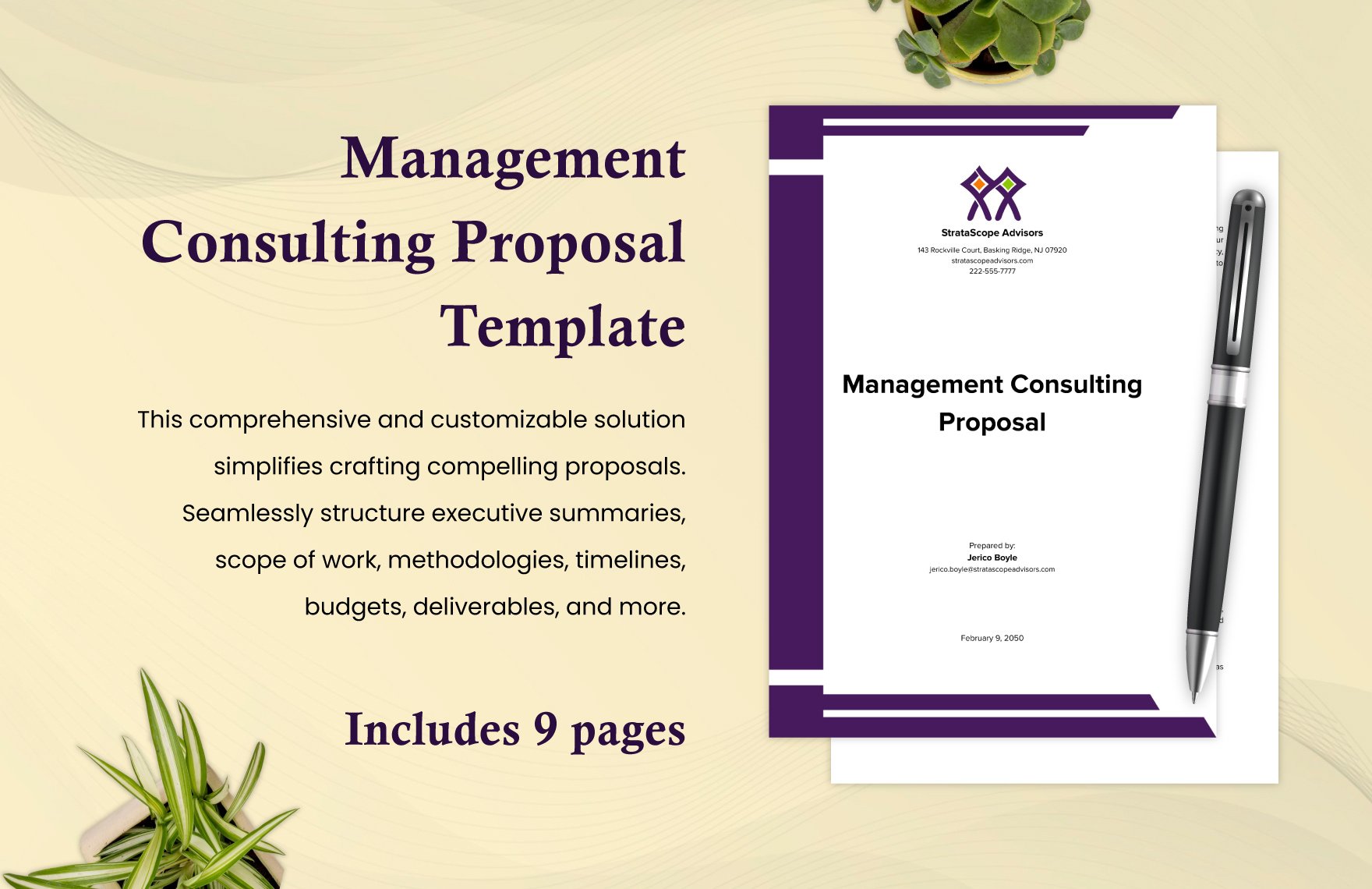
Aligning the Cover Letter With Your Resume
The resume and cover letter should work as a pair. The resume provides breadth and evidence across your career, while the letter selects a small number of details and explains their relevance to the specific position.
One effective method is to identify the three strongest resume achievements for the vacancy. Then ask which one best demonstrates creative problem-solving, which demonstrates client or stakeholder impact, and which demonstrates analytical or strategic capability.
Do not simply repeat resume bullet points word for word. Instead, give the achievement context. Explain the challenge, your contribution, and why the result matters for the new role.
Consistency also applies to dates, job titles, employer names, project descriptions, and metrics. A cover letter should never introduce a new achievement that cannot be reconciled with the resume unless there is a legitimate reason for the difference.
If the application includes a portfolio, use the cover letter to point toward the type of work the portfolio demonstrates. You do not need to describe every project. Choose one relevant theme and let the portfolio provide the visual evidence.
Sample Resume and Consultant Letter Alignment
Imagine a hypothetical applicant whose resume contains three relevant accomplishments: a brand repositioning project, a customer research initiative, and a cross-functional campaign launch. A weak letter might list all three without explaining how they relate to the vacancy.
A stronger letter could select the repositioning project as its primary story. It might explain that the applicant reviewed customer feedback, mapped competing brands, helped define a new positioning direction, and translated the recommendation into messaging guidance for multiple channels.
The second paragraph could then briefly reference the research initiative as evidence of analytical capability. Instead of explaining every research method, the candidate could show how the findings changed a strategic recommendation or helped a client make a decision.
The final evidence paragraph might connect the campaign launch to collaboration. If the applicant coordinated designers, marketers, account teams, and client stakeholders, that experience could demonstrate the communication skills required in consulting.
This approach creates a coherent narrative: research informed strategy, strategy shaped creative direction, and collaboration turned the recommendation into execution. The details are hypothetical, but the method is broadly useful.

Common Mistakes to Avoid
The first common mistake is repeating the resume. A cover letter that simply converts bullet points into paragraphs adds little value. Use the letter to interpret your experience and connect it directly to the employer’s needs.
The second mistake is excessive generic language. Words such as creative, strategic, passionate, innovative, analytical, and results-driven are useful only when supported by evidence. Replace unsupported adjectives with examples of what you actually did.
The third mistake is failing to customize the document. A letter addressed to the wrong company or containing another employer’s name is an obvious error. Less obvious but equally problematic is a letter that contains no evidence that the candidate researched the organization.
The fourth mistake is overdesign. A creative consultant should be capable of presenting information clearly. A crowded layout can undermine that impression. Let hierarchy, spacing, typography, and precise writing demonstrate creativity.
The fifth mistake is exaggeration. Never invent a client result, revenue figure, project role, award, certification, or relationship. Professional applications depend on credibility. If an achievement is confidential, describe the type of problem and outcome without disclosing protected details.
Editing and Fact-Checking Your Letter
Start the editing process by checking factual accuracy. Verify company names, job titles, dates, project descriptions, numbers, locations, and names of people. Small errors can create a disproportionately negative impression in a document intended to demonstrate attention to detail.
Next, check relevance. Every paragraph should support the central argument that you are a strong candidate for this particular position. If a sentence does not contribute evidence, motivation, or fit, consider deleting it.
Then check specificity. Replace vague phrases with concrete descriptions. “Worked on many projects” is weak. “Supported three brand strategy engagements involving customer research, positioning, and stakeholder workshops” is more informative when accurate.
Read the letter aloud. Awkward repetition, overly long sentences, and unnatural transitions become easier to notice when spoken. Consulting writing should feel deliberate and confident, not mechanical.
Finally, ask someone unfamiliar with your application to summarize your main argument after reading the letter. If they cannot explain what differentiates you, the document may need a clearer opening or stronger evidence.

Practical Solution: A Repeatable Workflow for Building Your Application
The most practical solution is to create one master creative consultant cover letter Template and treat every application as a tailored version. Start by maintaining a private evidence bank containing your strongest projects, responsibilities, outcomes, research experience, client work, leadership examples, and creative achievements.
For each vacancy, copy the master document and create a new file. Read the job description carefully and select three requirements that genuinely match your experience. Then choose two or three achievements that provide evidence for those requirements. This prevents the letter from becoming a general career summary.
Draft the opening last if you are struggling with it. Begin with the evidence paragraphs first, because once you understand which experience is most relevant, it becomes easier to write a concise introduction that frames the rest of the document.
Use a simple review sequence: content, evidence, fit, clarity, formatting, and accuracy. During the content review, remove irrelevant material. During the evidence review, check that important claims are supported. During the fit review, make sure the employer-specific reasoning is genuine.
For formatting, use a clean professional layout and maintain consistent spacing. For accuracy, verify every factual statement. Finally, export the document in the requested format and inspect the actual submitted file. This workflow turns template use into a controlled process rather than a shortcut.

Reference Examples
The following visual references illustrate different document formats and layouts that can help when evaluating how a creative consultant application might be structured. They are examples of presentation styles, not claims that any particular format guarantees an interview.
creative consultant cover letter template free

Source: Template.net
creative consultant cover letter template free download
Source: Template.net
creative consultant cover letter template word
Source: Template.net
creative consultant cover letter template pdf

Source: Template.net
creative consultant cover letter template reddit

Source: Template.net
creative consultant cover letter template google docs

Source: Template.net
template consulting cover letter
Source: Template.net
cover letter for consulting

Source: Template.net
consulting cover letter examples
Source: Template.net
sample resume consultant cover letter
Source: Template.net
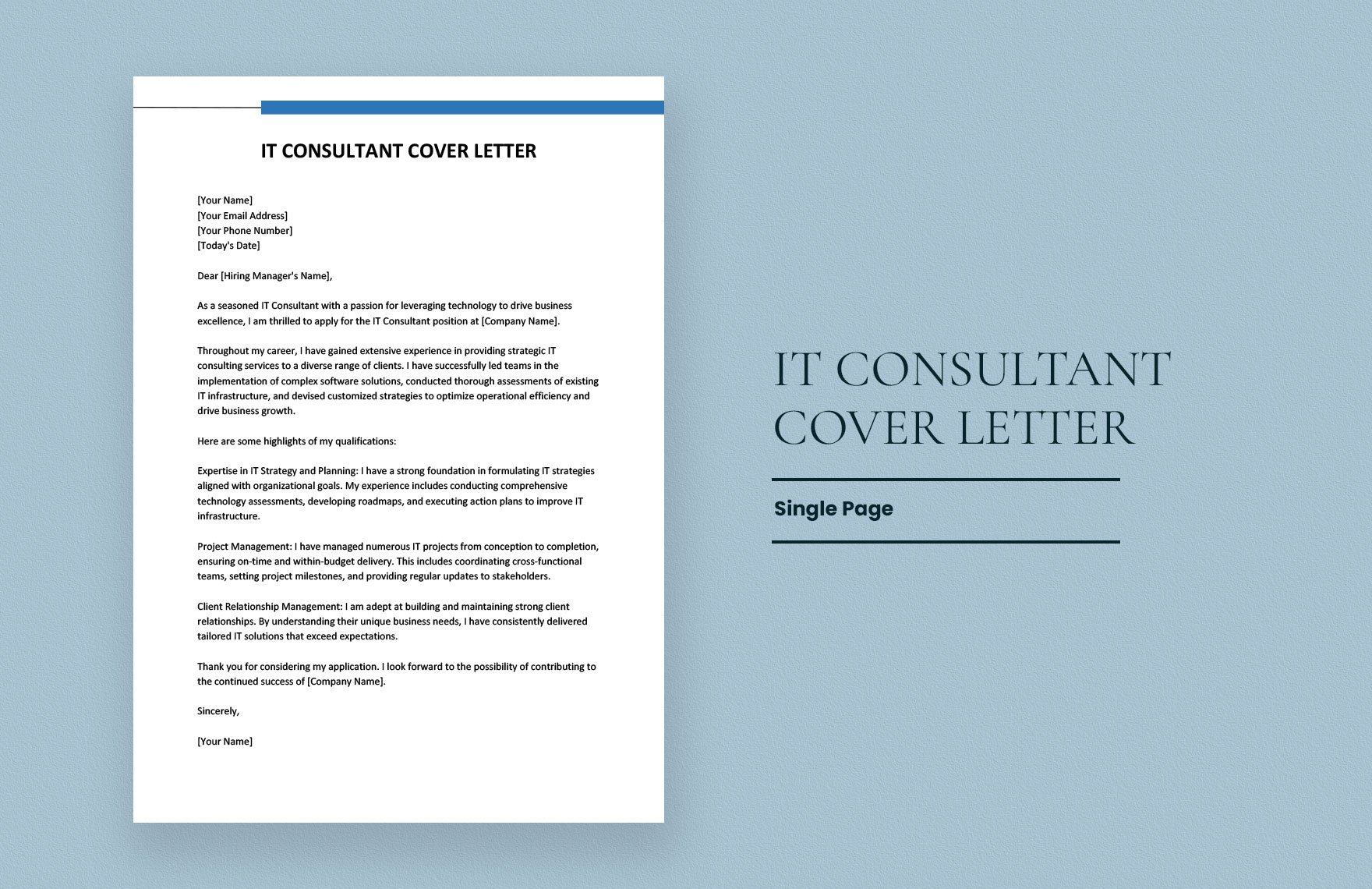
it consultant cover letter

Source: Template.net
free cover letter creator template
Source: Template.net
Frequently Asked Questions
How long should a creative consultant cover letter be?
A concise one-page document is a practical target for most standard applications. The important consideration is not an arbitrary word count but whether every paragraph contributes useful evidence. If the employer provides a specific length or format, follow those instructions instead.
Should a creative consultant use a highly creative design?
Usually, restraint is safer. Use strong typography, spacing, hierarchy, and subtle visual elements rather than turning the application into a poster. The design should support readability and reinforce professional judgment.
Should the letter repeat information from the resume?
It can reference the same achievements, but it should not simply reproduce resume bullets. The cover letter should explain context, relevance, motivation, and impact in a way that adds meaning to the resume.
What should a new graduate write about?
New graduates can use internships, university projects, research, freelance assignments, case competitions, volunteer work, and leadership experiences when those activities demonstrate relevant skills. The key is to explain what the applicant actually did and what resulted.
Can one template be used for several consulting firms?
Yes, but the template should function as a structural foundation rather than a finished letter. The opening, evidence selection, motivation, and firm-specific details should be adapted for each application.
Should achievements always include numbers?
No. Quantification is useful when reliable, but not every professional result has a meaningful number. A clear description of a decision influenced, process improved, client problem solved, or recommendation adopted can also provide strong evidence.
Is a portfolio necessary for a creative consultant?
It depends on the role. Some creative consulting positions place significant value on work samples, while others focus more heavily on strategy and business problem-solving. Follow the application instructions and reference a portfolio only when it adds relevant evidence.
How should confidential client work be described?
Describe the problem, your role, the approach, and the outcome without revealing protected names, sensitive data, or confidential commercial information. You can often demonstrate substantial impact without disclosing information that belongs to a client.
Final Checklist Before Sending
Before submitting your application, confirm that the position title is correct, the organization name is correct, and the recipient’s name is spelled correctly. Make sure the contact information matches your resume and that the document contains no placeholders or internal drafting notes.
Confirm that the opening explains your relevance, the middle paragraphs contain real evidence, and the closing explains your interest without making unsupported claims. Remove generic statements that could apply to any employer.
Check that the letter complements the resume rather than repeating it. Every achievement should be factually consistent across both documents, and any numbers should be accurate and defensible.
Finally, inspect the exported file visually. Check margins, spacing, typography, page breaks, and file naming. A polished application is not created by a template alone; it results from careful research, evidence selection, editing, and final quality control.

A well-built creative consultant cover letter Template should make your application easier to understand, not merely easier to format. Use the template to establish structure, then replace generic language with specific evidence, relevant achievements, and a credible explanation of fit. When the final document connects creative thinking with research, business judgment, client impact, and clear communication, it becomes a professional argument for why you belong in the consulting role.
