Running a business involves more than managing customers, employees, finances, and daily operations. Business owners also need to prepare for unexpected events that could cause financial losses. An insurance for business template can make it easier to organize important insurance information, identify coverage needs, and prepare for conversations with an insurance provider.
A well-designed business insurance template provides a simple way to record company details, assess potential risks, and identify different types of commercial insurance that may be relevant. Whether you operate a small business, professional service, retail store, construction company, or growing organization, having your information organized can make the insurance planning process more efficient.
This guide explains what an insurance for business template is, what information it should include, the common types of business insurance to consider, and practical tips for using a template effectively.
What Is an Insurance for Business Template?
An insurance for business template is a structured document designed to help business owners collect and organize information related to commercial insurance. It can be used as a planning worksheet, insurance information form, coverage checklist, or starting point for discussions with an insurance professional.
Instead of gathering information from different documents, a template puts essential details in one convenient place. This can include business contact information, industry details, employee numbers, estimated revenue, business activities, existing policies, and desired insurance coverage.
A business insurance template does not replace professional insurance advice or an actual insurance policy. Instead, it helps you prepare the information needed to evaluate your business insurance requirements.
Why Use a Business Insurance Template?
Insurance requirements can vary considerably between businesses. A company that operates from an office may face different risks from a restaurant, online store, contractor, manufacturer, or consultant.
Using a structured template can help you take a more organized approach to identifying those risks.
- Organize business information: Keep essential company details in one place.
- Identify coverage needs: Create a checklist of insurance types that may apply to your business.
- Prepare for insurance discussions: Have relevant information ready when speaking with an agent or broker.
- Review existing coverage: Compare your current policies with your business activities and potential risks.
- Save time: Reduce the need to repeatedly collect the same business information.
- Support annual reviews: Update the document as your business changes.
A template can be especially useful for small business owners who want a straightforward way to prepare before requesting insurance quotes or reviewing their current coverage.
What Should an Insurance for Business Template Include?
A useful business insurance form should be detailed enough to capture important information without becoming unnecessarily complicated. The following sections can provide a practical structure.
1. Business Information
Start with basic information that identifies the company. Typical fields include:
- Business name
- Business address
- Industry or business type
- Primary contact person
- Phone number
- Email address
- Business website
- Number of locations
Keeping these details together makes the template easier to use when communicating with insurance providers or updating business records.
2. Business Operations
Insurance decisions depend heavily on what a business actually does. Describe the company’s primary activities in clear, specific language.
For example, a consulting company might provide management advice to corporate clients, while a contractor may perform construction or renovation work at customer properties. These activities can create very different insurance exposures.
Consider including information about:
- Products or services offered
- Locations where work is performed
- Number of employees
- Use of company vehicles
- Equipment and property owned by the business
- Customer interactions
- Use of subcontractors
- Estimated annual revenue
3. Insurance Coverage Checklist
A coverage checklist is one of the most useful sections of an insurance for business template. It can help business owners discuss potentially relevant policies with an insurance professional.
Common types of commercial insurance include:
- General liability insurance: May help address certain third-party claims involving bodily injury or property damage.
- Commercial property insurance: Can provide coverage for eligible business property and physical assets, depending on the policy.
- Professional liability insurance: Often relevant to businesses that provide professional advice, services, or expertise.
- Workers’ compensation insurance: May be required by law for eligible employers, depending on the jurisdiction.
- Commercial auto insurance: Designed for qualifying vehicles used for business purposes.
- Cyber liability insurance: May help address certain risks associated with data breaches, cyber incidents, and technology-related events.
- Business interruption insurance: May provide coverage for certain income losses following a covered event, subject to policy terms.
- Product liability insurance: May be relevant to companies that manufacture, distribute, or sell products.
- Directors and officers insurance: May provide certain protections for directors and officers of eligible organizations.
- Employment practices liability insurance: May address certain employment-related claims, depending on the policy.
Not every business needs every type of coverage. The appropriate combination depends on factors such as industry, location, business structure, employees, assets, contracts, and specific risks.
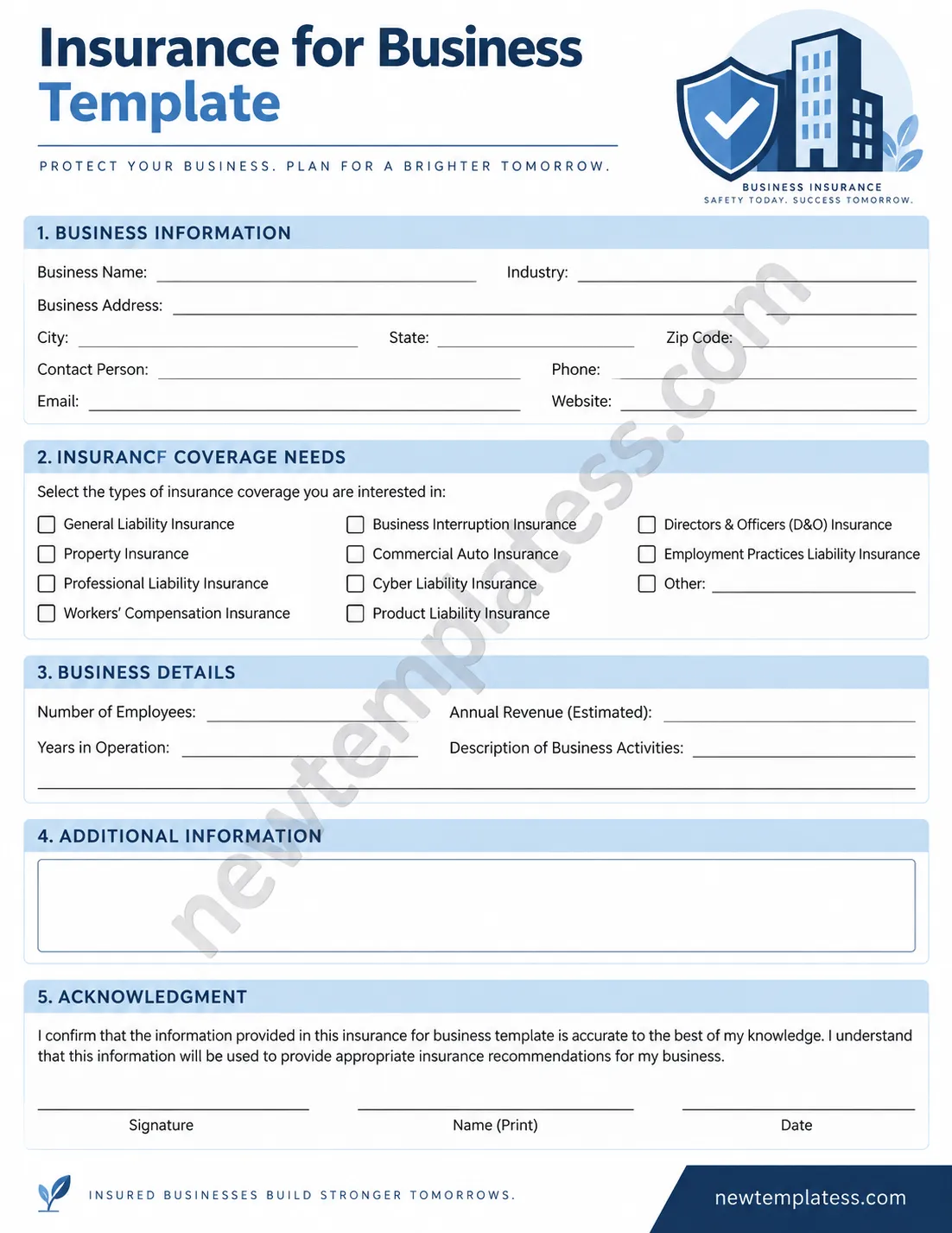
Insurance for Business Template
The visual template below is designed as a printable business insurance planning form. It includes sections for business information, coverage needs, business details, additional information, and acknowledgment.
How to Use an Insurance for Business Template
Completing a template is most useful when you treat it as a business planning document rather than simply filling in empty fields.
Step 1: Gather Your Business Information
Collect your current business details before completing the form. Use accurate information for your company name, address, contact details, employees, revenue, locations, and business activities.
Step 2: Identify Potential Risks
Think about what could realistically create a financial loss for your company. Consider your property, employees, customers, products, vehicles, technology, contracts, and professional services.
For example, an online business may need to pay particular attention to digital security and customer data, while a physical retail business may have greater exposure to property damage, customer injuries, or inventory losses.
Step 3: Review Possible Coverage
Use the coverage checklist to identify insurance policies that may be relevant. Do not assume that checking a box means you automatically need that policy. Instead, use the list as a discussion tool when reviewing your risks with a qualified insurance professional.
Step 4: Review Existing Policies
If your business already has insurance, record the relevant policy information separately. Note the policy type, insurer, renewal date, limits, deductibles, and other important details where appropriate.
Review your policies regularly to determine whether they still reflect your current business operations.
Step 5: Update the Template Regularly
Your insurance needs can change as your business grows. Update the template when you hire employees, add locations, purchase equipment, introduce new products, acquire vehicles, sign major contracts, or change your business activities.
Tips for Creating a Useful Business Insurance Checklist
A good insurance checklist should be simple enough to use but comprehensive enough to support meaningful discussions about risk.
- Keep information current. Outdated revenue, employee numbers, or business descriptions can make the document less useful.
- Be specific about operations. Clearly describe what your company does and where it operates.
- Separate required and optional coverage. Some insurance may be required by law, contract, lender, landlord, or industry rules, while other coverage may be optional.
- Record renewal dates. Tracking renewal periods can help prevent important deadlines from being overlooked.
- Review contracts. Customer, landlord, vendor, and partnership agreements may contain insurance requirements.
- Consider business growth. New employees, equipment, services, or locations can change your risk profile.
- Protect sensitive information. Store completed insurance forms securely, especially when they contain financial or business-sensitive information.
Common Mistakes to Avoid
A template is only useful when the information inside it is accurate and relevant. Avoid these common mistakes when preparing a business insurance worksheet.
Using Generic Business Descriptions
Simply writing “business services” may not provide enough context. Describe your actual activities, the customers you serve, and where the work takes place.
Forgetting Business Changes
A policy review based on last year’s operations may not reflect today’s business. Update your information whenever there are significant changes.
Assuming One Policy Covers Everything
Business insurance policies have specific coverage terms, exclusions, limits, and conditions. Do not assume that one policy automatically protects every aspect of your company.
Ignoring Contract Requirements
Some clients, landlords, lenders, or business partners may require specific insurance coverage or limits. Review contractual requirements before selecting or renewing coverage.
Who Can Benefit From an Insurance for Business Template?
An insurance for business template can be useful for businesses of many sizes and industries.
- Small business owners
- Entrepreneurs and startups
- Freelancers and consultants
- Retail businesses
- Professional service providers
- Contractors and tradespeople
- Online businesses and ecommerce companies
- Property owners operating commercial businesses
- Growing companies reviewing their insurance programs
The template can also serve as an internal checklist for administrative teams that manage insurance documents and renewal information.
How to Keep Your Business Insurance Information Organized
Good organization can make insurance reviews easier. Keep your completed template together with relevant insurance documents, certificates, policy summaries, and renewal information.
Consider maintaining a dedicated digital folder with clearly named documents. You can also keep a printed copy for quick reference, provided sensitive business information is stored securely.
Set a regular review schedule, such as once or twice a year. You should also review your information after major business changes rather than waiting for the next scheduled review.
Frequently Asked Questions About Business Insurance Templates
What is an insurance for business template used for?
An insurance for business template is used to organize company information, identify potential insurance needs, and prepare for discussions with insurance providers. It can also help businesses keep important insurance-related information organized.
Can a business insurance template replace an insurance policy?
No. A template is a planning and information-organizing tool. It does not provide insurance coverage and should not be treated as a substitute for an actual insurance policy.
What information should I prepare before requesting a business insurance quote?
Useful information can include your business activities, location, number of employees, estimated revenue, property and equipment, vehicles, products or services, previous insurance information, and details about potential risks.
How often should I update my business insurance template?
Review it regularly and update it whenever your business changes significantly. Changes in employees, locations, services, equipment, revenue, vehicles, or contractual obligations may affect your insurance requirements.
Conclusion
An insurance for business template provides a practical way to organize information and prepare for business insurance planning. By documenting your business activities, assets, employees, potential risks, and possible coverage needs, you can make insurance reviews more structured and efficient.
The most important step is to keep the information accurate and current. Use the template as a starting point for evaluating your business risks and discussing appropriate coverage with a qualified insurance professional. With a well-organized checklist and regular reviews, business owners can approach insurance planning with greater clarity and confidence.
