A legal testimony affidavit is a written statement in which a person presents facts or testimony under oath or affirmation. Affidavits can be used in a variety of legal situations, including court proceedings, administrative matters, applications, disputes, and other circumstances where a sworn written statement is required. Using a well-organized legal testimony affidavit template can make it easier to present information clearly and consistently.
An affidavit is more than an ordinary written statement. Its wording, structure, signature requirements, and notarization requirements may affect whether it can be used for a particular legal purpose. Because requirements vary by jurisdiction and by the type of proceeding, a template should be treated as a starting point rather than a substitute for legal advice.
Below is a practical guide to the main sections of an affidavit, what information to include, and how to prepare a testimony statement that is organized, factual, and easy to review.
What Is a Legal Testimony Affidavit?
A legal testimony affidavit is a formal written statement made by an individual, commonly called the affiant, who declares that the information provided is true to the best of their knowledge or as otherwise required by the applicable legal procedure. The document may be signed under oath before a notary public or another authorized official, depending on local rules.
The purpose of an affidavit is generally to put relevant facts into a structured written form. Instead of relying only on an oral statement, a legal professional, court, agency, or other authorized recipient can review the information in a documented format.
Common situations where an affidavit may be requested include:
- Supporting a court filing or legal proceeding
- Providing a sworn statement of facts
- Confirming information based on personal knowledge
- Explaining events relevant to a dispute
- Supporting an application or administrative process
- Providing evidence or background information when permitted by applicable rules
Why Use a Legal Testimony Affidavit Template?
Starting with a legal testimony affidavit template can help organize information before the document is finalized. A structured format also makes it easier to separate identifying information, factual testimony, declarations, signatures, and notarization details.
A useful template can help you:
- Keep important information in a logical order
- Identify missing details before signing
- Present testimony in clearly separated sections
- Reduce formatting inconsistencies
- Make the document easier for another person to review
However, a template does not automatically make an affidavit legally sufficient. Courts, government agencies, attorneys, and other recipients may have specific formatting, wording, identification, filing, or notarization requirements.
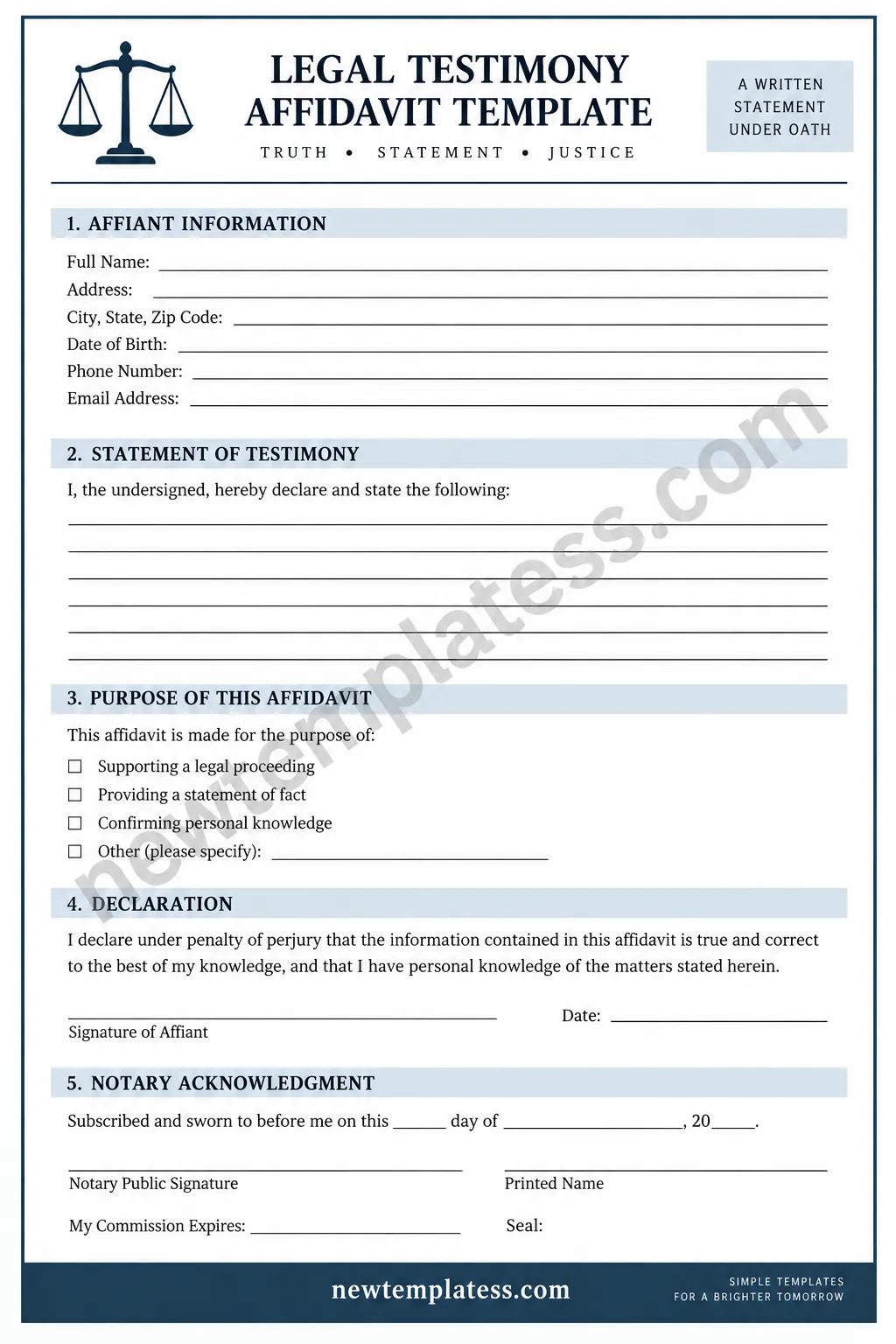
Essential Sections of a Legal Testimony Affidavit
Although affidavit formats vary, many legal testimony affidavits contain several core components. The exact requirements should be checked against the rules applicable to the particular matter.
1. Affiant Information
The first section normally identifies the person making the statement. Depending on the purpose of the affidavit, this may include the affiant’s full legal name, address, contact information, or other identifying details.
Only provide information that is required or appropriate for the intended legal use. Sensitive personal information should not be included unnecessarily.
2. Statement of Testimony
The main body of the affidavit contains the facts or testimony being presented. This section should be organized logically and should distinguish between information personally known by the affiant and information obtained from another source.
When describing events, consider presenting them chronologically. Include relevant dates, locations, people involved, and specific facts when they are known and necessary to understand the statement.
3. Purpose of the Affidavit
A short section explaining why the affidavit is being prepared can provide useful context. For example, the document may support a legal proceeding, confirm a factual matter, or provide a sworn account of a particular event.
The purpose should be stated accurately without adding unnecessary conclusions or arguments.
4. Declaration or Oath
An affidavit generally includes language in which the affiant declares or swears that the statements are truthful as required by the applicable procedure. The precise wording can differ depending on the jurisdiction and document type.
Do not simply copy an oath or declaration from an unrelated form when a court, agency, attorney, or other authority has provided specific language.
5. Signature and Notary Acknowledgment
Many affidavits require the affiant to sign the document in the presence of a notary public or another authorized official. The final section may contain the date, signature of the affiant, notary signature, commission information, and seal or stamp where applicable.
Not every sworn statement has identical execution requirements. Confirm whether notarization is required and what form of acknowledgment or jurat is appropriate before signing.
How to Write a Clear Testimony Statement
The testimony section is usually the most important part of the affidavit. Clear writing can make the statement easier to understand and review.
Focus on Facts
Describe what you personally saw, heard, did, received, or otherwise know when that information is relevant. Avoid exaggeration, speculation, or statements presented as facts when you do not have a reliable basis for them.
Use a Logical Chronology
If the affidavit concerns a series of events, explain them in the order in which they occurred. Dates and approximate times can be helpful when they are known and relevant.
Be Specific
Instead of using vague phrases, provide concrete details that help the reader understand the circumstances. For example, identify the relevant document, location, event, or communication when doing so is accurate and necessary.
Separate Personal Knowledge From Secondhand Information
If you learned something from another person or document, do not automatically present it as something you personally witnessed. The rules governing affidavits and admissibility of evidence can differ, so legal advice may be appropriate when secondhand information is important to the case.
Tips for Completing a Legal Testimony Affidavit
- Read the instructions first: Check whether the recipient has supplied a required affidavit form or wording.
- Use accurate information: Review names, dates, addresses, and other factual details carefully.
- Stay relevant: Include information that relates directly to the purpose of the affidavit.
- Keep the language clear: Short, direct sentences can make complicated events easier to follow.
- Review before signing: Carefully check the entire statement for errors or omissions.
- Do not sign prematurely: If notarization is required, determine whether the document must be signed in front of the notary.
- Keep a copy: Retain a copy of the signed affidavit and any supporting documents for your records when appropriate.
Common Mistakes to Avoid
Even a carefully designed affidavit template can be completed incorrectly. Several common mistakes are worth checking before the document is submitted.
- Using a generic affidavit when a specific official form is required
- Leaving required fields blank
- Including facts that the affiant cannot reasonably verify
- Mixing personal observations with assumptions
- Adding irrelevant arguments or excessive background information
- Signing before confirming the required notarization procedure
- Failing to follow the filing or submission instructions of the relevant authority
Legal Testimony Affidavit vs. Other Written Statements
An affidavit is not necessarily interchangeable with every other type of legal statement. A declaration, witness statement, sworn statement, and deposition can have different purposes and procedural requirements.
For example, some jurisdictions permit certain unsworn declarations under penalty of perjury in circumstances where an affidavit might otherwise be used. A deposition, by contrast, is typically an oral examination conducted under oath and recorded according to applicable procedures.
Because terminology and requirements differ between jurisdictions, identify exactly what type of document the receiving court, agency, attorney, or organization is requesting.
When Should You Get Legal Assistance?
A template can help with organization, but legal documents can have consequences beyond formatting. Consider consulting a qualified attorney when the affidavit concerns an important dispute, complex legal rights, significant financial interests, or a proceeding with specific evidentiary requirements.
Professional assistance can also be useful when you are unsure about what facts to include, how to describe evidence, whether notarization is required, or whether a particular statement could have legal consequences.
Frequently Asked Questions About Legal Testimony Affidavits
Can I use a legal testimony affidavit template for any case?
Not necessarily. A general template can provide a useful structure, but individual courts, agencies, jurisdictions, and legal proceedings may require specific forms or language.
Does an affidavit always need to be notarized?
Not every written sworn statement has identical execution requirements. Whether notarization is required depends on the applicable law, procedure, and recipient. Check the instructions for the specific matter before signing.
What should I include in the testimony section?
Include relevant facts that you can state accurately, with useful details such as dates, locations, people, documents, and events when appropriate. Clearly distinguish personal knowledge from information obtained from other sources.
Can I edit an affidavit after signing it?
Do not assume that an already executed affidavit can simply be edited. If a correction is necessary, the appropriate procedure may depend on the recipient and jurisdiction. Ask the relevant legal professional, court, or authority how corrections should be handled.
Conclusion
A legal testimony affidavit template provides a practical framework for organizing a sworn written statement. By separating affiant information, testimony, purpose, declaration, signature, and notary details, a template can make the preparation process more structured and easier to review.
The most important consideration is accuracy. Use clear factual language, provide only relevant information, follow the requirements of the applicable jurisdiction, and confirm whether a specific official form or notarization procedure is required. When the affidavit is connected to a significant legal matter, professional legal guidance can help ensure that the document is prepared and executed appropriately.
