A real estate agent performance statement is a useful way to document an agent’s results, activity, progress, and professional goals over a defined period. Instead of relying on scattered sales records or informal updates, a structured statement brings important performance information into one clear document.
For real estate professionals, managers, and brokerage owners, this type of statement can make performance reviews easier to understand. It can also help agents identify strengths, spot areas that need attention, and set measurable goals for the next reporting period.
A well-designed statement should go beyond the number of properties sold. It can include listings acquired, closed transactions, lead conversion, client follow-up, marketing activity, revenue, and progress toward business objectives.
What Is a Real Estate Agent Performance Statement?
A real estate agent performance statement is a structured report that summarizes an agent’s performance during a specific period. The period may be monthly, quarterly, annually, or based on an individual brokerage’s review cycle.
The document typically combines measurable results with information about activities and future objectives. This makes it different from a simple sales report. A sales report may focus mainly on transactions, while a performance statement provides a broader view of professional performance.
Depending on the purpose, the statement may be prepared by the agent, team leader, sales manager, or brokerage. It can support performance reviews, business planning, coaching sessions, and personal development.
Why Use a Real Estate Agent Performance Statement?
Real estate performance can involve many moving parts. An agent may generate leads this month but close those opportunities several months later. A single sales figure therefore does not always show the full level of activity behind the results.
A structured performance statement provides useful context. It can help answer questions such as:
- How many new leads did the agent generate?
- How many listings were obtained?
- How many transactions were completed?
- How effectively were prospects converted into clients?
- How consistently did the agent follow up with leads and clients?
- How did actual results compare with established targets?
- Which goals should receive attention during the next period?
Using consistent measures also makes it easier to track changes over time. An agent can compare one quarter with another and identify patterns rather than relying only on memory.
Key Sections to Include in the Statement
1. Agent Information
Start with basic identification details. Include the agent’s name, team or brokerage, position if relevant, reporting period, and the date the statement was prepared.
Keeping these details at the top makes the document easy to file and reference later.
2. Sales Performance
Sales performance is usually one of the most important sections. Useful metrics can include the number of closed transactions, total sales volume, listing agreements, buyer representation agreements, and completed deals.
Where appropriate, separate listing-side and buyer-side activity. This can reveal differences in the agent’s business mix.
3. Lead Generation and Conversion
Lead generation metrics help explain the activity that supports future transactions. Consider tracking new leads, qualified leads, appointments, consultations, and conversion rates.
For example, an agent might receive a high number of inquiries but have a lower appointment conversion rate. That information can point toward a need for improved qualification, follow-up, or communication processes.
4. Client Service and Follow-Up
Client relationships are an important part of real estate work. A performance statement can track follow-up consistency, client meetings, referral activity, repeat business, and other service-related measures that are appropriate for the brokerage.
These metrics should be selected carefully. The goal is to measure meaningful professional activity rather than create unnecessary administrative work.
5. Revenue and Financial Results
When appropriate, include relevant financial information such as commission income, gross revenue, transaction value, or other approved business measures.
Use clearly defined figures and reporting periods. If expenses are included, distinguish them from gross revenue so readers can understand what each number represents.
How to Build an Effective Performance Statement
The most useful approach is to choose metrics that connect daily activity with business outcomes.
Define the Reporting Period
Choose a consistent period before entering data. Monthly statements are useful for frequent tracking, while quarterly and annual statements can provide a broader view of performance.
Set Measurable Targets
Targets should be specific enough to compare against actual results. For example, instead of writing “generate more leads,” use a measurable target such as a defined number of qualified leads or consultations for the reporting period.
Record Actual Results
Enter verified results from the relevant CRM, transaction records, accounting system, or other approved business sources. Consistent data makes the statement more useful for future comparisons.
Compare Targets With Actual Performance
A simple target-versus-actual format makes the document easier to scan. It can also highlight areas that require further discussion without requiring a lengthy narrative.
Add Context Where Needed
Numbers do not always tell the complete story. A short notes section can explain unusual changes, major business events, market-related circumstances, or operational factors that affected the reporting period.
Useful Real Estate Performance Metrics
The right metrics depend on the agent’s role and business model. Common examples include:
- New leads generated
- Qualified leads
- Lead-to-client conversion rate
- Buyer consultations
- Listing appointments
- New listings acquired
- Active listings
- Closed transactions
- Total transaction volume
- Average transaction value
- Client follow-up rate
- Referral opportunities
- Repeat clients
- Commission or gross revenue
- Progress toward annual goals
It is not necessary to include every possible metric. A smaller set of relevant indicators is often easier to maintain and interpret.
Tips for Making the Statement More Useful
Keep the Layout Simple
A professional performance statement should be easy to read. Use clear headings, consistent spacing, and concise labels. Tables and summary boxes can help readers find important numbers quickly.
Use Consistent Definitions
Define metrics before tracking them. For example, clarify what qualifies as a lead, appointment, closed transaction, or converted client. Consistent definitions prevent misleading comparisons between reporting periods.
Focus on Trends
One reporting period provides a snapshot. Several periods reveal trends. Where practical, maintain historical records so agents and managers can identify sustained changes in lead generation, conversion, listings, and transactions.
Separate Activity From Outcomes
Activity metrics and outcome metrics serve different purposes. Calls, appointments, and follow-ups measure activity. Listings, closed transactions, and revenue measure outcomes. Reviewing both provides a more complete picture of the sales process.
Use the Statement as a Planning Tool
The document should not simply record what happened. Use the results to establish practical next steps. If lead volume is strong but conversions are lower than expected, for example, the next-period plan could focus on qualification and follow-up processes.
Example of a Practical Performance Review
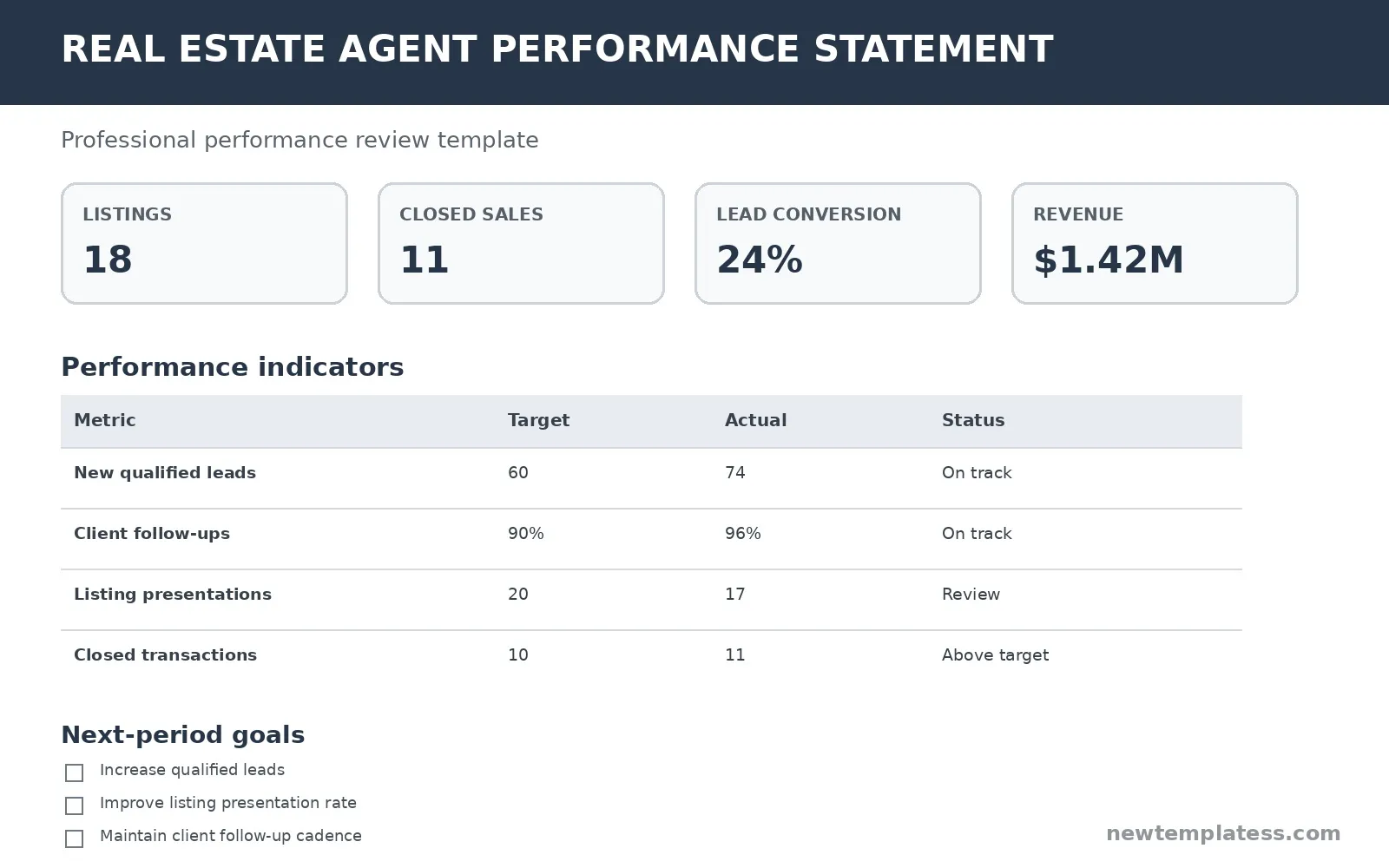
Imagine an agent sets a quarterly target of 60 qualified leads, 20 listing presentations, and 10 closed transactions. At the end of the quarter, the performance statement records 74 qualified leads, 17 listing presentations, and 11 closed transactions.
Those figures provide several useful discussion points. Lead generation exceeded the target, while listing presentations were below the target. Closed transactions exceeded the target. Rather than focusing on one number alone, the agent can review the entire process and determine which activities should be maintained or adjusted.
This is where a performance statement becomes more valuable than a basic sales tally. It creates a structured starting point for a factual performance discussion.
Common Mistakes to Avoid
- Tracking too many metrics: An overloaded report can become difficult to maintain.
- Using inconsistent definitions: Changing what counts as a lead or conversion can distort comparisons.
- Ignoring the reporting period: Always identify the dates covered by the figures.
- Relying on unverified numbers: Use reliable business records whenever possible.
- Focusing only on closed sales: Pipeline and activity metrics can provide important context.
- Leaving goals vague: Make next-period objectives measurable and practical.
How to Use the Statement During a Performance Review
Before a review meeting, the agent can complete the statement and verify the underlying data. The manager or team leader can then review the results and identify topics for discussion.
A useful review can cover three areas: what happened, why the results occurred, and what actions should follow. The first area is supported by the recorded metrics. The second may require context from the agent. The third should result in specific goals or process improvements.
Keeping the discussion connected to documented information helps make the review more focused and actionable.
Conclusion
A real estate agent performance statement provides a practical framework for documenting sales results, lead activity, client service, revenue, and professional goals. When the metrics are clearly defined and consistently tracked, the statement can support more organized performance reviews and better business planning.
The best format is not necessarily the longest one. It should contain the measures that matter to the agent’s role, present them clearly, and make it easy to compare targets with actual results. With regular use, a well-structured performance statement can become a valuable record of progress and a practical tool for setting the next stage of professional goals.
